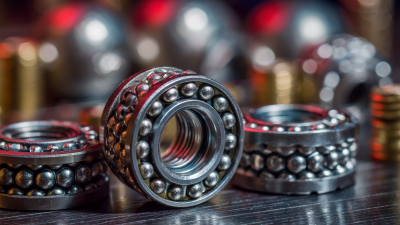
Choosing the right precision ball bearings in 2026 requires more than comparing catalog prices. Global buyers must examine accuracy, load capacity, speed, lubrication, materials, and supplier consistency. A bearing that performs well in a clean laboratory may fail inside a dusty packaging line or a humid coastal factory.
This guide introduces the main precision ball bearings types used across robotics, medical equipment, machine tools, aerospace systems, and high-speed automation. It covers miniature bearings, angular contact bearings, deep groove bearings, ceramic hybrid bearings, stainless steel bearings, and thin-section designs. Each type has a different operating purpose. Angular contact models support combined radial and axial loads. Ceramic hybrid versions can reduce friction and electrical damage in selected applications. Miniature bearings suit compact instruments, but their small size leaves less tolerance for contamination and installation errors.
Practical selection also depends on real operating details. Shaft fit, housing tolerance, preload, sealing, temperature, and maintenance access can change service life significantly. Buyers should request inspection records, material certificates, dimensional reports, and clear warranty terms. Supplier reputation matters, but documentation matters more.
No single bearing fits every machine. This is easy to overlook.
The most reliable decisions connect engineering data with field experience. Even experienced teams can misjudge noise, mounting pressure, or lubricant compatibility. Therefore, the following sections compare each bearing type through performance, limitations, application examples, and purchasing considerations. The goal is not to promote one universal solution, but to help global buyers make informed, traceable, and technically defensible choices.
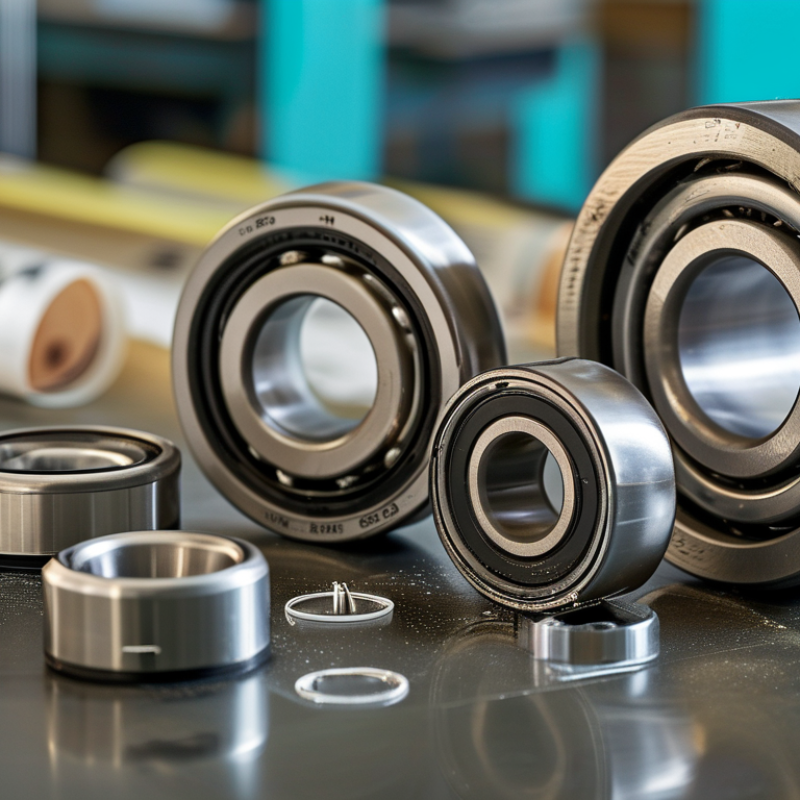
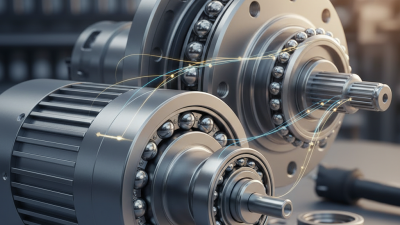
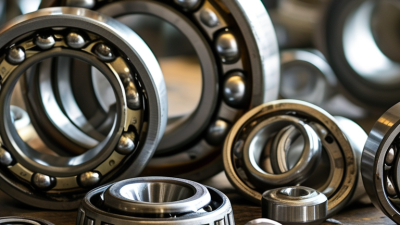
Precision ball bearings guide shafts with minimal friction and controlled movement. Their structure includes inner and outer rings, rolling balls, a cage, seals, and lubricant. Angular-contact bearings manage combined radial and axial loads. Deep-groove bearings suit steady radial loads and moderate thrust. Ceramic-hybrid designs can reduce mass and electrical damage, but they require careful preload selection.
During operation, balls roll between precision-ground raceways. The cage separates each ball and stabilizes spacing. Lubricant forms a thin film between contacting surfaces. Correct preload removes unwanted clearance and improves rotational accuracy. Excessive preload creates heat. Insufficient preload allows vibration and runout. ISO 281 calculates basic rating life from load and dynamic capacity, yet contamination can shorten real service life sharply. A 2024 Grand View Research report estimates the global ball-bearing market at approximately USD 19 billion in 2023, with continued growth driven by automation and precision machinery. That growth does not remove installation mistakes.
Tips: Match bearing type, clearance, seal, and lubricant to the actual load and speed. Check shaft fits with calibrated tools. Keep packaging sealed until installation. I would not treat catalog speed as a promise. A clean calculation can still fail in dusty, misaligned service. The U.S. Department of Energy reports that motor-driven systems consume more than half of industrial electricity, making friction control a practical efficiency concern. Temperature checks, vibration trends, and documented mounting torque provide stronger evidence than appearance alone.
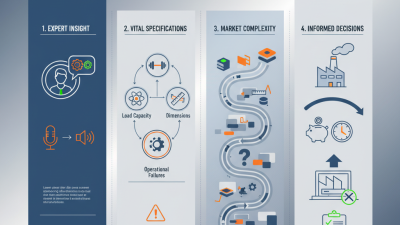
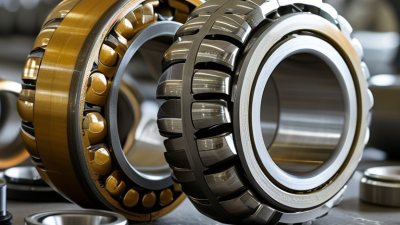
Precision ball bearings differ by load direction, speed, stiffness, and alignment tolerance. Deep-groove ball bearings suit electric motors, pumps, and conveyors. They handle radial loads and moderate axial loads. Angular-contact bearings support combined loads at high rotational speeds. Paired arrangements improve axial stiffness. Thrust ball bearings manage axial loads, but they are unsuitable for heavy radial forces. Self-aligning bearings tolerate limited shaft or housing misalignment. Hybrid ceramic bearings can reduce friction in high-speed spindles, though their price and installation demands are higher.
The International Energy Agency’s Energy Efficiency 2023 report estimates that electric motor systems consume about 53% of global electricity. Bearing selection therefore affects more than maintenance costs. ISO 281:2007 provides the basic rating-life method for rolling bearings. However, calculated life is not a promise. Contamination, preload, lubrication, and mounting errors can shorten service dramatically. I have seen a correct bearing fail early because the housing shoulder was slightly misaligned.
Tips: Match the bearing type to the real load spectrum. Check speed, temperature, clearance, sealing, and shaft fit. Use ISO 15243 damage classifications when investigating spalling, smearing, or corrosion. Do not choose only by bore diameter. For dusty conveyors, sealed deep-groove designs may outperform faster open bearings. For precision machine tools, angular-contact pairs need controlled preload and careful installation. Overlooking one detail remains common.
2026 Top Precision Ball Bearings Types for Global Buyers
When selecting precision ball bearings, accuracy should match the machine’s actual movement. Excessive precision can increase cost without improving output. Measure radial runout, bore tolerance, and rotational vibration before choosing a tolerance class. A spindle may need extremely stable rotation, while a conveyor often needs only dependable alignment. Small errors become visible as noise, heat, or uneven surface quality.
Load capacity requires more than reading a catalog rating. Radial loads act across the bearing, while axial loads push along its shaft. Combined forces need careful calculation. Consider shock, misalignment, lubrication, and operating hours. A bearing carrying a moderate load can still fail early under repeated vibration. Static load matters too. A brief impact may damage raceways before normal fatigue appears.
Speed changes the decision again. High rotational speed creates heat, lubricant stress, and cage instability. Use the manufacturer’s speed limits as guidance, not as a promise. Real performance depends on preload, sealing, cooling, and installation accuracy. Ceramic rolling elements may reduce friction in selected applications, but they are not automatically better. That assumption deserves review. In practical inspections, clean assembly and correct lubrication often matter more than an impressive specification. A careful buyer should request test data, dimensional reports, and traceable quality records before approving a bearing for global production.
| Precision Ball Bearing Type | Primary Design Feature | Typical Accuracy Classes | Relative Load Capacity | Typical Speed Capability | Axial Load Capability | Typical Bore Range | Best-Suited Applications |
|---|---|---|---|---|---|---|---|
| Single-Row Deep-Groove Ball Bearing | Deep raceway grooves support radial loads and moderate axial loads in both directions. | ISO P6, P5, P4; P2 for ultra-precision applications | Medium to high radial load capacity; generally higher than comparable angular-contact designs of similar size. | High; commonly suitable for approximately 10,000–40,000 rpm depending on size, clearance, lubrication, seals, and cage design. | Moderate, bidirectional | Approximately 3–100 mm in common precision configurations | Electric motors, instruments, pumps, automation equipment, gearboxes, and general high-speed machinery. |
| Single-Row Angular-Contact Ball Bearing | Raceways are offset to create a contact angle, allowing combined radial and axial loading. | ISO P5, P4, P2 | Medium radial capacity with high axial capacity in one direction; capacity increases with contact angle. | High; approximately 8,000–35,000 rpm is typical for many precision sizes, with spindle versions capable of higher speeds. | High in one direction; paired arrangements support axial loads in both directions. | Approximately 10–150 mm in common precision configurations | Machine-tool spindles, pumps, compressors, robotics, screw drives, and high-accuracy gear systems. |
| Matched Angular-Contact Pair | Two bearings are factory-matched for controlled preload and predictable load sharing. | ISO P4 or P2 for high-precision spindle assemblies | High combined-load capability; duplex arrangement improves moment and axial-load resistance. | High; approximately 6,000–30,000 rpm depending on arrangement, preload, lubricant, and bore size. | Very high; supports bidirectional axial loads with DB, DF, or universal arrangements. | Approximately 15–120 mm in common spindle and precision arrangements | Machine-tool spindles, rotary tables, precision actuators, inspection equipment, and high-speed indexing systems. |
| Four-Point Contact Ball Bearing | Split inner or outer raceway creates four possible contact points for combined loading. | ISO P5 or P4, depending on design and application | High axial capacity and moderate radial capacity; lower stiffness than a properly preloaded duplex pair for some spindle duties. | Moderate; generally approximately 1,000–8,000 rpm for many medium-size designs. | High in both directions | Approximately 20–300 mm in common industrial configurations | Robotics, indexing mechanisms, turntables, gearboxes, and applications with limited axial space. |
| Double-Row Angular-Contact Ball Bearing | Two angular-contact rows provide higher moment resistance and bidirectional axial support in one unit. | ISO P5 or P4 | High radial and axial capacity with good moment-load resistance. | Moderate to high; approximately 3,000–15,000 rpm depending on size, preload, and lubrication. | High in both directions | Approximately 15–120 mm in common precision configurations | Machine tools, robotics, pumps, compressors, and compact assemblies requiring high rigidity. |
| Precision Spindle Ball Bearing | High-accuracy angular-contact construction optimized for low runout, stiffness, and thermal control. | ISO P4, P2; equivalent classifications may be specified by the supplier | Medium to high radial capacity, prioritized for rigidity, repeatability, and controlled preload. | Very high; approximately 10,000–60,000 rpm is possible with suitable oil-air lubrication and optimized design. | High when used in matched sets; depends strongly on contact angle and arrangement. | Approximately 15–150 mm in common spindle sizes | CNC machine tools, grinding spindles, high-speed milling, precision motorized spindles, and metrology equipment. |
| Hybrid Ceramic Ball Bearing | Steel rings combined with silicon-nitride balls reduce mass, electrical conductivity, and friction-related heat. | ISO P4 or P2 for high-speed precision designs | High dynamic performance; static load capacity is generally lower than an equivalent all-steel bearing because ceramic balls are less tolerant of certain shock conditions. | Very high; often approximately 15,000–70,000 rpm under suitable lubrication and preload conditions. | Moderate to high, depending on angular-contact geometry | Approximately 10–120 mm in common precision configurations | High-speed spindles, electric motors, generators, vacuum equipment, and electrically insulated bearing positions. |
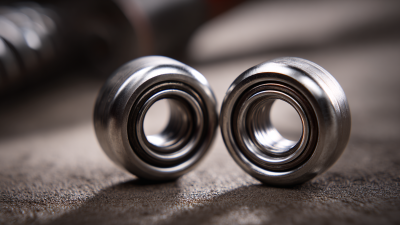
| Miniature Precision Ball Bearing | Small-bore deep-groove or angular-contact construction for compact, low-friction assemblies. | ISO P6, P5, P4 | Low to medium load capacity because of small rolling elements and limited cross-section. | Very high relative to size; approximately 20,000–150,000 rpm depending on bore, cage, lubricant, and load. | Low to moderate | Approximately 1–10 mm bore | Medical instruments, small motors, laboratory equipment, optical systems, dental tools, and compact actuators. |
| Precision Thrust Ball Bearing | Raceways are arranged primarily for axial load support and precise axial positioning. | ISO P5 or P4 in specialized precision designs | Low radial capacity; axial capacity is the principal performance characteristic. | Low to moderate; approximately 500–5,000 rpm for many industrial designs. | High in one direction; double-direction versions support axial loads in both directions. | Approximately 5–150 mm bore | Vertical shafts, screw mechanisms, rotary tables, low-speed positioning systems, and axial locating assemblies. |
| Self-Aligning Ball Bearing | Two rows of balls run on a spherical outer raceway to accommodate shaft or housing misalignment. | ISO P6 or P5; higher classes are application-dependent | Medium radial capacity; axial capacity is limited compared with angular-contact bearings. | Moderate to high; approximately 3,000–15,000 rpm depending on size, misalignment, and lubrication. | Low to moderate, generally bidirectional | Approximately 10–100 mm bore | Long shafts, textile machinery, conveyors, fans, agricultural equipment, and housings with alignment variation. |
| Selection note: Speed figures are indicative engineering ranges rather than universal ratings. Actual permissible speed depends on bearing size, internal clearance or preload, cage material, lubricant type, sealing, operating temperature, load, mounting accuracy, and cooling. ISO precision classes primarily control dimensional accuracy and running accuracy; they do not by themselves determine load rating or maximum speed. | |||||||
For global buyers, precision ball bearing selection begins with the operating environment, not the catalog number. Chrome steel offers strong load capacity and cost efficiency for clean, controlled machinery. Stainless steel performs better where moisture, washdown, or mild corrosion is expected. Ceramic-hybrid bearings reduce rotating mass and electrical damage risk, but their higher price needs careful justification.
Material is only part of the decision. Sealing changes friction, heat, and service life. Non-contact shields support higher speed with lower drag, while contact seals provide stronger protection against dust and water. A sealed bearing can still fail when the seal material does not match the temperature or cleaning fluid. Small details matter.
Lubrication deserves equal attention. Standard grease may suit moderate speed and room-temperature operation. High-speed spindles often need low-viscosity grease or oil-air lubrication. Excess grease can create heat, especially in compact housings. Too little lubricant is worse. It can leave raceways marked and noisy.
Ask suppliers for hardness data, dimensional tolerance, seal testing, lubricant specifications, and traceable inspection records. Confirm whether the stated speed is continuous or intermittent. This distinction is often overlooked. Also check storage conditions, because moisture and vibration can damage unused bearings before installation. A perfect specification rarely exists; buyers may need to accept a small speed trade-off for better sealing and longer field reliability.
2026 Top Precision Ball Bearings Types for Global Buyers
Selecting precision ball bearings begins with the machine’s real operating conditions, not a catalog label. Deep-groove bearings suit general radial loads and moderate speeds. Angular-contact bearings support combined loads and controlled axial movement. Thrust bearings handle axial forces, while ceramic-hybrid designs can reduce friction in demanding applications. Fit, clearance, preload, cage material, and sealing also affect performance.
Quality checks should include dimensional inspection, surface-finish testing, hardness verification, and noise monitoring. Request inspection reports with traceable batch numbers. Confirm tolerance grades, lubrication details, packaging methods, and storage conditions. During supplier audits, examine calibration records and process controls. I have found that attractive test data means little when measurements lack traceability. A perfect checklist does not exist.
Tips: Compare at least three qualified suppliers. Send operating data, not only a bearing number. Check shaft and housing drawings carefully. Ask for sample inspection before volume production. Inspect packaging for moisture barriers and impact damage. International sourcing adds risks involving lead times, customs documents, language gaps, and replacement support. Clarify delivery terms and technical responsibilities in writing. Remote audits help, but they cannot reveal every production weakness. When uncertainty remains, order a small trial batch and record temperature, vibration, and noise during installation.
To learn more about any of the products and services provided by Abbott Ball Company, Inc., simply complete the form below.