What is 440 Stainless Steel and its Common Uses?
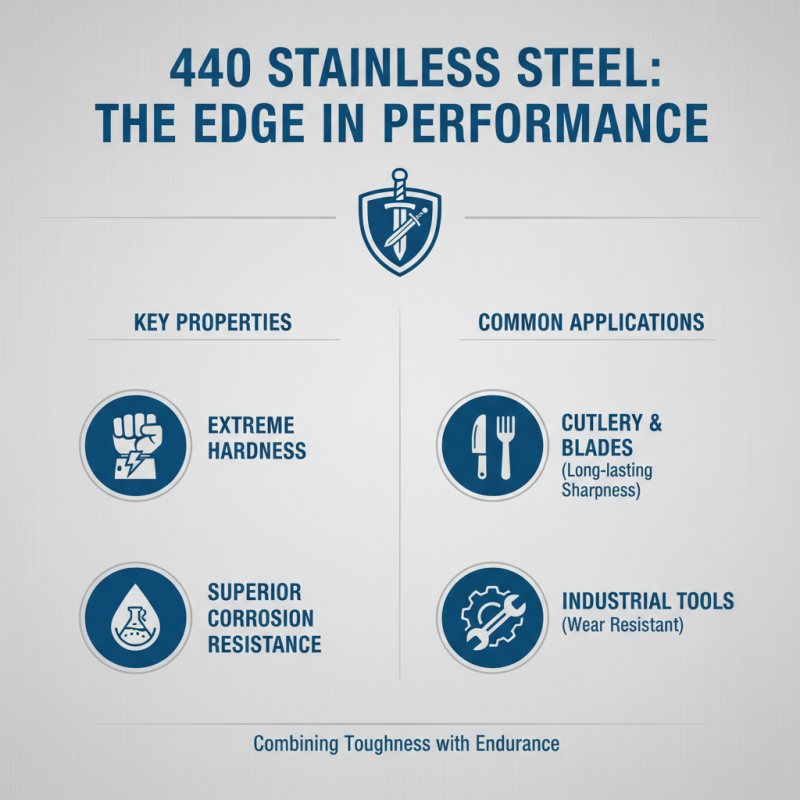
440 stainless steel is a unique alloy known for its high hardness and resistance to wear. This material is widely used in various applications, ranging from cutlery to industrial equipment. As industry expert Dr. John Miller states, “440 stainless steel is a balancing act of strength and corrosion resistance.” His words highlight the dual nature of this alloy, which is both durable and sleek.
The composition of 440 stainless steel includes high amounts of carbon, enhancing its hardness significantly. However, this also makes it less resistant to corrosion compared to other stainless steels. It is crucial for manufacturers to consider these trade-offs. In various sectors, including food processing and automotive industries, the advantages of 440 stainless steel shine.
Despite its popularity, there are reflective points to consider. Users must be aware that not all 440 stainless steel grades are equal. Each grade has different properties that may suit specific applications better than others. As the industry evolves, understanding these nuances becomes vital for effective decision-making.
What is 440 Stainless Steel? A Comprehensive Overview
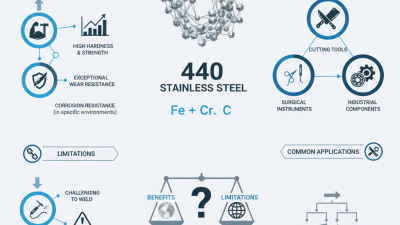
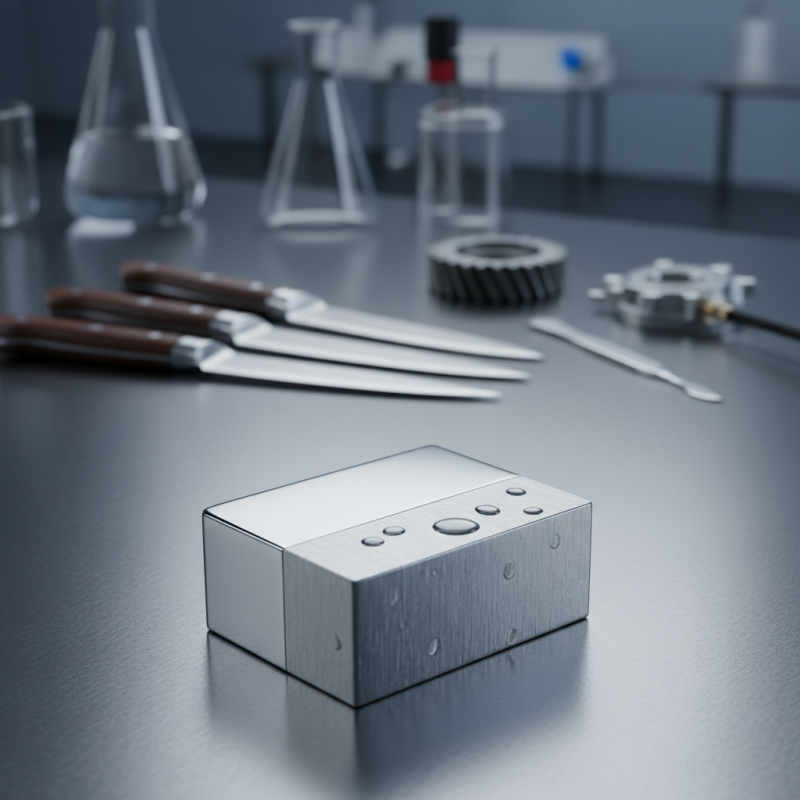
440 stainless steel is a high-carbon steel that belongs to the martensitic stainless steel family. It has a high hardness level due to its high carbon content. Typically, it contains 16-18% chromium. This composition provides excellent corrosion resistance while maintaining a strong surface. Many consider it a great choice for applications requiring durability and wear resistance.
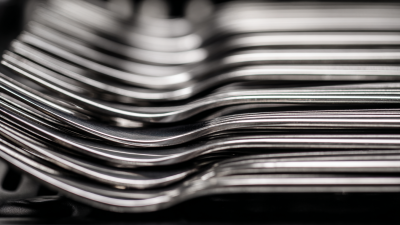
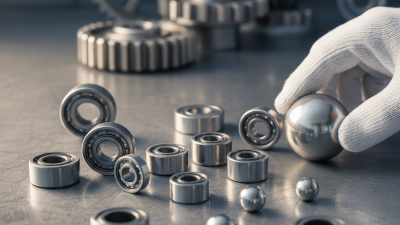
Common uses include knives, surgical instruments, and bearings. The material's hardness allows it to maintain a sharp edge for a longer time, making it ideal for cutlery. However, it can be challenging to work with during manufacturing because of its toughness. This can lead to increased production costs and effort for manufacturers. Additionally, if not properly maintained, 440 stainless steel can rust, which diminishes its effectiveness over time.
It’s essential to consider both the benefits and drawbacks of using 440 stainless steel. While its properties make it suitable for many demanding applications, processing challenges exist, and maintenance is crucial. Rethinking its uses might be necessary for certain industries that require both strength and ease of handling.
What is 440 Stainless Steel and its Common Uses?
| Property |
Description |
| Material Type |
Stainless Steel (440 Grade) |
| Chemical Composition |
Approx. 16-18% Chromium, 1-2% Carbon, 1% Manganese, 1% Silicon |
| Hardness |
HRC 55-60 |
| Corrosion Resistance |
Good, but less than 304 or 316 stainless steels |
| Common Uses |
Cutlery, surgical instruments, high-quality tooling |
| Weldability |
Difficult, not recommended to weld due to hardening |
| Heat Treatment |
Can be heat treated to enhance hardness |
| Advantages |
High hardness, good wear resistance |
| Disadvantages |
Brittle, lower corrosion resistance compared to higher grades |
Chemical Composition and Mechanical Properties of 440 Stainless Steel
440 stainless steel is known for its high carbon content, typically around 0.95-1.20%. This composition contributes to its exceptional hardness and strength. In terms of chromium, the level is about 16-18%. This element grants it resistance to corrosion and oxidation. However, while it resists rust, it is not completely immune. The properties of 440 stainless steel make it popular in various applications.
The mechanical properties of 440 stainless steel include impressive tensile strength, usually in the range of 750-860 MPa. Its yield strength falls between 200-620 MPa. These characteristics are ideal for making durable tools and cutlery. Nevertheless, the high hardness can result in brittleness, posing challenges during machining processes. In fact, careful consideration is needed when designing components that require intricate cutting or shaping.
440 stainless steel is often used in the manufacturing of knives, medical instruments, and valve components. Its ability to hold a sharp edge is unmatched, making it a favorite among chefs. Despite its advantages, manufacturers must account for its brittleness when using it for more complex shapes. Balancing hardness with ductility remains an ongoing challenge in the industry.
Common Applications of 440 Stainless Steel in Various Industries
440 stainless steel is known for its hardness and corrosion resistance. This unique combination makes it a favorite in various industries. Tools and cutlery are common applications. Blades made from this steel retain sharpness longer. They withstand wear better than softer steels.
In the automotive sector, 440 stainless steel components are valued for their strength. Exhaust systems, for instance, benefit from its ability to resist oxidation. Similarly, surgical instruments made from this material are trusted for their durability and ease of sterilization. Their performance in medical settings is crucial.
However, some challenges exist. The hardness of 440 stainless steel can make it difficult to machine. This may lead to longer production times. Not every application may benefit from its properties. In some cases, softer stainless steels are more appropriate. There’s always a balance to strike between performance and practicality.
Comparison of 440 Stainless Steel with Other Stainless Steel Grades
440 stainless steel is a high-carbon martensitic stainless steel. It is known for its excellent hardness and strength. This grade often finds applications in cutlery, surgical instruments, and valve components. However, it can be challenging to work with due to its brittleness, especially in high-stress situations.
When compared to other grades, 440 stainless steel stands out for its ability to achieve a harder state through heat treatment. For example, 304 stainless steel is more corrosion-resistant but lacks the hardness of 440. 410 stainless steel is also martensitic but has lower carbon content, resulting in less hardness. While 440 excels in cutting applications, it may not be ideal for environments that require high corrosion resistance.
Choosing the right stainless steel grade depends on specific needs. 440 could be too brittle for some applications. Users must consider the balance between hardness and flexibility. In practical use, many find their experiences differ from expectations. That's a reflection of the need for careful selection.
Comparison of 440 Stainless Steel with Other Stainless Steel Grades
Advantages and Limitations of Using 440 Stainless Steel in Manufacturing
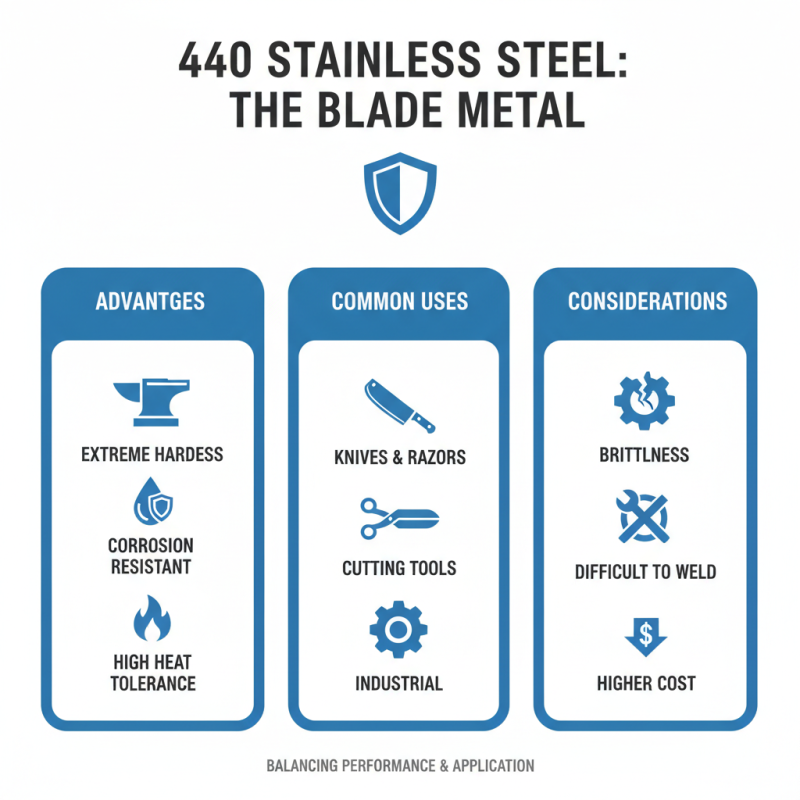
440 stainless steel is known for its hardness and corrosion resistance. It finds common uses in knife blades and cutting tools. This material can withstand high temperatures, making it suitable for various applications. However, the advantages come with certain limitations.
One major advantage of 440 stainless steel is its ability to take a sharp edge. This makes it ideal for manufacturing kitchen knives and surgical instruments. According to a report by the Steel Recycling Institute, over 25% of stainless steel produced is used in cutlery and culinary tools. Despite this, 440 stainless steel can be difficult to sharpen. Users may find themselves frustrated by this characteristic.
Additionally, while 440 stainless steel offers good corrosion resistance, it's not completely immune to rust. In high-humidity environments, users might need to exercise caution. This can lead to additional maintenance efforts. Furthermore, the tensile strength of 440 steel is lower than that of some higher alloyed steels. It presents trade-offs in strength versus hardness that manufacturers must consider. Balancing these factors can prove challenging in specific applications.