
MON - FRI 8AM - 5PM

7 Best Army Anti Riot Suits for Global Buyers?

Choosing an Army Anti-Riot Suit requires more than comparing photos, prices, or impressive product claims. Global buyers must examine protection, mobility, climate performance, certification, and after-sales support. A crowded marketplace can hide important differences.

Reports from Grand View Research and MarketsandMarkets describe continued growth in protective equipment demand, driven by public-security investment and stricter workplace safety expectations. These reports also reveal a limitation: market forecasts rarely explain how suits perform during long shifts, heavy rain, or repeated cleaning. That practical gap matters.

The National Institute of Justice emphasizes evidence-based equipment selection, while EU standards such as EN 166 support consistent eye-protection testing. Buyers should also review impact resistance, flame behavior, ventilation, joint flexibility, and replacement-part availability. A suit that protects well but restricts walking, kneeling, or communication may fail in real service.

Dr. Andrew Maynard, a recognized risk-science researcher, has stated, “Safety is not a feature; it is a relationship between technology and people.” That principle fits protective clothing closely. Fit, training, maintenance, and user feedback influence performance as much as materials do.

This guide compares seven Army Anti-Riot Suit options for international buyers. It considers construction details, certification evidence, comfort, customization, shipping practicality, and supplier transparency. No ranking is universally correct. Purchasing conditions differ between humid ports, cold training grounds, and urban deployments.

Some product information may remain incomplete. Buyers should verify laboratory reports independently. They should also request sample testing before placing large orders. Practical caution is not hesitation; it is responsible procurement.
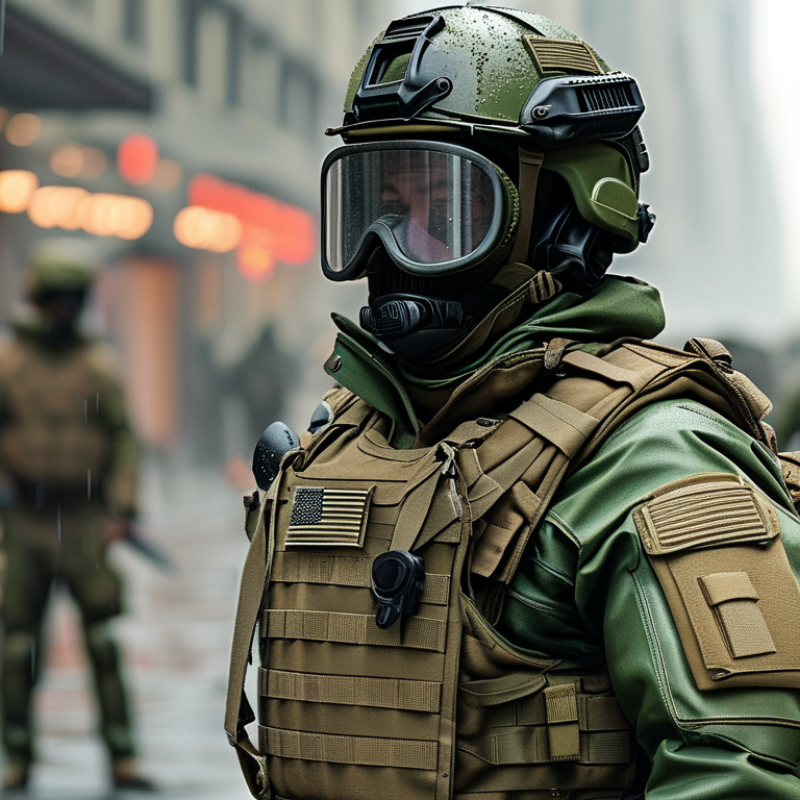
7 Best Army Anti Riot Suits for Global Buyers?

How to Classify Seven Anti-Riot Suits by Coverage and Protection Level

Choosing the seven best army anti-riot suits requires more than comparing prices. Coverage and tested protection matter more. NIJ Standard-0115.00 defines three stab-resistance energy levels: 24, 33, and 43 joules. However, this standard does not automatically certify an entire riot suit. Buyers should check each component separately.

The first category is head-only protection, using a helmet and face shield for short operations. The second adds neck coverage and improves protection from flying fragments. The third covers the torso with a vest, often using rigid chest and back panels. The fourth protects arms with padded sleeves, shoulder guards, and elbow shells. The fifth focuses on legs, combining thigh, knee, and shin protection. The sixth is a full-body suit, reducing exposed gaps during crowd-control movement. The seventh is a modular high-coverage system, combining removable panels, gloves, boots, and groin protection. It offers flexibility, but more weight can reduce mobility.

EN ISO 13688 emphasizes fit, marking, and garment performance, while EN 13567 provides useful guidance for impact-protective components. Field experience shows that ventilation and adjustment straps are not minor details. They decide whether protective equipment stays correctly positioned. One weakness remains. Test laboratories cannot fully recreate heat, smoke, stairs, and prolonged movement. Global buyers should request test reports, impact-energy results, material specifications, and replacement-part data. A suit may look highly protective, yet poorly fitted equipment can leave dangerous gaps.

7 Best Army Anti Riot Suits for Global Buyers? - How to Classify Seven Anti-Riot Suits by Coverage and Protection Level

Class Suit Type Typical Coverage Main Protective Components Typical Materials Approx. Weight* Mobility Protection Level Typical Operational Use
1 Light Impact Set Forearms, elbows, knees and shins Separate hard-shell guards; optional gloves and groin protection Polypropylene or polyethylene shells, EVA foam, elastic straps 2–4 kg Very high Basic Low-risk public-order duties, patrols and short deployments
2 Modular Limb Protection Suit Arms, shoulders, thighs, knees, calves and shins Integrated limb guards, articulated joints, padded collar and optional groin panel Impact-resistant polymer, closed-cell foam, abrasion-resistant textile 4–7 kg High Basic–Moderate Routine crowd-control formations where arm and leg mobility are important
3 Torso-and-Limb Riot Suit Chest, back, shoulders, arms, thighs, knees and lower legs Front and rear torso shells, shoulder caps, elbow and knee guards, shin plates Thermoformed polymer, impact foam, reinforced nylon or polyester fabric 6–10 kg High Moderate General-purpose riot response and protection against blunt impacts
4 Full-Coverage Riot Armor Neck, torso, arms, hands, hips, legs and shins; helmet used as a system component Overlapping hard plates, padded joints, forearm guards, gauntlet gloves and groin protection High-impact polymer, molded composites, foam padding and heavy-duty textiles 8–13 kg Moderate–High Moderate–High Higher-threat disorder control and prolonged line formations
5 Ballistic-Compatible Riot Suit Full riot coverage with a carrier compatible with separate ballistic inserts Impact armor plus front, back and side insert pockets; helmet and shield can be added Aramid or high-performance polyethylene panels, polymer shells and padded carrier fabric 8–16 kg† Moderate High when certified inserts are fitted Mixed-threat operations requiring blunt-impact protection and scalable ballistic protection
6 Anti-Stab and Anti-Slash Riot Suit Torso, neck, upper arms, forearms, groin and legs, with cut-resistant gloves available Stab-resistant panels, cut-resistant layers, hard impact shells and reinforced seams Aramid or other cut-resistant fibers, engineered laminates, polymer plates and foam 7–14 kg Moderate High against specified test threats Prison disturbances, searches and public-order incidents involving edged-weapon risks
7 Maximum-Protection Integrated Suit Head, face, neck, torso, shoulders, arms, hands, groin and complete legs Full hard armor, sealed or close-fitting joints, helmet, visor, neck guard, gauntlets and optional shield High-impact polymers, composite or aramid panels, flame-resistant textiles and energy-absorbing foam 12–20+ kg† Low–Moderate Very high, threat-specific Severe-threat entry, barricade incidents and short-duration high-risk interventions
Buyer guidance: Protection levels are practical purchasing categories rather than a universal international classification. Actual performance depends on the tested configuration, coverage gaps, sizing, closures and maintenance condition. Verify independent test documentation for impact, cut, stab, ballistic, flame or chemical resistance before procurement.

* Weight: Approximate suit-only ranges; helmet, shield, ballistic inserts and other accessories may add substantial weight.
† Ballistic-compatible and maximum-protection configurations: Weight varies significantly according to panel material, protection rating and installed accessories.

ISO 13688 Fit Criteria and ASTM F2878 Puncture-Resistance Benchmarks

When comparing the 7 best army anti-riot suits for global buyers, fit and puncture resistance deserve careful attention. ISO 13688 provides a useful foundation for protective clothing design. It addresses sizing, ergonomic comfort, labeling, materials, and harmlessness. A well-fitted suit should allow a full arm lift, controlled kneeling, and quick movement without exposed gaps. Check sleeve overlap, waist adjustment, and helmet compatibility. Small details matter.

ASTM F2878 focuses on resistance to hypodermic needle puncture. This benchmark can help buyers compare tested fabric panels and garment areas. However, it does not prove that a complete suit prevents every sharp-object injury. Test results depend on force, probe type, fabric construction, and test location. Ask for the test method, specimen details, and laboratory documentation. Do not accept a single headline number as complete evidence. Field conditions are messier.

Tips: Request size charts based on actual body measurements, not general labels. Inspect seams, closures, ventilation zones, and replacement parts before ordering. Confirm whether the puncture data covers the finished garment or only fabric samples. Independent inspection is wise. We have seen comfortable suits fail through poor sizing, while heavily reinforced designs restrict movement. That trade-off needs honest review. Procurement teams should also check local use requirements, cleaning instructions, storage limits, and staff training records before approval.

Seven Army Riot Suit Types Compared by Weight, Mobility, and Impact Zones

For global buyers, army riot suits should be compared as protective equipment for authorized public-safety personnel, not universal armor. Weight affects endurance, heat buildup, and movement. Mobility affects balance, running, and safe withdrawal. Impact zones show where protection is concentrated. Buyers should also verify regional certification, material testing, and documented sizing procedures.

Seven common types serve different priorities.

A lightweight patrol suit protects the head, chest, and joints with minimal weight.

A modular suit adds removable shoulder, elbow, and knee panels.

A torso-focused suit covers the chest, back, and abdomen while keeping the limbs flexible.

An extended-limb suit gives stronger coverage around arms and legs but may restrict bending.

A lower-body suit emphasizes hips, thighs, and shins.

A full-body suit provides broad impact coverage with noticeable heat and weight.

A reinforced heavy suit adds thicker protection for repeated contact zones, yet mobility decreases sharply.

In practical evaluations, fit often matters more than advertised weight. A poorly adjusted 9-kilogram suit may hinder movement more than a balanced 11-kilogram design. Short drills can reveal pressure points beneath the ribs, knees, and neck. Ventilation also deserves attention, especially in tropical deployments.

Protection is not automatically better when layers increase. That assumption needs review.

Buyers should request impact-test results, abrasion data, replacement-part availability, and supervised fitting guidance. A small gap at the wrist or collar can expose a critical zone. Temperature, duty duration, and local operating procedures should shape the final selection.

EN 13567 Testing, Heat Resistance, and Ergonomic Requirements

When comparing the 7 best army anti-riot suits for global buyers, verify the testing scope first. EN 13567 mainly addresses fencing protective clothing, not complete riot suits. It can inform impact, penetration, and material performance, but it should not replace a full system evaluation. A supplier claiming simple EN 13567 compliance may provide an incomplete picture. Ask for accredited laboratory reports, test dates, specimen details, and stated limitations.

Heat resistance deserves equal attention. The WHO and WMO 2024 report estimates that more than 2.4 billion workers face excessive heat exposure globally. It also links heat stress with about 22.87 million occupational injuries each year. A suitable suit should therefore show results for flame spread, radiant heat, convective heat, and material shrinkage, where relevant. Thermal protection can increase weight and reduce ventilation. That trade-off is easy to underestimate.

Fit matters more.

Ergonomic review should include shoulder rotation, knee flexion, glove dexterity, helmet clearance, and fast removal during emergencies. Use representative body measurements, not only one test wearer. Check whether hard panels shift during crouching, climbing, or repeated arm movement. Waist adjustment, breathable zones, smooth internal seams, and balanced load distribution improve practical comfort. The European Agency for Safety and Health at Work repeatedly identifies heat, fatigue, and awkward postures as connected workplace risks. A suit may pass laboratory tests yet perform poorly after six hours. That remains a common weakness, and buyers should record field observations beside formal certificates.

Global Buyer Scorecard: Certification, MOQ, Service Life, and Total Cost

7 Best Army Anti Riot Suits for Global Buyers?

Global buyers should score certification before appearance or price. ISO 13688 covers general protective-clothing design, marking, and ergonomic requirements. It does not certify complete anti-riot ensembles. NIJ Standard-0115.00 addresses stab resistance, not every suit component. Ask for component-level test reports, laboratory accreditation, and traceable batch numbers. The ILO reported 2.93 million work-related deaths globally in 2023, reinforcing the importance of verified protection and proper fit.

MOQ can quietly reshape the purchase decision. A 1,000-set order with a 3% inspection failure creates 30 replacement units. Request a pilot batch before signing a large contract. Record chest sizes, helmet fit, glove dimensions, and adjustment ranges. Service life should include storage conditions, cleaning cycles, UV exposure, and replacement intervals. Five years sounds attractive, but untested shelf-life claims deserve caution.

Total cost includes freight, spare visors, sizing exchanges, training, inspection, and disposal. In a simple five-year model, a suit costing 180 dollars may exceed 260 dollars after 80 dollars of accessories and maintenance. The 2024 International Trade Centre logistics guidance also highlights how shipping delays and documentation errors increase landed costs. A spreadsheet can still mislead. Compare delivered cost per usable set, not the catalogue price. Require English technical files, conformity declarations, warranty terms, and clear export documentation before approval.

7 Best Army Anti-Riot Suits for Global Buyers

Global Buyer Scorecard: certification evidence, MOQ flexibility, service life, and total cost efficiency

Scores are indicative procurement benchmarks based on commonly quoted ranges for protective equipment: documented PPE compliance and test evidence, order quantities of approximately 20–500 sets, service lives of about 3–8 years under normal storage and use, and estimated landed costs of roughly USD 180–650 per set. Higher scores indicate better buyer value.

Request a Quote

To learn more about any of the products and services provided by Abbott Ball Company, Inc., simply complete the form below.