
MON - FRI 8AM - 5PM

China Best Dishwasher Tub Assembly Line Manufacturer?

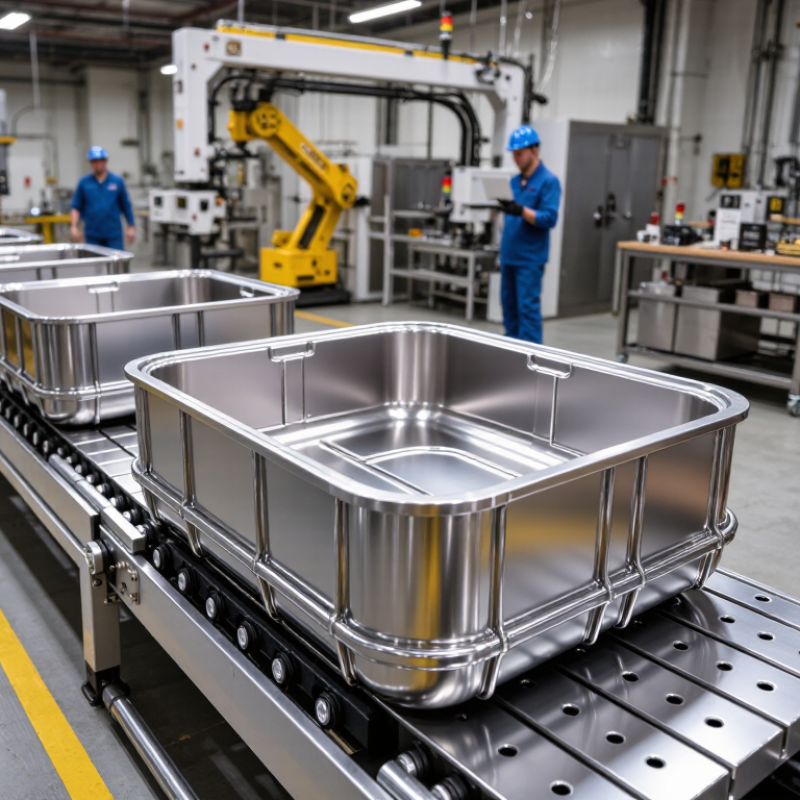
Choosing the China Best Dishwasher Tub Assembly Line Manufacturer requires more than comparing prices. The right partner should understand stainless steel forming, welding, polishing, leak testing, and production-line integration. A reliable Dishwasher Tub Assembly Line must support stable output while protecting dimensional accuracy and worker safety. Its performance appears in small details, such as smooth weld seams, clean drainage openings, and consistent tub depth.

Experience matters on the factory floor. An experienced manufacturer can identify deformation after deep drawing and adjust tooling before defects spread. The team should also provide layout planning, equipment testing, operator training, spare parts, and responsive technical support. Ask for documented project experience, production samples, inspection records, and clear acceptance standards. Do not rely only on polished brochures.

No supplier is perfect.

Even a capable factory may face delays during commissioning or require tooling revisions. That is why transparent communication and practical after-sales service deserve careful attention. Buyers should verify material compatibility, cycle time, automation level, energy consumption, and maintenance requirements before signing an agreement. Independent audits and customer references can strengthen confidence. A dependable manufacturer will explain limitations instead of making unrealistic promises.

This guide explores how to evaluate Chinese suppliers, compare technical capabilities, and reduce purchasing risks. It focuses on evidence, not marketing language. The best choice is not always the cheapest offer. It is the manufacturer that delivers repeatable quality, measurable efficiency, and support throughout the equipment’s working life.
China Best Dishwasher Tub Assembly Line Manufacturer?

Dishwasher Tub Assembly Lines: Purpose and Main Components

Dishwasher Tub Assembly Lines: Purpose and Main Components

A dishwasher tub assembly line turns formed stainless-steel or polymer panels into a rigid, leak-resistant enclosure. It typically combines panel feeding, forming, joining, sealing, inspection, and transfer stations. Fixtures hold each panel square while welders or fastening tools create repeatable joints. Sealant applicators then trace corners and seams, where small gaps can cause costly leaks. The tub moves onward for dimensional checks and integration with racks, insulation, and door components.

Automation can improve repeatability, but it cannot correct poor incoming panels or weak process control. The International Federation of Robotics reported 4.28 million industrial robots operating in factories worldwide in 2023. This figure describes broad manufacturing adoption, not dishwasher lines specifically. A practical line may use robotic handling, vision inspection, torque monitoring, and leak testing. However, excessive automation can make changeovers harder. Human operators still matter.

Tips: Check whether the line tracks weld quality, sealant volume, and tub dimensions at each critical station. Ask for cycle-time data from comparable production conditions. A fast line is not always a reliable one. Pilot runs often reveal awkward loading points and rework that a layout drawing misses.

Dishwasher Tub Assembly Lines: Purpose and Main Components

A tub assembly line transforms formed panels into a completed dishwasher tub. This chart counts representative production operations in each process group; it is a process overview, not a measure of factory output or performance.

Typical equipment includes presses or forming machines, joining stations, sealant application equipment, finishing tools, and inspection fixtures. Exact line layouts and operation counts vary with tub design and production requirements.

How Dishwasher Tub Assembly Lines Work

How Dishwasher Tub Assembly Lines Work

A dishwasher tub line turns flat steel or molded panels into a rigid, leak-resistant chamber. For stainless-steel designs, the process may include sheet feeding, blanking, forming, trimming, and edge joining. Fixtures hold panels square while operators or robots make repeatable seams. The International Stainless Steel Forum reported 58.4 million tonnes of global stainless-steel melt shop production in 2023, showing the scale of the material supply behind many products. That figure is not dishwasher-specific. It does, however, underline why stable material specifications matter.

After forming, the tub moves through cleaning and inspection, then joins the base, insulation, door, and circulation components. Cameras can check holes and edges; gauges verify key dimensions. A controlled water test can reveal leaks that visual checks miss. Production data should connect each tub to its material batch and inspection results. In practice, small alignment errors can still create rework. A line is not automatically consistent just because it is automated.

Tips: Track first-pass yield, leak-test failures, and changeover time together. Review defect photos with operators, not only dashboard totals. Keep sample tubs from each shift for comparison. Ask suppliers how they control sheet thickness and surface condition. Those details can affect forming, joining, and final fit.

Key Technologies Used in Tub Forming and Assembly

Key Technologies Used in Tub Forming and Assembly

A dishwasher tub starts as a flat sheet, often stainless steel, whose thickness and surface condition affect every later operation. Blanking equipment cuts the sheet to size, while deep-drawing presses shape it into a basin. Controlled pressure and suitable tooling help limit wrinkles and thinning around corners. Small changes in lubrication or sheet alignment can still leave visible marks.

Then come trimming, flange forming, and joining. Robotic welding or other validated joining methods connect panels, while fixtures hold edges in position. A poor fit can create gaps that complicate sealing. It happens. Automated measuring systems check key dimensions, and cameras can flag dents or uneven seams before the tub moves downstream. Leak testing adds a practical check: the assembly is pressurized or exposed to a controlled water test, depending on the process design. Sensors can record results for traceability, but they do not replace sound maintenance. Tool wear and calibration drift deserve regular attention. A clean-looking tub is not always a reliable one; inspection must focus on joints, geometry, and sealing surfaces. Manufacturers refine these settings over time, and some process choices still require careful trial runs.

China Best Dishwasher Tub Assembly Line Manufacturer? - Key Technologies Used in Tub Forming and Assembly

Line Stage Key Technology What It Controls Practical Verification Evaluation Consideration
Sheet preparation Coil or sheet feeding, straightening, and CNC laser cutting or blanking Blank dimensions, edge condition, and material traceability before forming Check material certificates, blank dimensions, burrs, and cut-edge condition Confirm the process supports the specified sheet material, thickness, and production volume.
Tub forming Multi-stage press forming or deep drawing with matched dies Tub geometry, corner radii, flange shape, and repeatability Measure critical dimensions and inspect for wrinkles, splits, and surface marks Review die design, press capacity, changeover method, and first-piece approval process.
Edge and flange finishing Trimming, hemming, and precision flange forming Edge profile, fit-up, and the interface for seals or adjoining panels Inspect flange dimensions, edge finish, and part-to-part fit Ask how tooling wear and dimensional variation are monitored during production.
Seam joining Resistance spot welding, seam welding, or another process selected for the tub design Joint strength, seam continuity, heat effects, and potential leak paths Use visual inspection and a suitable leak or joint test defined by the product design Check weld-fixture repeatability, process monitoring, and the response to failed tests.
Surface protection Material-specific cleaning, passivation, coating, or other approved surface treatment Corrosion resistance, cleanliness, and compatibility with detergents and operating conditions Verify treatment records and carry out the product-specific corrosion or surface checks Confirm that treatment requirements match the selected tub material and product specification.
Component assembly Dedicated fixtures, controlled fastening, and automated or guided component placement Positioning of seals, brackets, insulation, and other tub-related components Check component presence, orientation, fastening records, and assembly dimensions Evaluate error-proofing, traceability, and access for maintenance or line changeovers.
End-of-line inspection Dimensional checks, leak testing, and documented inspection plans Conformance of the completed tub assembly to drawing and product requirements Review test method, calibration records, results logging, and nonconformance handling Confirm that acceptance limits are defined by the product design and validated test method.
System and safety documentation Documented quality controls and applicable product-safety testing Consistency between manufacturing controls and the finished dishwasher requirements Review the applicable edition and scope of standards, such as IEC 60335-2-5 for dishwasher safety Standards applicability depends on the product, market, and conformity-assessment route.

Note: Tub materials, forming routes, joining methods, and inspection limits vary by dishwasher design. Compare suppliers using the same product drawings, material specifications, target capacity, and acceptance criteria; the table is a technical evaluation guide, not a manufacturer ranking.

How to Evaluate Chinese Dishwasher Tub Assembly Line Manufacturers

Evaluating a Chinese dishwasher tub assembly line manufacturer requires more than comparing quotations. Start with engineering experience. Ask how the supplier forms stainless steel tubs, controls welding distortion, and manages different tub sizes. A capable manufacturer should provide layout drawings, cycle-time data, utility requirements, and a clear equipment list. Vague answers deserve attention.

Visit the factory if possible. Watch a sample tub move from sheet loading to forming, welding, leak testing, and final inspection. Check the welding fixtures closely. They should feel rigid, clean, and adjustable. Request records for dimensional checks, weld inspections, and pressure tests. Traceability matters. Each critical component should have a documented source and inspection result.

After-sales support often reveals real competence. Confirm response times, spare-parts availability, remote troubleshooting, and technician training. Ask for references from comparable production projects, not unrelated machinery. A factory acceptance test should use your drawings and agreed samples. Small details matter.

No supplier is flawless. A manufacturer may offer strong automation but weak documentation. Another may provide excellent service but lack experience with complex tub geometries. I have seen promising lines lose time because drain openings were positioned incorrectly. That mistake was avoidable. Review tolerances, safety controls, software access, and maintenance space before signing. A reliable partner welcomes difficult questions and records every technical change.

Choosing a Manufacturer for Production and Service Needs

Choosing a dishwasher tub assembly line manufacturer requires more than comparing machine prices. Grand View Research estimated the global dishwasher market at about USD 7.4 billion in 2023. Its projected growth increases pressure for stable output and faster service. A reliable supplier should explain welding accuracy, leak testing, cycle time, and material traceability. Ask for documented factory acceptance tests, not attractive demonstrations alone. Request sample records from a complete tub assembly line.

Production data matters. The International Organization for Standardization reported 1,265,216 valid ISO 9001 certificates worldwide in its 2022 survey. Certification shows process discipline, but it does not guarantee suitable equipment. Check how the manufacturer controls design changes, replacement parts, software updates, and operator training. Service response should include named contacts, remote diagnostics, and a realistic on-site repair schedule. I would also inspect a running installation. A polished showroom can hide weak maintenance planning.

Tips: Compare total ownership cost, not only the quotation. Require spare-part lists, training hours, warranty limits, and acceptance criteria in writing. Verify that the line handles your actual stainless-steel thickness and forming tolerances. Also, ask for production records from comparable projects. One overlooked detail is often the compressed-air requirement. It may affect your factory more than expected. A lower price can become expensive when support is slow.

Request a Quote

To learn more about any of the products and services provided by Abbott Ball Company, Inc., simply complete the form below.