
China has become a central manufacturing base for battery pack buyers worldwide. The scale is difficult to ignore. The International Energy Agency reported that global electric vehicle battery demand approached 750 GWh in 2023, rising by about 40% in one year. China supplied more than half of the world’s electric cars and remained deeply integrated across battery materials, cells, modules, and pack assembly.
Cost pressure is also reshaping procurement decisions. BloombergNEF’s 2024 Battery Price Survey placed the average lithium-ion battery pack price at approximately $115 per kWh. Chinese pack producers often benefit from dense supplier networks, automated production lines, and strong experience with LFP chemistry. These advantages can shorten development cycles. They do not remove quality risks.
“The battery is the heart of an electric vehicle,” battery scientist Dr. Shirley Meng has emphasized. Her point matters to global buyers. A battery pack is not merely a box of cells. It includes thermal control, busbars, enclosure design, software, protection circuits, and traceable testing. Look closely. Small design choices affect safety and service life.
This guide examines China’s leading battery pack manufacturers from a buyer’s perspective. It considers production capability, chemistry, customization, certifications, testing, and export experience. Factory size alone is not enough. A polished showroom can hide weak documentation. Even supplier rankings have limits, because capacity figures may reflect planned production rather than shipped products. Buyers should request recent test reports, sample packs, warranty terms, and clear cell traceability before signing a contract. The strongest supplier is not always the cheapest. It is the one that performs consistently after delivery.
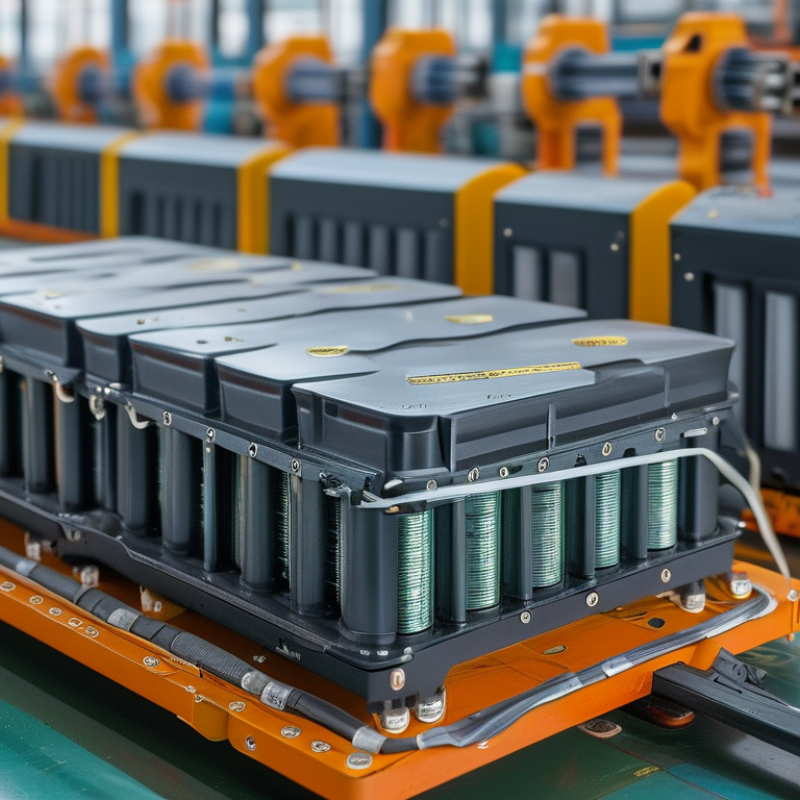
China’s battery pack industry is scaling around a powerful demand signal.
The IEA reported about 750 GWh of electric vehicle battery demand in 2023. That volume is changing how global buyers assess Chinese suppliers. Capacity alone is not enough. Buyers should examine cell traceability, thermal management, welding consistency, and production testing. A reliable factory can explain its process with records, not only polished samples.
In supplier evaluations, I look for clear evidence at each stage. Incoming cells should have batch information and electrical test results. Pack assembly should include insulation checks, torque controls, and end-of-line testing. Software protection matters too. It should monitor temperature, voltage balance, and abnormal current behavior. Certifications such as ISO 9001, UN 38.3, and IEC 62619 may support safer international procurement, depending on the product and destination market.
The numbers can mislead.
A large production line does not automatically deliver stable quality. Some suppliers still depend too heavily on manual inspection, which creates uneven results across shifts. Buyers should request sample test data, factory audit access, warranty terms, and documented corrective actions. I have found that honest suppliers discuss failure risks openly. That conversation may feel less impressive, but it often reveals stronger engineering discipline. Shipping schedules, after-sales support, and spare-part planning also deserve attention before signing a purchase agreement.
China’s leading battery pack manufacturers serve different global needs. One focuses on large-scale electric vehicle platforms and integrated cell-to-pack designs. Another combines battery production with vehicle engineering, improving system matching. A third is known for flexible lithium battery solutions across storage, mobility, and commercial equipment. The fourth emphasizes cost-efficient packs, safety testing, and expanding international production capacity.
In practical procurement, pack quality depends on more than energy density. Buyers should examine thermal management, enclosure strength, battery management software, and traceable cell sourcing. Ask for test records covering vibration, overcharge protection, water resistance, and temperature cycling. Factory audits also reveal details that brochures often miss. For example, inspect connector sealing and cable routing. Small faults can become expensive delays. Some performance claims may look impressive, but real-world data can be incomplete. That deserves careful questioning.
Tips: Compare complete pack performance, not only cell price. Request samples before signing large orders. Check warranty terms, spare-part support, communication speed, and local service plans. Confirm that charging interfaces match your equipment. A technically strong supplier may still struggle with documentation or after-sales response. Keep those risks visible.
For global buyers, battery chemistry often matters more than factory location. Lithium iron phosphate (LFP) cells usually provide 90–160 Wh/kg at cell level. Nickel manganese cobalt (NMC) cells commonly reach 150–250 Wh/kg, according to technical ranges reported by the International Energy Agency and the U.S. Department of Energy.
That gap changes vehicle design. A 60 kWh LFP pack may need more weight and space than an equivalent NMC pack. However, LFP chemistry generally offers stronger thermal stability and longer service life. Under controlled laboratory conditions, LFP cells can exceed 2,000–4,000 cycles. NMC cells often deliver about 1,000–2,000 cycles. Real results depend on charging speed, temperature, depth of discharge, and battery management settings.
Use case decides the better option. NMC can suit long-range vehicles, premium equipment, and weight-sensitive applications. LFP fits fleet vehicles, energy storage, and daily charging routines. It is usually less dependent on nickel and cobalt markets. The IEA’s Global EV Outlook 2024 also notes LFP’s growing share in electric vehicle batteries, supported by lower material costs. BloombergNEF reported an average lithium-ion pack price of 115 dollars per kWh in 2024, though chemistry, region, and order volume change the figure. Laboratory data can mislead. A supplier should provide cycle-test conditions, not only a headline number. Even then, results may not match a hot warehouse or an overloaded vehicle.
Battery pack prices reached an average of $139 per kWh in 2023, according to BNEF. This benchmark helps global buyers compare supplier quotations more realistically. A 100 kWh pack, for example, implies an average reference cost near $13,900 before shipping, taxes, integration, and support. The figure is useful, but it is not a universal invoice price.
BUYER CHECKLIST Experienced buyers examine the chemistry, usable capacity, cooling design, enclosure material, and battery management system. They also check production volume and warranty conditions. A low quotation may exclude testing, certification, spare modules, or software updates. Those omissions can distort the real cost. Ask for a line-by-line quotation.
Regional labor costs and raw material prices can move the final figure sharply. Pack assembly location also affects logistics, inspection, and after-sales response. Reliable manufacturers should provide traceable test records, clear quality procedures, and realistic delivery schedules. Buyers should request samples before committing to large orders. Small details matter.
The $139 per kWh benchmark reflects an industry average, not a guaranteed target. Custom packs often cost more. That is reasonable when safety controls, harsh-weather performance, or longer service life are required. However, I would question any supplier promising an unusually low price without technical evidence. Cost comparisons remain imperfect when suppliers measure capacity differently.
Global buyers should treat compliance as a purchasing requirement, not a brochure claim. UN 38.3 testing confirms that lithium battery shipments withstand transport-related hazards, including vibration, impact, and temperature changes. Ask for the test summary, model number, cell configuration, and revision date. A missing match can delay customs clearance.
IEC 62133-2 addresses safety for portable sealed secondary lithium batteries. It examines risks such as overcharge, external short circuit, and mechanical stress. ISO 9001 shows that a manufacturer operates a documented quality system. It does not prove that every battery pack is safe. The ISO Survey 2023 recorded more than 1.2 million ISO 9001 certificates worldwide, so certification alone cannot separate strong suppliers from weak ones.
The International Energy Agency reported that global electric vehicle battery demand exceeded 750 GWh in 2023, rising about 40%. This rapid growth increases pressure on production controls. Warranty terms should state the coverage period, cycle limit, usable capacity, repair process, and exclusions. Twelve months may be inadequate for industrial use. Thirty-six months sounds better, but only if capacity testing is defined. A practical clause might require 80% retained capacity after an agreed cycle count. Details matter. Buyers should also request sample inspection records, traceability codes, and corrective-action reports. One uncomfortable lesson remains: polished certificates can hide inconsistent assembly, and even careful buyers may overlook it.
To learn more about any of the products and services provided by Abbott Ball Company, Inc., simply complete the form below.