
Choosing the best Pto Chipper Shredder begins with the material you actually process. Fresh branches, dry limbs, vines, and wet leaves behave differently inside the machine. A model that handles small garden branches may struggle with hardwood logs. That difference matters.
Forestry equipment specialist Dr. Brian K. Via offers a practical reminder: “Choose the machine for your toughest regular job, not your easiest occasional task.” This principle keeps the decision grounded. It also prevents buyers from trusting impressive horsepower figures alone. PTO speed, tractor horsepower, feed-opening size, rotor design, blade access, and discharge control deserve equal attention.
Start with your tractor. Check its rated PTO horsepower and shaft compatibility. Then measure the largest branch you expect to process. Imagine feeding it on a rainy afternoon, with mud around the tires and a full trailer waiting nearby. Would the machine remain stable and easy to clear?
Safety features should never become an afterthought. Look for guarded belts, accessible emergency controls, balanced components, and clear maintenance instructions. Operator comfort matters too. A difficult hopper can turn a productive morning into a frustrating one.
There is no perfect machine.
A compact Pto Chipper Shredder may be economical, but limited capacity can slow demanding work. A heavier model may perform better, yet require more tractor power, storage space, and maintenance. Buyers sometimes focus too much on price. That is understandable, but incomplete.
This guide compares practical specifications, operating conditions, maintenance needs, and long-term value. It also questions common assumptions. The strongest choice is not always the biggest one. It is the machine that fits your tractor, workload, property, and experience with dependable consistency.
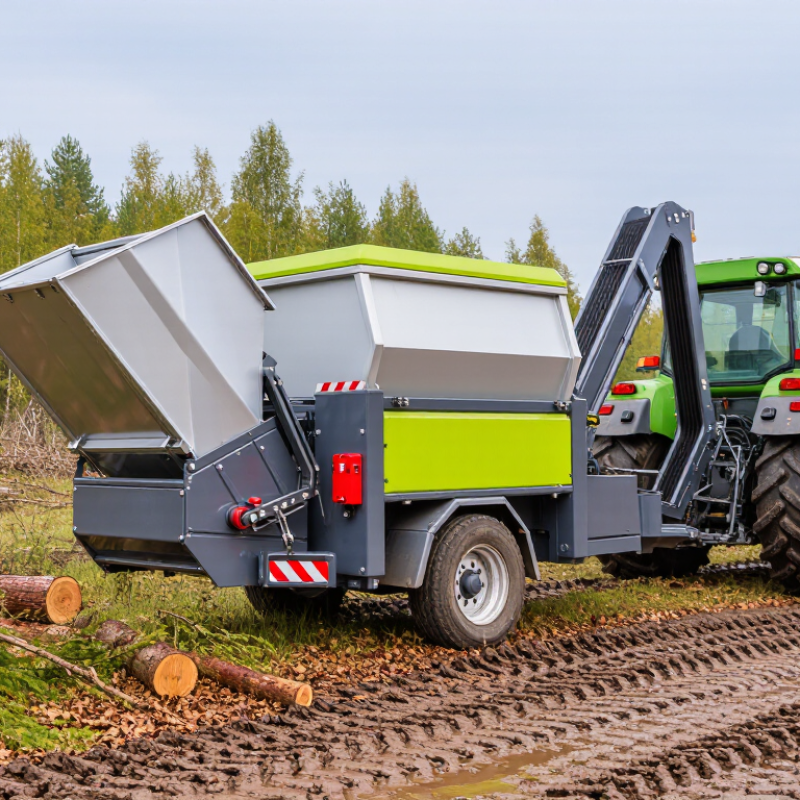
Choosing the best PTO chipper shredder starts with the material, not the advertised horsepower. A disc chipper uses rotating knives and suits straight branches with consistent diameter. A drum chipper accepts heavier, irregular wood and usually handles continuous feeding well. Hammer or flail shredders reduce brush, leaves, and small limbs into a rougher mulch. Each type performs a different job.
The FAO Global Forest Resources Assessment 2020 records about 4.06 billion hectares of global forest. That scale highlights the wide variation in available wood. The USDA Forest Products Laboratory’s Wood Handbook, 2021, reports large differences in wood density among species, roughly from 0.25 to 0.90 specific gravity. Dry branches, wet brush, and hardwood logs will not behave alike. A clean specification sheet can still mislead.
Check the tractor’s PTO speed, hydraulic flow, and usable power before choosing a machine. Most agricultural PTO systems operate at 540 or 1,000 revolutions per minute. Match the chipper’s required speed exactly. An oversized flywheel can improve cutting momentum, while hydraulic feed rollers reduce manual pushing. I would not trust horsepower alone. Feed opening size, rotor balance, discharge height, and knife access matter during real work. PTO shields, emergency controls, and stable hitch geometry also deserve inspection. Small oversights become expensive quickly.
| PTO Chipper Shredder Type | Typical Tractor PTO Range | Typical Maximum Infeed Diameter | Main Cutting System | Primary Function | Best-Suited Material | Key Advantages | Important Considerations |
|---|---|---|---|---|---|---|---|
| Disc Chipper | Approximately 25–100 PTO hp | About 6–12 in (15–30 cm), depending on model | One or more knives mounted on a rotating disc | Converts branches and small logs into relatively uniform wood chips | Fresh branches, straight limbs, and small-to-medium logs | High throughput; produces consistent chips; well suited to continuous chipping work | Usually requires a powerful tractor and regular knife adjustment or sharpening; less suitable for highly irregular brush |
| Drum Chipper | Approximately 25–100 PTO hp | About 6–12 in (15–30 cm), depending on model | Knives fitted to a rotating cylindrical drum | Feeds and chips branches, limbs, and woody debris with strong cutting momentum | Mixed branches, larger limbs, and material requiring aggressive feeding | Strong self-feeding performance; handles dense woody material effectively; suitable for demanding workloads | Can draw substantial tractor power; heavier rotating components may increase machine weight and transport requirements |
| Flywheel Chipper | Approximately 15–60 PTO hp | About 3–8 in (8–20 cm), depending on model | Knives mounted on a high-speed flywheel | Produces chips from smaller branches and general tree-pruning waste | Green branches, pruning material, and light woody debris | Compact design; comparatively efficient for small farms, orchards, and property maintenance | Capacity is generally lower than that of larger disc or drum machines; oversized or crooked material may require pre-cutting |
| Chipper-Shredder Combination | Approximately 20–70 PTO hp | Chipping inlet commonly about 3–8 in (8–20 cm) | Separate or combined knives, hammers, flails, or shredding screens | Chips woody branches and reduces leaves, brush, crop residue, and lighter organic waste | Branches, leaves, vines, garden waste, and mixed green material | More versatile than a dedicated chipper; can create smaller shredded material suitable for composting or mulch | Shredding capacity and particle size depend on screen design; wet or stringy material may reduce flow and increase clogging |
| Hammer-Mill PTO Shredder | Approximately 20–60 PTO hp | Usually up to about 2–4 in (5–10 cm) for woody material | Free-swinging hammers rotating inside a housing, often used with screens | Breaks down brush, leaves, stalks, and small branches into smaller particles | Green waste, crop residue, leaves, light brush, and small-diameter branches | Produces relatively fine material; useful for composting, ground cover, and residue management | Not normally the best choice for large logs; particle size depends on screen openings, hammer condition, and material moisture |
| Heavy-Duty Forestry PTO Chipper | Approximately 50–150+ PTO hp | About 8–16 in (20–40 cm), depending on model | Large disc or drum rotor with industrial-grade knives and feed rollers | Processes large volumes of logs, branches, and forestry residue | Timber thinning waste, large limbs, logging residue, and storm debris | Very high capacity; designed for extended use and demanding material-handling conditions | Requires a suitably rated tractor, secure three-point or drawbar setup, adequate hydraulic capacity, and careful transport planning |
| Compact Orchard or Vineyard PTO Chipper | Approximately 15–40 PTO hp | About 2–6 in (5–15 cm), depending on model | Compact flywheel, disc, or small drum with manual or hydraulic feeding | Processes prunings directly after orchard, vineyard, or landscape maintenance | Fruit-tree prunings, grapevines, hedge trimmings, and small branches | Compact dimensions; easier to maneuver between rows; useful for returning chipped prunings to the soil | Limited by smaller infeed capacity; tangled vines and long flexible branches may need controlled feeding |
| High-Discharge PTO Chipper | Approximately 30–100 PTO hp | About 4–12 in (10–30 cm), depending on model | Disc or drum rotor with an adjustable discharge chute | Throws chips into a trailer, truck, windrow, or designated storage area | Branches and logs where chip placement or collection is important | Reduces manual handling; adjustable chute direction can improve loading efficiency and site cleanliness | Requires sufficient clearance around the discharge area; chip projection distance varies with rotor speed, material, and chute design |
| Low-Speed Mulching PTO Unit | Approximately 30–100 PTO hp | Typically up to about 2–6 in (5–15 cm) for woody brush | Flails, hammers, or fixed cutting tools on a horizontal or vertical rotor | Mulches brush and vegetation close to the ground rather than producing clean, uniform chips | Scrub, roadside vegetation, pasture encroachment, and light-to-medium brush | Useful for vegetation management; can leave material distributed across the work area | Not a direct substitute for a chipper when transportable wood chips are required; ground contact and debris can accelerate wear |
| Selection note: Choose the machine by matching the tractor’s usable PTO horsepower, PTO speed, hydraulic capacity, three-point hitch category, intended material, required chip size, and maximum branch diameter. The ranges shown are typical industry ranges and can vary substantially by machine configuration. | |||||||