
MON - FRI 8AM - 5PM

How to Choose the Right Cardboard Baler in 2026?

Choosing the right cardboard baler in 2026 requires more than comparing prices and motor power. Cardboard Balers now serve retail stores, warehouses, factories, and recycling centers with very different needs. A compact vertical model may suit a small stockroom. A high-capacity horizontal machine may better support a busy distribution facility.

The right choice begins with real operating conditions. Measure daily cardboard volume, available floor space, bale weight, loading height, and power access. Watch how employees handle boxes during peak hours. A baler that looks efficient on paper may slow production if its chamber is too small. That detail is often overlooked.

Safety and service matter equally. Look for guarded moving parts, clear operating controls, emergency stops, and accessible maintenance points. Reliable manufacturers should provide performance data, training guidance, warranty terms, and replacement-part support. Ask how the machine handles wet, mixed, or oversized cardboard. Marketing claims can sound impressive, but practical evidence matters more.

Do not chase maximum capacity automatically. Bigger is not always better. An oversized baler can waste space, energy, and capital when material volumes remain low. On the other hand, an undersized unit may create labor bottlenecks and frequent tying cycles. This guide compares bale density, throughput, automation, installation needs, operating costs, and long-term reliability. It also recognizes an uncomfortable truth: no single machine fits every workplace. Careful measurement, honest staff feedback, and a realistic maintenance plan usually produce better results than confident guesses.
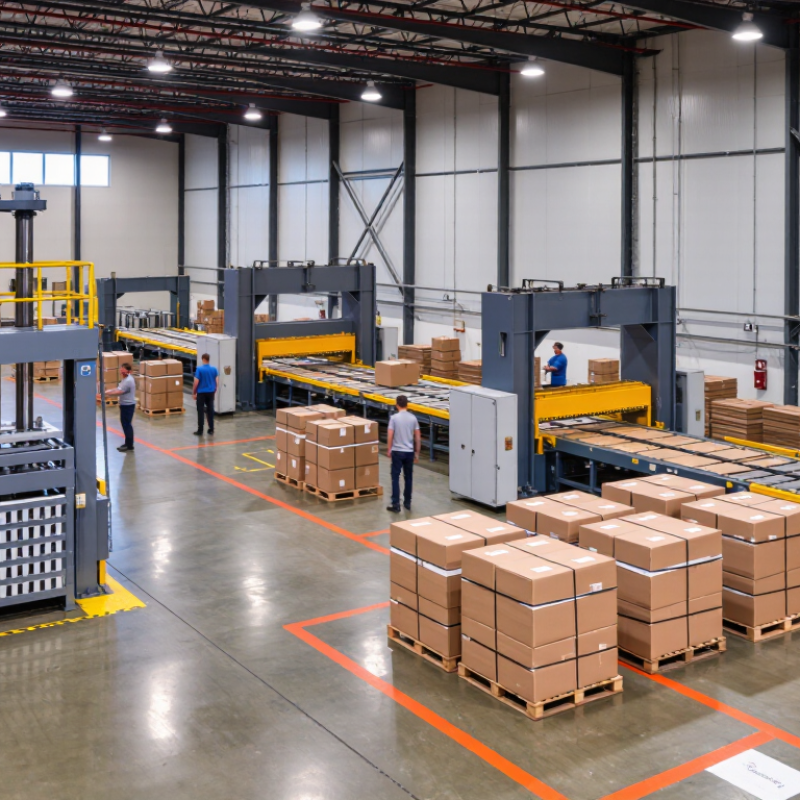
How to Choose the Right Cardboard Baler in 2026?

Define Your Cardboard Waste Volume and Baling Requirements

How to Choose the Right Cardboard Baler in 2026?

Define Your Cardboard Waste Volume and Baling Requirements

Start with measured waste, not guesswork. Record cardboard volume for at least seven working days. Include delivery peaks, seasonal promotions, and damaged cartons. A small warehouse may fill two 1,100-litre bins daily. A distribution site may exceed ten.

The U.S. EPA reported 67.4 million tons of paper and paperboard waste in 2018. About 46 million tons were recycled. The American Forest & Paper Association reported a 69% recycling rate for corrugated containers in 2023. These figures show the material’s scale. They do not define your site’s needs.

Weigh several full bins.

Volume alone can mislead. Wet cardboard weighs more and forms poor bales. Remove plastic film, food residue, and other contaminants before testing. Then estimate weekly tonnage and your preferred collection frequency. A site storing bales for seven days needs more floor space than one receiving daily pickup.

Choose a baler based on peak volume, not average volume. Check the required bale weight, chamber size, feeding height, and available power. A vertical baler may suit limited floor space. A horizontal system may better fit continuous, high-volume operations. Yet assumptions fail. Recheck your measurements after installation, especially during busy months.

Compare Baler Types, Sizes, and Operating Methods

Choosing a cardboard baler in 2026 starts with your actual waste stream, not the largest machine available. I have seen small warehouses overspend on equipment that sits idle most afternoons. Measure cardboard volume for at least one busy week. Record bale sizes, loading frequency, and available floor space.

Vertical balers suit shops, offices, and compact warehouses. They usually require manual loading and produce manageable bales for regular collection. Horizontal balers handle higher volumes and support faster feeding, but they need more room and stronger electrical service. For mixed operations, a semi-automatic model may balance labor and throughput. Fully automatic systems reduce handling, although they demand careful setup and scheduled maintenance.

Size should match both storage capacity and collection schedules. A small bale may be easier to move, while a dense bale can lower transport frequency. Check the chamber dimensions, pressing force, wire or strap method, and finished bale weight. Moist cardboard can reduce compression and create unstable bales. Keep the feed opening clear, train operators on lockout procedures, and inspect hydraulic lines regularly. I misjudged the volume. A simple measurement log would have prevented that mistake. Ask the supplier for tested cycle times, service requirements, and realistic output under your material conditions. Advertised capacity can differ sharply from daily performance.

How to Choose the Right Cardboard Baler in 2026? – Compare Baler Types, Sizes, and Operating Methods

Use this comparison to match a cardboard baler with your material volume, available space, labor model, and desired bale size. The figures below are typical industry ranges for clean, dry corrugated cardboard and should be confirmed against the equipment manufacturer’s technical specification.

Cardboard Baler Comparison Guide
Baler Type Typical Press Force Typical Bale Size Typical Bale Weight Approximate Throughput Operating Method Typical Power Requirement Space and Installation Needs Best Suited For Main Advantages Key Limitations
Vertical Small-Channel Baler 4–10 tonnes Approximately 700 × 500 × 800 mm 30–80 kg Approximately 0.5–2 tonnes per day Manual loading; the operator closes the chamber and starts a compaction cycle. Tying is usually manual. Approximately 1.5–4 kW, usually single-phase or three-phase depending on the model Compact footprint; generally suitable for indoor use near a cardboard collection point. Requires a level floor and overhead clearance for loading. Low purchase cost, simple installation, small footprint, and straightforward operation Lower throughput; operators must load material and tie or remove bales more frequently
Vertical Medium-Duty Baler 10–30 tonnes Approximately 800 × 600 × 1,000 mm 80–180 kg Approximately 2–6 tonnes per day Manual or semi-automatic loading; hydraulic compaction is controlled by push buttons or a basic control panel. Approximately 3–7.5 kW, typically three-phase Moderate floor area; requires access for pallet handling and sufficient working space around the chamber. Good balance between bale density, operating cost, and space efficiency Requires more labor than fully automatic equipment and may not suit continuous high-volume streams
Vertical Heavy-Duty Baler 30–60 tonnes Approximately 1,100 × 700 × 1,200 mm 150–350 kg Approximately 5–12 tonnes per day Manual loading with hydraulic compression; bale tying is commonly performed by an operator after the compression cycle. Approximately 5.5–15 kW, usually three-phase Needs a reinforced, level floor and wider access routes for moving heavier bales with a pallet truck or forklift. Produces dense, valuable bales while requiring less floor space than many horizontal systems Higher equipment cost, heavier bale handling, and greater electrical and floor-load requirements
Horizontal Semi-Automatic Baler 40–100 tonnes Approximately 1,100 × 700 × 900 mm 200–450 kg Approximately 10–25 tonnes per day Cardboard is loaded manually or by conveyor. The machine compresses the material, while operators usually tie the bale with wire or plastic strapping. Approximately 11–30 kW, typically three-phase Requires a longer installation area, material infeed space, bale discharge space, and safe access for tying and removal. Higher capacity and larger bales than vertical balers; suitable for regular production volumes Needs more space and labor coordination; manual tying can limit continuous operation
Horizontal Fully Automatic Baler 80–150 tonnes Approximately 1,100 × 750 × 1,100 mm 350–650 kg Approximately 20–50 tonnes per day Conveyors feed the chamber, and the machine can automatically compress, tie, cut, and eject bales with limited operator intervention. Approximately 30–75 kW, typically three-phase Requires substantial floor space, conveyors, safety guarding, electrical capacity, and planned vehicle access for bale removal. High throughput, consistent bale dimensions, reduced manual handling, and efficient labor use Highest capital cost, more complex maintenance, and less economical for irregular or low-volume cardboard streams
Closed-End Horizontal Baler 80–200 tonnes Approximately 1,100 × 750 × 1,100 mm 400–700 kg Approximately 25–60 tonnes per day Material is compacted inside a closed chamber. Loading may be conveyor-based, and tying can be semi-automatic or automatic depending on the configuration. Approximately 30–90 kW, typically three-phase Requires a long, fixed installation with a strong floor, guarded infeed, service access, and forklift or conveyor access at the discharge end. High bale density, stable bale shape, and efficient transport utilization Complex installation and maintenance; generally unsuitable where cardboard volume changes significantly during the day
Mobile or Trailer-Mounted Baler 20–80 tonnes Varies by configuration; commonly 1,000–1,200 mm wide and 700–1,100 mm high 150–500 kg Approximately 5–20 tonnes per day Material is loaded at different collection locations; hydraulic controls operate the compaction cycle, with manual or automatic tying depending on the model. Approximately 7.5–30 kW, or powered by an engine-driven hydraulic system Needs a stable outdoor or indoor standing area, vehicle clearance, and suitable connection to electrical or hydraulic power. Flexible deployment and reduced need for permanent installation Usually lower automation and throughput than fixed horizontal systems; transport and site stability must be considered
Selection notes: Choose capacity based on the highest normal daily cardboard volume rather than the average volume. Allow additional space for loading, bale tying, bale storage, ventilation, maintenance, and safe pedestrian movement. Bale weights depend on cardboard moisture, material composition, compression settings, and the operator’s loading method. Always verify electrical requirements, safety interlocks, guarding, noise levels, floor loading, and local workplace regulations before purchase or installation.

Evaluate Bale Density, Dimensions, and Material Compatibility

How to Choose the Right Cardboard Baler in 2026?

Choosing a cardboard baler starts with the bale, not the machine’s advertised speed. Dense bales reduce storage volume and transport frequency. However, excessive pressure can crush cartons unevenly or overload handling equipment. In daily recycling operations, a stable bale is usually more useful than the heaviest possible bale. Ask for measured density under your actual cardboard mix, not laboratory samples.

Dimensions matter on the warehouse floor. Check door widths, pallet sizes, truck loading space, and storage rack clearance. A narrow bale may fit tight areas, while a wider bale can improve stacking stability. Confirm bale weight too. One operator may move a 40-kilogram bale comfortably, while another needs mechanical assistance. I have seen plans fail because the baler fitted the room, but the finished bales did not fit the truck.

Tips: Test several cardboard grades before purchasing. Include corrugated sheets, flattened boxes, and printed cartons. Check whether the chamber accepts your largest pieces without excessive cutting. Avoid feeding wet, heavily contaminated, or unsuitable materials. Record bale density, dimensions, cycle time, and operator effort during the trial. The first test may look promising, yet repeated trials often reveal loose edges, shifting layers, or inconsistent weights. That inconvenient evidence deserves attention.

Check Safety Features, Energy Use, Maintenance, and Space Needs

Choosing a cardboard baler in 2026 requires more than comparing pressing force or purchase price. Safety features deserve close attention. Look for guarded chambers, emergency stops, door interlocks, and clear control panels. Operators should not reach into moving parts during a jam. A visible pressure gauge also helps staff notice abnormal cycles early. Small details prevent serious mistakes.

Energy use affects both operating costs and workplace planning. Ask for power consumption per cycle, standby demand, and motor efficiency data. A baler that runs briefly but often may consume more energy than expected. Record several days of usage before deciding. Real measurements are better than sales estimates. Still, energy figures can be difficult to compare between models.

Maintenance needs should match your team’s skills. Easy access to filters, belts, and hydraulic connections reduces service delays. Check whether lubrication points are clearly marked. Keep a small inspection log near the machine. It can reveal leaks, unusual noise, or slower compression. I have seen teams overlook maintenance because the baler still worked. That decision became expensive later. Space planning also matters. Measure ceiling height, loading paths, bale storage, and operator clearance. Leave room for maintenance, not only daily operation. A compact machine may fit the floor but block a doorway. That is an easy mistake to miss.

How to Choose the Right Cardboard Baler in 2026?

Compare typical planning values for bale size, connected power, floor space, and recommended service intervals before selecting a cardboard baler.

Representative mid-range values from commonly used vertical, semi-automatic horizontal, and fully automatic horizontal balers. Safety should be treated as a pass/fail requirement: verify guarded moving parts, emergency stops, door interlocks, safe loading access, and conformity with applicable local standards. Lower power and smaller floor space can reduce operating costs, while longer service intervals may reduce maintenance downtime. Confirm final specifications with the equipment supplier.

Assess Total Cost, Supplier Support, and Long-Term Value

How to Choose the Right Cardboard Baler in 2026?

Choosing the right cardboard baler in 2026 requires more than comparing purchase prices. In warehouse assessments, I have seen low-cost machines create expensive delays through frequent wire changes and slow cycle times. Estimate the full five-year cost before signing. Include delivery, installation, electrical work, operator training, maintenance visits, consumables, energy, and downtime. Ask for a written cost model. Hidden costs matter.

Supplier support often determines whether equipment remains productive. Check response times, technician coverage, spare-parts availability, and training materials. Request references from facilities with similar bale volumes. Speak with an operator, not only a salesperson. Ask how quickly a jam is diagnosed and which parts commonly fail. A reliable supplier explains limitations clearly. That honesty matters. I once accepted optimistic service promises without checking local coverage. The machine worked, but waiting several days for a minor sensor delayed shipments.

Consider long-term value through measurable output. Compare bale density, throughput, power use, noise, floor space, and cleaning access. A smaller footprint may protect valuable aisle space, while poor compaction can increase haulage charges. Require a practical demonstration using your own cardboard mix. Measure cycle time and bale weight. Leave room for growth. Bigger is not always better. Overcapacity can raise costs without improving daily performance. Review warranty exclusions, upgrade options, and end-of-life recycling arrangements. Put every promise in writing.

Request a Quote

To learn more about any of the products and services provided by Abbott Ball Company, Inc., simply complete the form below.