How to Identify AISI 304 Stainless Steel Properties and Uses?
AISI 304 stainless steel stands out in various industries due to its excellent corrosion resistance and durability. According to industry reports, it is one of the most widely used stainless steels globally. Its applications range from kitchen equipment to automotive components, showcasing its versatility.
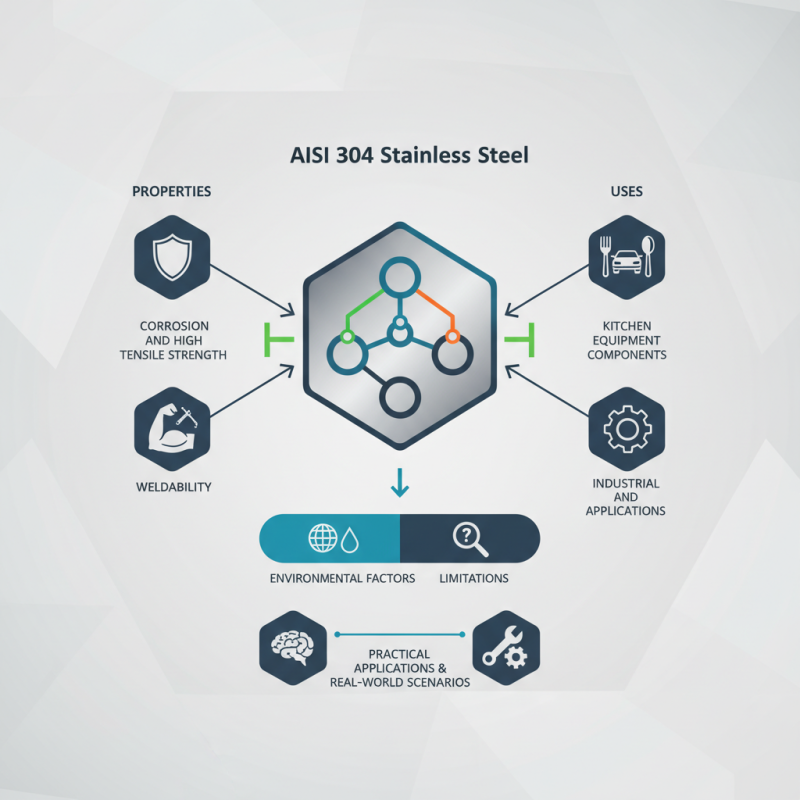
Dr. Emily Chen, an expert at the Stainless Steel Institute, emphasizes, “Understanding AISI 304 is crucial for selecting the right material for any project.” This statement underscores the importance of identifying the right properties of AISI 304 stainless steel. Features like high tensile strength and weldability make it a preferred choice, yet many still underestimate its potential.
However, there are overlooked aspects. Users must consider specific environmental factors that can affect performance. The right choice depends on a clear understanding of the material’s limitations. Identifying these properties is not just about technical data; it’s also about practical applications and real-world scenarios.
Understanding AISI 304 Stainless Steel: Composition and Characteristics
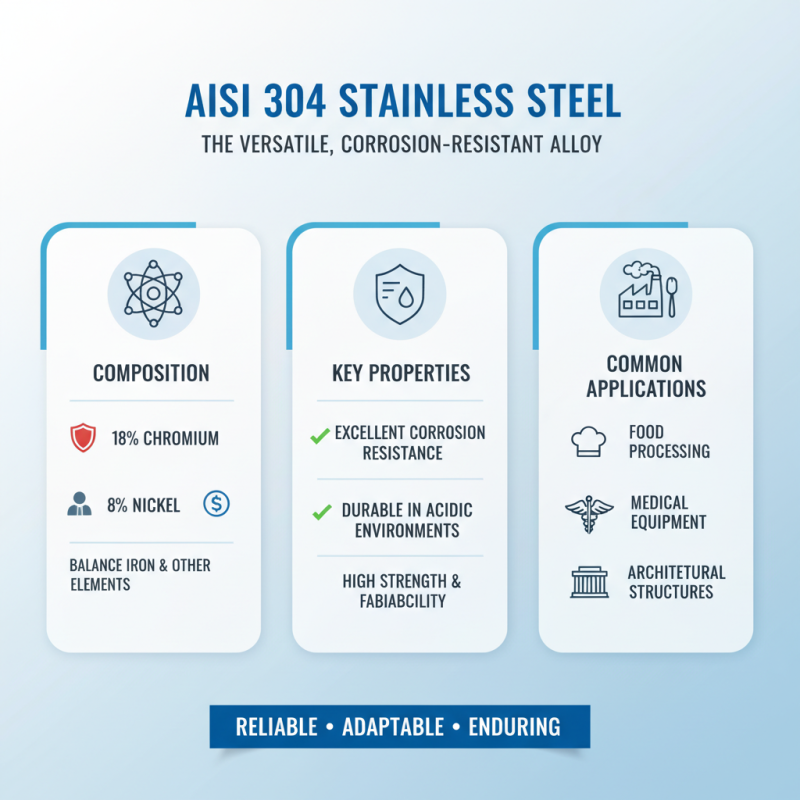
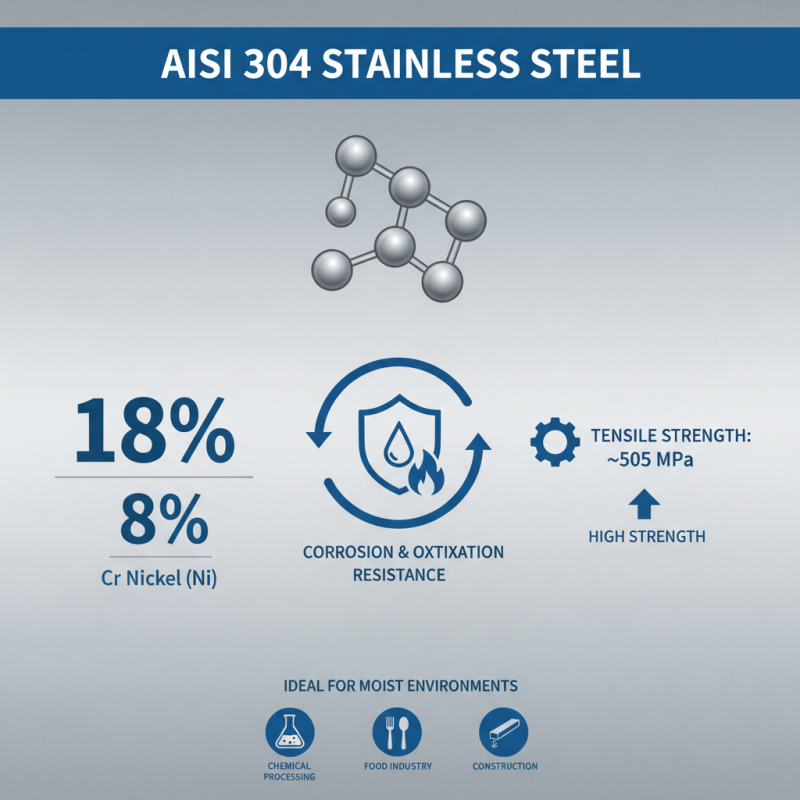
AISI 304 stainless steel is widely recognized for its excellent corrosion resistance and versatility. It contains approximately 18% chromium and 8% nickel. This composition grants it remarkable durability in various environments, especially in acidic conditions. These properties make it suitable for applications in food processing, medical equipment, and architectural structures.
However, while AISI 304 stainless steel is robust, it can still suffer from pitting corrosion in chloride-rich environments. This risk highlights the need for careful selection in marine applications. Data from industry reports indicate that over 60% of corrosion failures could be linked to improper material choice. Testing and evaluating environments is essential to avoid costly failures.
The mechanical properties of AISI 304 are also noteworthy. It has a tensile strength of around 505 MPa and yields strength of about 215 MPa. Despite its strength, it is still relatively ductile, making it easy to work with. Yet, the balance of toughness and strength might not always meet the requirements of high-stress applications. Close attention should be paid to specific use cases to ensure optimal performance.
Key Mechanical Properties of AISI 304 Stainless Steel Explained
AISI 304 stainless steel is a type of stainless steel known for its remarkable properties. It is primarily composed of 18% chromium and 8% nickel. This composition gives it great resistance to corrosion and oxidation. According to industry standards, its mechanical properties include a tensile strength of around 505 MPa. This high strength makes AISI 304 suitable for various applications, especially in environments exposed to moisture.
Additionally, AISI 304 exhibits a yield strength of about 215 MPa. This property allows it to withstand substantial loads without permanent deformation. Its elongation percentage is about 40%, which indicates good ductility. This means it can be formed into various shapes without breaking. Such details make it ideal for industries like food processing and construction. However, it's essential to be cautious. Although AISI 304 is durable, its resistance to chloride solutions is limited. Thus, it can corrode in specific aggressive environments.
In terms of temperature resistance, AISI 304 performs well up to about 870°C in intermittent service. However, continuous exposure over 425-860 °C may lead to carbide precipitation. This can weaken the material over time. Each application demands careful consideration of these factors. Proper understanding of the mechanical properties of AISI 304 helps ensure effective use in real-world situations.
Common Applications of AISI 304 Stainless Steel in Various Industries
AISI 304 stainless steel is widely used across various industries. Its corrosion resistance makes it ideal for food processing. Food facilities require materials that can withstand harsh cleaning agents and high temperatures. AISI 304's properties serve this need well.
In the construction sector, AISI 304 is favored for its aesthetic appeal. Many architectural features use it for both form and function. The shine adds visual interest, while durability ensures a long lifespan. Reports show that architectural use of stainless steel is rising, with AISI 304 leading the way.
However, it's essential to understand limitations. This alloy is not ideal for environments with chloride exposure. Such conditions can lead to pitting corrosion. Additionally, while AISI 304 is robust, it can be more expensive than other materials. Industries must weigh costs against benefits carefully.
Comparative Analysis: AISI 304 vs. Other Stainless Steel Grades
AISI 304 stainless steel is one of the most popular grades due to its versatile properties. It has excellent corrosion resistance and good weldability. However, it's crucial to compare it with other grades to understand its strengths and weaknesses. For instance, AISI 316 has a higher resistance to chlorides due to the addition of molybdenum. This makes 316 preferable in marine environments.
In contrast, AISI 430 is a ferritic stainless steel. It exhibits magnetic properties and is less resistant to corrosion than 304. While it can be cost-effective, 430 is not ideal for kitchen applications where hygiene is paramount. AISI 304 remains the industry standard for kitchen equipment and food processing. Yet, its cost can be a drawback in large projects.
While AISI 304 offers great utility, it might not always be the best choice. In high-temperature applications, for example, AISI 310 is often recommended. This grade maintains strength at extreme temperatures. Therefore, understanding the application helps in selecting the right grade. Each type of stainless steel has its specific advantages and limitations.
Comparative Analysis of Corrosion Resistance in Various Stainless Steel Grades
This bar chart presents a comparative analysis of the corrosion resistance percentages of different stainless steel grades. AISI 304 is widely used for its good balance of strength, corrosion resistance, and formability.
Maintenance and Care Tips for AISI 304 Stainless Steel Products
AISI 304 stainless steel is widely recognized for its resistance to corrosion. However, its longevity largely depends on proper maintenance. Regular cleaning is essential. Using warm water with mild soap is effective. Avoiding abrasive cleaners preserves its finish.
Outdoor items made from AISI 304 must contend with environmental factors. Rain and humidity can lead to rust if not maintained. A simple routine of wiping down surfaces can prevent buildup. It's crucial to inspect for any signs of wear regularly. Even minor scratches can become points of weakness.
In industrial settings, AISI 304 is often exposed to oils and solvents. Cleaning these materials promptly can maintain its integrity. For deeper cleaning, a mixture of vinegar and baking soda can be utilized. This approach is both safe and effective. Understanding the physical properties, like a melting point of around 1400-1450 °C, helps in handling and caring for this material well. Regular maintenance is necessary but often overlooked. Small lapses can lead to significant issues over time.
How to Identify AISI 304 Stainless Steel Properties and Uses? - Maintenance and Care Tips for AISI 304 Stainless Steel Products
| Property |
Description |
Uses |
Maintenance Tips |
| Corrosion Resistance |
Excellent resistance to corrosion from various chemicals and environmental conditions. |
Used in food processing, kitchen equipment, and chemical containers. |
Regular cleaning to prevent surface staining; use mild detergents. |
| Mechanical Properties |
Good tensile strength and ductility, making it easy to form and machine. |
Widespread usage in manufacturing automotive components and appliances. |
Avoid exposing to harsh conditions and mechanical stress beyond limits. |
| Temperature Resistance |
Maintains structural integrity at high temperatures up to 870°C (1600°F). |
Commonly used in furnace parts, heat exchangers, and exhaust systems. |
Inspect regularly for changes in color or surface condition; clean soot and residue. |
| Aesthetic Appeal |
Shiny, attractive surface that is easy to polish and maintain. |
Used in architecture, interior design, and decorative items. |
Use non-abrasive cleaners to retain shine and avoid scratches. |