
Choosing the right Roller Conveyor Supplier can shape an entire material-handling operation. A dependable supplier provides more than steel frames, rollers, and drive units. It offers accurate engineering, practical installation guidance, responsive support, and parts that remain available after commissioning.
Roberto Michel, a respected materials-handling analyst, has often emphasized this principle: “A conveyor should support the process, not dictate it.” That idea matters for global buyers. A warehouse may need gentle handling for cartons, higher capacity for pallets, or corrosion-resistant components for demanding environments. Product weight, roller spacing, line speed, transfers, and floor conditions must all be examined carefully.
This guide reviews ten Roller Conveyor Supplier companies serving international markets. The comparison considers manufacturing experience, customization, quality controls, delivery capability, technical documentation, and after-sales service. It also examines less visible details, such as bearing protection, frame rigidity, motor efficiency, and spare-parts access.
Price still matters.
But it should not lead alone.
A low quotation can hide weak support, unclear specifications, or costly downtime. Buyers should request load charts, layout drawings, warranty terms, and installation requirements before making a decision. Regional compliance and electrical standards also deserve attention. These factors are easy to overlook during fast procurement.
No supplier is perfect for every application. That is worth admitting. A strong manufacturer for pallet transport may not suit small cartons or food-related environments. The best choice depends on operating conditions, growth plans, and the supplier’s willingness to challenge an unsuitable design. This overview is intended to support that evaluation with clearer, evidence-based questions.
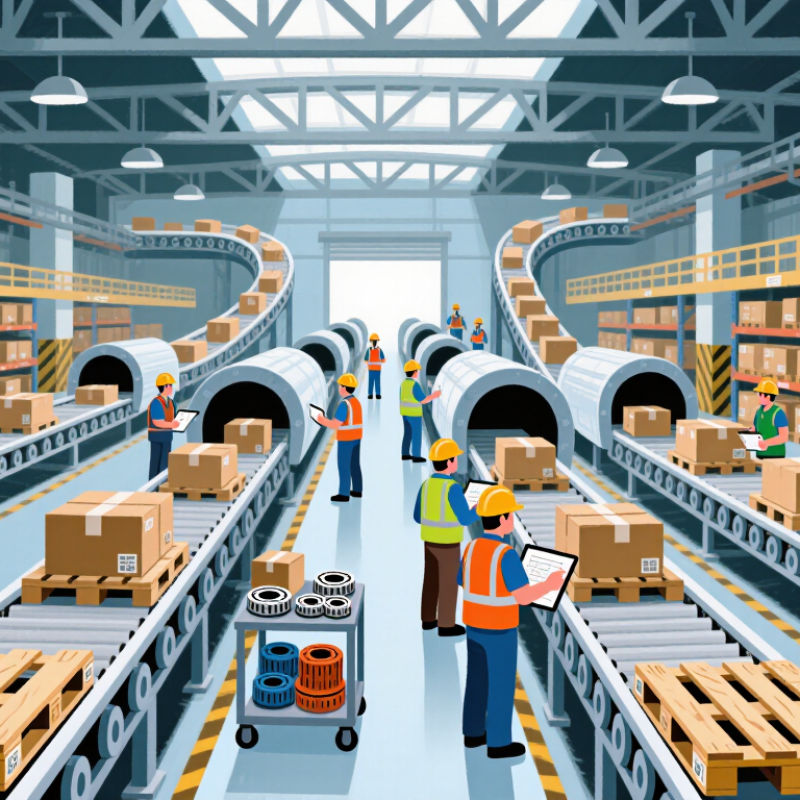
Roller conveyors are material-handling systems built from parallel rollers mounted in a rigid frame. Boxes, totes, pallets, and parcels move across these rollers with less lifting and carrying. Gravity models use a slight slope, while powered models use motors, belts, or chains for controlled movement. The choice depends on load weight, package shape, speed, and available floor space.
Global buyers use roller conveyors to connect receiving docks, storage zones, packing stations, and shipping areas. They can reduce manual handling and support steadier warehouse workflows. In a busy facility, a carton should travel smoothly without stopping at every transfer point. Small details matter. Roller diameter, spacing, frame height, and bearing quality affect performance. Dust, humidity, temperature, and cleaning routines also influence the required materials.
Practical purchasing experience shows that a cheap quotation may hide costly limitations. A narrow roller gap may damage soft packages. An undersized frame may flex under repeated pallet loads. I have seen layouts look efficient on paper but create awkward walking routes in operation. That weakness deserves attention. Buyers should request load tests, maintenance instructions, spare-part availability, and clear safety documentation. Suppliers should also explain installation tolerances and emergency-stop requirements. Local service capacity can matter as much as the conveyor itself, especially when international shipping delays interrupt production.
Evaluating roller conveyor suppliers requires more than comparing catalog prices. Check their engineering experience with your product type, load weight, package size, and line speed. A supplier should provide clear drawings, roller specifications, motor details, and realistic production timelines. Ask for test reports and documented quality procedures. Reliable suppliers explain limitations instead of promising everything. That matters.
Visit the factory when possible, or request a live video inspection of assembly and testing areas. Examine welding quality, frame alignment, bearing protection, and surface finishing. Ask for references from buyers using similar conveyor systems. Confirm spare-part availability, installation support, warranty terms, and communication after delivery. International shipments also require careful packing, export documents, and damage-control procedures. A polished website proves little. One overlooked detail can delay an entire warehouse project.
Tips: Create a comparison sheet with measurable criteria. Score technical support, delivery history, customization ability, and after-sales response separately. Request a sample roller or a small pilot section before approving a large order. Do not judge suppliers only by the lowest quotation. I have seen attractive prices hide weak bearings, unclear tolerances, or expensive replacement parts. Some evaluations still feel uncertain, especially when factory access is limited. Record every assumption, then ask the supplier to confirm it in writing.
Top 10 Roller Conveyor Suppliers for Global Buyers
The strongest roller conveyor suppliers usually lead through product focus and market strength. Some specialize in gravity rollers for cartons, totes, and light warehouse loads. Others build powered systems for distribution centers, parcel hubs, and manufacturing lines. A few offer stainless steel conveyor sections for food processing, where washdown access and corrosion resistance matter. Product depth often reveals more than a polished catalog.
Market strength depends on practical evidence. Reliable suppliers can support different voltage standards, roller widths, frame heights, and control requirements. They also maintain spare-part channels across major regions. During supplier evaluations, buyers should request load charts, belt or roller speed data, factory test records, and installation references. A supplier serving automated warehouses may provide stronger controls expertise, while a regional fabricator may deliver faster customization. Both can be valuable.
No ranking is flawless. Product quality can vary between standard and customized orders. A supplier with excellent engineering may still struggle with local service response. Buyers should inspect sample welds, listen for uneven roller noise, and verify packaging before shipment. Ask how damaged components are replaced. Small answers matter. In my experience, the best choice balances conveyor performance, documented testing, delivery stability, and responsive technical support, rather than chasing the lowest quotation. Mistakes happen, but transparent corrective action is a meaningful strength.
A normalized benchmark comparing product breadth and international market strength across ten leading supplier profiles. Scores are indexed from 0 to 100 and do not represent revenue or market share.
Roller conveyor suppliers now compete on more than frame strength and roller diameter. The leading ten typically offer gravity, powered, flexible, and accumulation models for different load profiles. According to Grand View Research, the global conveyor systems market was valued at about USD 10.6 billion in 2023. This growth reflects demand for faster material movement and better warehouse space use. Buyers should inspect bearing quality, load capacity, noise levels, and corrosion protection. Small details matter.
The strongest suppliers serve distribution centers, food processing plants, parcel hubs, automotive factories, and retail warehouses. They often provide layout design, load testing, installation guidance, spare parts, and operator training. MHI’s 2024 industry report indicates that most supply-chain professionals expect technology investment to increase during the next five years. That trend supports suppliers offering barcode integration, sensors, safety guarding, and warehouse-control compatibility. Still, automation is not always the best answer. A low-volume facility may need simple gravity sections instead.
Global buyers should compare warranty terms, delivery coverage, maintenance response, and documentation quality. Ask for drawings showing transfer gaps and emergency-stop locations. Request references from facilities handling similar cartons or pallets. Some quotations look attractive until electrical work and site adjustments appear. That is an easy mistake. Supplier evaluations also need honest attention to local voltage, humidity, cleaning routines, and worker access. No ranking is perfect; application fit should carry greater weight than marketing language.
How to Select the Right Roller Conveyor Supplier for Your Needs
Choosing among the top roller conveyor suppliers requires more than comparing catalog prices. Start with your material, load weight, package size, and operating speed. A supplier should calculate roller diameter, pitch, frame strength, and motor capacity from these details. Ask for drawings before approving a quotation. Small errors can cause cartons to wobble or jam.
Inspect the supplier’s engineering process and production controls. Reliable suppliers can explain material grades, weld quality, surface treatment, and load testing. Request test records, installation guidance, and maintenance instructions. Photos help, but measured performance matters more. If possible, visit a working installation or speak with a recent customer. A polished website proves very little.
Consider the full operating environment. Stainless or coated components may suit humid areas, while dusty facilities need protected bearings and accessible cleaning points. Confirm spare-part availability, response times, warranty terms, and technician support across your region. Also check whether the design meets applicable workplace and machinery safety requirements. An experienced supplier will ask difficult questions about emergency stops, guarding, transfers, and floor conditions.
Do not select the cheapest proposal automatically. A low initial price can hide weak frames, limited support, or expensive replacement parts. I have seen projects fail because the conveyor was designed around average loads, not peak loads. That mistake is easy to repeat. Leave room for future expansion, but avoid paying for capacity you will never use. A careful supplier should challenge your assumptions, not simply accept every specification.
Comparative supplier profiles based on commonly published roller conveyor specifications, international purchasing requirements, customization capability, compliance documentation, delivery performance, and after-sales support. The profiles are anonymized to keep the focus on measurable selection criteria rather than company or brand names.
| Rank | Supplier Profile | Primary Market Coverage | Core Conveyor Types | Typical Roller Diameter | Typical Load Range | Typical Conveyor Width | Customization Capability | Compliance Documentation | Indicative Lead Time | Best-Fit Applications | Selection Score (100) |
|---|---|---|---|---|---|---|---|---|---|---|---|
| 1 | Profile A | North America, Europe, Asia-Pacific | Gravity Powered Accumulation | 38–89 mm | 30–1,500 kg/m | 300–1,500 mm | High: frames, drives, transfers, guarding, controls | CE, ISO 9001 documentation, material certificates available by project | 6–10 weeks for standard systems | Warehousing, parcel handling, distribution centers, manufacturing lines | 94 |
| 2 | Profile B | Europe, Middle East, Africa | Pallet Chain-Driven Heavy-Duty | 60–108 mm | 250–2,000 kg/m | 500–2,000 mm | High: pallet sizes, side guides, safety systems, layout engineering | CE, risk assessment, technical drawings, load calculations | 8–14 weeks for engineered projects | Pallet storage, automotive, appliance production, heavy manufacturing | 92 |
| 3 | Profile C | Asia-Pacific, North America, Latin America | Flexible Expandable Gravity | 25–76 mm | 10–500 kg/m | 200–1,200 mm | Medium to high: modular lengths, supports, curves, casters | ISO 9001, CE options, factory inspection records | 4–8 weeks for modular units | Packaging, temporary lines, order picking, small-item movement | 89 |
| 4 | Profile D | Europe, North America, selected global projects | Motor-Driven Roller Zero-Pressure Sortation | 50–89 mm | 20–1,000 kg/m | 400–1,600 mm | High: zoned controls, sensors, PLC integration, safety circuits | CE, EMC documentation, electrical schematics, FAT support | 10–16 weeks for integrated systems | E-commerce fulfillment, automated warehouses, distribution hubs | 88 |
| 5 | Profile E | Asia, Africa, Middle East, developing markets | Gravity Pallet Telescopic | 38–89 mm | 30–1,200 kg/m | 300–1,800 mm | Medium: standard modules with project-based modifications | ISO 9001, CE documentation for applicable configurations | 5–9 weeks for standard configurations | Loading docks, cartons, pallets, general material handling | 86 |
| 6 | Profile F | North America, Latin America | Powered Accumulation Pallet | 50–108 mm | 100–1,800 kg/m | 450–2,000 mm | High: motor selection, controls, guarding, integration engineering | UL/CSA-oriented electrical packages, risk assessment, manuals | 8–15 weeks depending on controls scope | Food and beverage, consumer goods, palletizing, plant logistics | 84 |
| 7 | Profile G | Europe, Asia-Pacific, Middle East | Stainless Steel Washdown Gravity | 38–76 mm | 20–800 kg/m | 250–1,200 mm | Medium to high: hygienic frames, sealed bearings, special finishes | CE, stainless material grades, hygienic design documentation | 7–12 weeks for hygienic equipment | Food processing, pharmaceuticals, clean production areas | 83 |
| 8 | Profile H | Global export markets with distributor support | Light-Duty Gravity Flexible | 25–60 mm | 10–350 kg/m | 200–1,000 mm | Medium: length, roller pitch, legs, side rails | ISO 9001, general technical datasheets, inspection reports | 3–7 weeks for catalog-based products | Retail backrooms, packing stations, small cartons, manual handling | 81 |
| 9 | Profile I | Europe, Africa, Middle East, Central Asia | Heavy-Duty Chain-Driven Turntable | 60–133 mm | 300–2,500 kg/m | 600–2,200 mm | High: structural design, transfers, lifts, heavy-load controls | CE, structural calculations, welding records, inspection plans | 10–18 weeks for custom heavy-duty systems | Steel service centers, automotive, machinery, industrial pallets | 80 |
| 10 | Profile J | Asia-Pacific, Africa, South America | Basic Gravity Powered Modular | 38–76 mm | 20–900 kg/m | 300–1,500 mm | Medium: standard layouts, drive options, supports, guides | ISO 9001, CE options, product inspection documentation | 5–10 weeks for standard projects | General warehousing, carton transport, assembly, packaging | 78 |
To learn more about any of the products and services provided by Abbott Ball Company, Inc., simply complete the form below.