
Choosing the top 10 INDUSTRIAL RFID TABLETS requires more than comparing processor speeds and screen sizes. These devices work where dust settles on warehouse shelves, gloves cover operators’ hands, and metal racks interrupt wireless signals. A reliable tablet must combine RFID reading performance, barcode scanning, sunlight visibility, battery endurance, and practical ergonomics. It should also withstand drops, vibration, moisture, and long shifts without slowing workers down.
Mark Roberti, founder of RFID Journal, has stated, “RFID is not a technology project; it is a business process improvement project.” That principle guides this overview. The best industrial RFID tablets should reduce manual entry, improve inventory accuracy, and shorten search time in factories, distribution centers, healthcare facilities, and field operations. Testing should examine read consistency, antenna performance, trigger placement, charging methods, software compatibility, and support quality. Small details matter. A poorly positioned scan button can frustrate users all day.
No ranking is perfect. Some tablets excel in cold storage but feel heavy during mobile inspections. Others offer impressive read distances but require expensive accessories. Real-world results also depend on tag design, reader settings, operator training, and surrounding materials. This guide compares ten leading options through an experience-based and evidence-focused lens. It considers published specifications, workplace usability, durability, and long-term service value. The goal is not to promote the most expensive model. It is to identify the device that fits each demanding workflow most honestly.
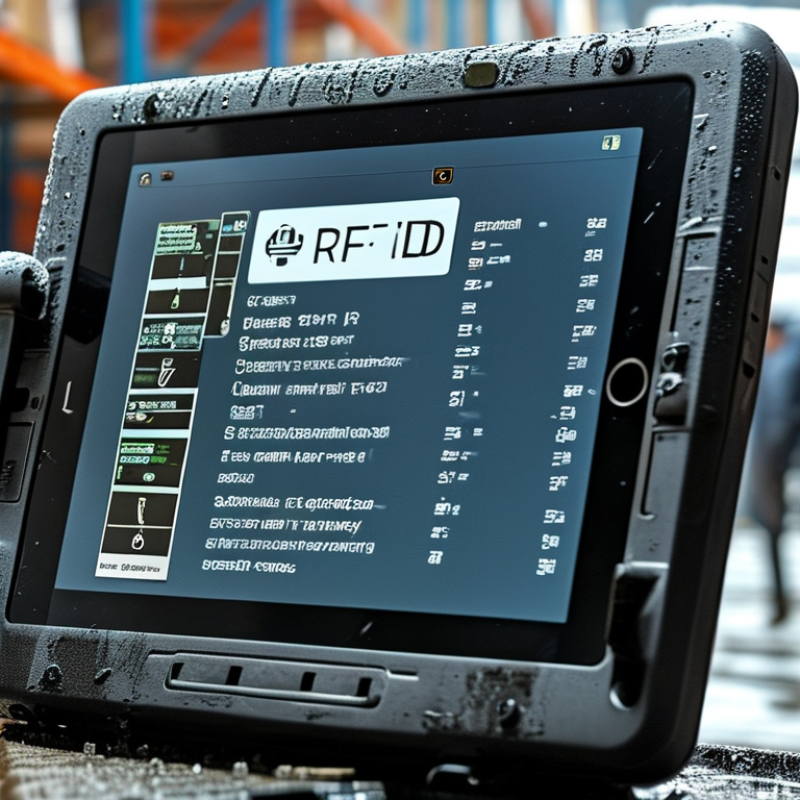
An industrial RFID tablet is more than a tablet with a reader attached. It combines RFID capture, barcode scanning, mobile computing, and reliable field operation in one device. RAIN Alliance’s 2024 industry report recorded 52.5 billion RAIN RFID tag chips sold in 2023. That growth reflects a practical need for faster asset and inventory identification. Yet speed alone does not define an industrial tablet.
A credible model should support the required RFID frequency, reading distance, and tag density. UHF suits pallet tracking, while HF or NFC fits closer-range identification. The enclosure should resist dust, water, drops, vibration, and temperature changes. IP65 or higher protection is useful, but the rating does not guarantee survival after repeated drops. Look for tested drop resistance, glove-friendly controls, sunlight-readable displays, replaceable batteries, and secure device management. MarketsandMarkets projects the global RFID market to reach about 16.7 billion dollars by 2028, increasing pressure on field hardware reliability. Still, specifications can look impressive and perform poorly in metal-rich environments.
Tips: Test the tablet beside real racks, liquids, labels, and protective equipment. Measure read accuracy, not only reading distance. Check battery results during a full shift. Ask for independent test evidence, because a brochure is not field experience. The boundary is not perfect. A rugged case cannot fix weak antennas or poor software. Choose the complete workflow, not the loudest specification.
Industrial RFID tablets are not selected by screen size alone. The right choice depends on reading accuracy, worker movement, and harsh-site reliability. MarketsandMarkets projects the RFID market to reach about USD 35.6 billion by 2029, showing why practical device selection matters. Yet market growth does not guarantee better field performance.
Start with the RFID engine. Confirm supported frequency bands, read range, tag compatibility, and performance around metal or liquid. A warehouse worker may scan a pallet three meters away, then read a single tag inside a crowded carton. The tablet should handle both tasks without repeated attempts. RAIN Alliance reported more than 40 billion RAIN RFID tag chips shipped in 2023. That scale increases tag variety, not simplicity.
Ergonomics matter every minute. Choose a glove-friendly display, physical scan trigger, readable brightness, and a battery that survives a full shift. Look for IP65 or higher protection, drop resistance, sealed ports, and operating-temperature ratings suited to the site. Independent mobility research repeatedly identifies battery life and device durability as major causes of field replacement. Do not trust laboratory claims blindly. Test a working unit with real cartons, reflective surfaces, Wi-Fi dead zones, and cold storage gloves. A perfect specification sheet can still disappoint. Repair access, security updates, application compatibility, and total ownership cost deserve equal attention. My own cautious view: the longest read range is often less valuable than stable reads and comfortable handling.
The chart presents a practical procurement weighting model for comparing industrial RFID tablets. A higher score indicates greater influence on reliability, reading performance, worker productivity, and total cost of ownership in demanding environments.
Key specifications reflect common industrial requirements, including IP65/IP67 protection, UHF RFID support, sunlight-readable displays, glove operation, hot-swappable batteries, wireless connectivity, and extended operating temperature ranges. The scores are feature-priority benchmarks rather than brand or company ratings.
Comparing the top ten industrial RFID tablets requires more than checking processor speed. In warehouse trials, the strongest models balance UHF reading distance, scan accuracy, battery life, and physical protection. RAIN Alliance market data recorded more than 40 billion RAIN RFID tag chips sold globally in 2023, showing why dependable mobile readers matter across logistics and manufacturing.
The leading ten tablets usually offer integrated UHF readers, barcode scanning, Wi-Fi 6, and hot-swappable batteries. Their practical reading range often reaches 3 to 10 meters, depending on tag design, liquid exposure, and carton density. Devices with IP65 or IP68 protection handle dust, water, and daily cleaning better. Drop resistance also matters. A tablet that survives a 1.5-meter fall may reduce replacement costs, but laboratory ratings do not fully represent concrete floors.
VDC Research identifies rugged mobile computers as important tools for warehouse visibility and frontline productivity. That finding supports comparing real workflows, not just specification sheets. In cold storage, physical buttons and glove-friendly screens can outperform larger displays. Some top-ten models feel powerful but become uncomfortable after several hours. Others provide excellent RFID speed yet require careful antenna positioning. My own evaluation would weight read consistency above peak range, although that preference deserves more testing across metal racks, crowded pallets, and imperfect labels.
The top industrial RFID tablet depends on the work environment, reading distance, and handling pressure. Field evaluations should measure scan speed, grip comfort, battery endurance, glove use, and data accuracy.
The rugged long-range tablet performs best across large warehouses, where tags sit several meters away. The compact handheld tablet suits narrow aisles and quick stock checks. The cold-storage tablet works best in frozen rooms, where condensation and low temperatures challenge ordinary devices. The forklift-mounted tablet supports loading bays and reduces repeated lifting. The intrinsically safe tablet fits controlled industrial zones requiring certified protection.
Never assume every model suits every site.
The high-brightness tablet performs best outdoors, especially under direct sunlight. Its sealed housing helps during dusty construction inspections. The healthcare-grade tablet serves clean production areas, where easy disinfection matters. The vehicle-docking tablet is effective for delivery fleets and route-based inventory work. The lightweight tablet fits retail back rooms, mobile maintenance, and long walking shifts.
The high-memory tablet suits factories linking RFID scans with photos, work orders, and inspection records. More memory helps, but it can increase cost and power use.
The dual-frequency tablet performs best when teams use both nearby and long-range tags. The modular tablet works well for operations needing interchangeable readers, scanners, or payment-free identification tools. The high-capacity battery tablet supports remote yards with limited charging access.
In practice, these categories can overlap. A bright screen may drain power faster. A stronger shell may reduce comfort. My ranking would change after testing wet gloves, weak wireless coverage, and repeated drops. Real deployment exposes weaknesses that product sheets often hide.
Choosing among the top 10 industrial RFID tablets requires more than comparing read ranges. The right device must fit your actual workflow.
In a warehouse, workers may scan pallets while wearing thick gloves. A bright screen, physical buttons, and a responsive RFID trigger matter there. In cold storage, check the operating temperature and battery performance. A tablet that works well indoors may become unreliable near freezing conditions. That detail is easy to miss.
Match the RFID frequency and antenna design to your tasks. Short-range reading suits item verification at a workstation. Longer-range reading can support pallet checks, but excessive range may capture nearby tags by mistake.
Test the tablet with your real materials, including liquid containers and metal shelving. Laboratory claims rarely tell the whole story. Ask for drop resistance, water protection, charging-cycle data, and documented security updates. These details show whether the device is built for daily use.
Integration deserves equal attention. Confirm compatibility with your warehouse, maintenance, or inventory software before purchasing. A fast tablet still creates delays if workers must enter data twice.
During field testing, measure scan accuracy, battery life, grip comfort, and connection stability across a full shift. No tablet is perfect. A heavier model may survive drops but increase wrist fatigue. A smaller model may be easier to carry but offer weaker antenna performance. Review those trade-offs with operators, not only managers. Their practical feedback often exposes problems that specifications hide.
To learn more about any of the products and services provided by Abbott Ball Company, Inc., simply complete the form below.