Top 10 Outdoor Advertising Flags for Businesses
Outdoor Advertising Flags remain a practical format for businesses seeking visible, location-based promotion. They move with the wind, catch attention above parked cars, and guide customers toward a storefront. Unlike static signs, well-designed flags can be repositioned quickly for entrances, events, seasonal offers, and temporary campaigns.
The Outdoor Advertising Association of America reported approximately $9.1 billion in U.S. out-of-home advertising revenue during 2023, marking another record year for the medium. PQ Media’s Global Out-of-Home Advertising Forecast also identifies continued investment in outdoor media, supported by mobility, local targeting, and digital integration. These figures show strong industry confidence, but they do not guarantee results for every flag. Placement, fabric quality, message length, and maintenance still matter.
Anna Bager, president and CEO of the Out of Home Advertising Association of America, has described out-of-home advertising as “a medium that reaches people in the real world.” That idea fits flags especially well. A readable logo, high-contrast colors, and a clear call to action can work within seconds. Keep it simple.
This guide explores the Top 10 Outdoor Advertising Flags for Businesses, including feather flags, teardrop flags, rectangular banners, and custom-shaped options. Each design has strengths and weaknesses. Some perform better near roads, while others suit crowded trade shows or narrow sidewalks. The comparison also considers wind stability, printing durability, portability, and total ownership cost. No single flag wins everywhere. That is the part many buyers overlook.
Types of Outdoor Advertising Flags for Different Business Goals
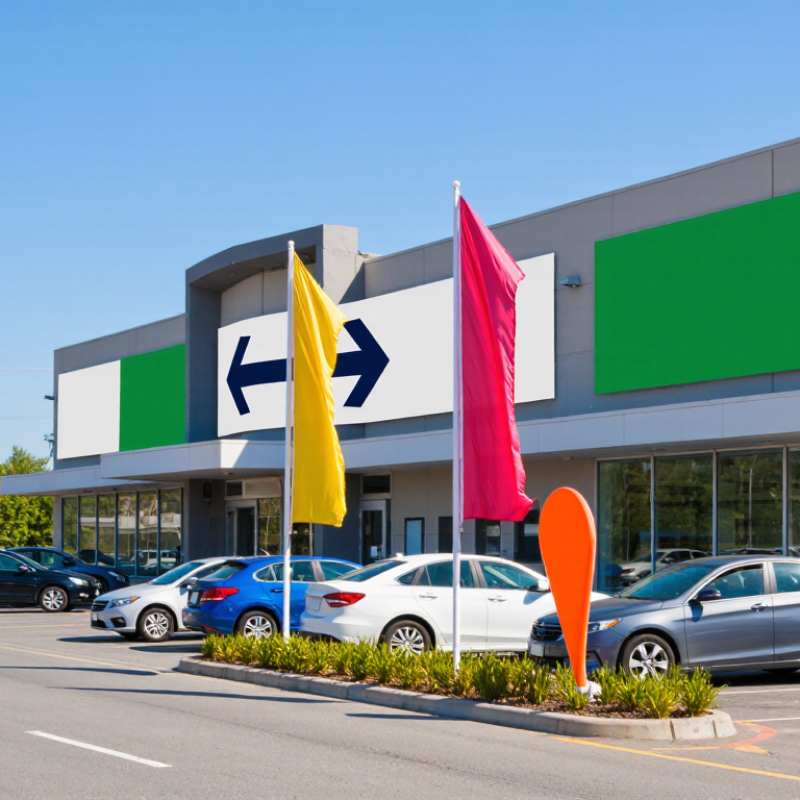
Outdoor advertising flags serve different business goals, and shape affects how people read them. Feather flags rise above parked cars and can attract attention to a storefront from the road. Their curved fabric moves in light wind, but detailed copy may be hard to read. Teardrop flags keep a compact outline and suit short messages near entrances. They look tidy. Rectangular flags offer more space for directions, hours, or product details, though they need a stable base in exposed locations.
For wayfinding, choose a blade or rectangular flag with a clear arrow and one destination. At markets and outdoor events, compact teardrop flags can mark a booth without using much ground space. Tall feather styles suit promotions or seasonal displays, while paired pole flags can frame an entrance. Choose according to viewing distance, wind exposure, and pedestrian flow—not appearance alone. A flag cannot fix a confusing offer. A clear message can still lead visitors toward a cluttered doorway.
Tips: Keep the main message to a few words and use strong contrast. Check the flag at its actual location before ordering several. Photograph it from the road or walkway; small lettering may disappear at a distance. Secure the base, inspect the seams after windy days, and remember that fabric fades over time.
Key Features to Compare When Choosing Advertising Flags
When comparing outdoor advertising flags, start with the site, not the shape. A narrow pavement may suit a slim feather flag, while an open forecourt can accommodate a wider teardrop design. Check the displayed height against nearby signs, trees, and building entrances. The message should remain visible without blocking pedestrian movement. Small practical details matter.
Fabric and printing affect how a flag performs outdoors. Look for weather-resistant material, reinforced stitching, and print that remains legible from both sides if people approach from different directions. Ask how the graphic behaves in sunlight and whether replacement prints are available. A vibrant sample can look different under cloudy skies. Specs help, but the actual location matters more.
Tips: Match the base to the ground: a cross base may work indoors or on firm surfaces, while a weighted base can add stability outdoors. Check wind guidance from the supplier and take the flag down in strong gusts. Compare setup time, packed size, and cleaning instructions, too. One detail is easy to miss: frequent folding can crease fabric, so consider how often the flag will travel.
Top 10 Outdoor Advertising Flags for Businesses
Key features to compare when choosing advertising flags include flag shape, size, fabric, base type, and suitability for local wind conditions.
Wind Conditions to Consider When Choosing an Advertising Flag
The bars show the upper wind-speed boundary for Beaufort forces 2–11. These ranges describe wind conditions, not a flag’s wind rating. Check the manufacturer’s wind guidance for the specific flag, pole, and base you plan to use. Beaufort force 12 is excluded because its range has no upper limit.
Top Outdoor Advertising Flag Styles for Business Promotion
Outdoor advertising flags come in shapes suited to different sites. Feather flags have a tall, curved edge that keeps a message visible above a crowd. Teardrop flags hold their shape neatly, though their smaller print area can limit long wording. Rectangular and blade flags offer a broader reading space for store entrances or roadside displays. Sail flags create a sweeping profile beside open walkways. Wind changes everything.
Other useful styles include bowhead flags, crest flags, straight-edge banners, angled flags, and vertical pole flags. Their names can vary between suppliers, so compare the actual outlines before ordering. A crest shape can frame a short offer, while a straight edge makes simple lettering easier to arrange. Pole-mounted flags suit building fronts, but need a secure fixing and enough clearance from doors and branches. Small detail, big effect.
Choose the flag after checking viewing distance, wind exposure, and available ground space. A narrow path may suit a compact teardrop; a wide forecourt can handle a taller feather flag. Keep wording brief, use strong contrast, and test how the design reads from the direction people approach. I have seen attractive layouts lose impact when folds hide a phone number or the base crowds a doorway. It is easy to overestimate how much text fits. A little restraint usually helps.
Materials, Sizes, and Designs for Long-Term Outdoor Use
Top 10 Outdoor Advertising Flags for Businesses
Outdoor advertising flags perform best when materials match the environment. Polyester is lightweight, vivid, and suitable for frequent event changes. Knitted fabric can reduce show-through on double-sided designs. For harsher weather, reinforced stitching and dense fabric provide better stability. A water-resistant finish also helps after sudden rain. Still, no fabric is completely weatherproof.
The ten most useful formats include feather, teardrop, straight, angled, sail, bow, blade, rectangle, double-sided, and custom-shaped flags. Feather and teardrop flags attract attention from moving vehicles. Straight and rectangle styles offer more readable text. Double-sided models need an internal block-out layer to prevent reversed graphics. Common heights range from 6 to 16 feet, while larger flags need heavier bases and stronger poles. Small 6-foot flags suit entrances, but tall designs work better beside wide roads.
Design should remain clear from several yards away. Use one main message, high contrast, and lettering large enough for quick reading. Keep logos and contact details away from pole seams. In my experience, crowded graphics look acceptable on a screen but become unreadable in wind. That mistake is easy to make. Choose ground stakes for soil and weighted cross bases for pavement. Inspect poles, seams, and anchors weekly during long campaigns. Replace faded panels early, because worn fabric can weaken public trust. There is no perfect setup; local wind, sun, and foot traffic should shape the final choice.
Placement, Maintenance, and Effective Flag Display Practices
A flag earns attention only when people can see it without obstruction. Place it near an entrance or decision point, but keep it clear of doorways, accessible routes, and vehicle sightlines. Stand where approaching customers stand. Can they read the message in a few seconds?
Wind changes everything. Choose a base suited to the surface and local conditions, and follow the pole maker’s wind guidance.
The Outdoor Advertising Association of America reported that U.S. out-of-home advertising revenue reached $9.1 billion in 2023, a record at the time. That figure covers many formats, not flags alone, but it shows how much competition exists for outdoor attention.
Inspect flags before opening and after strong winds or rain. Check seams, clips, poles, and weighted bases; replace frayed fabric before it becomes hard to read. Keep the message brief, with strong contrast and lettering visible from the actual viewing distance.
A crooked flag can look careless. I still find placement easy to misjudge from inside a shop, so review it from the pavement and from an approaching vehicle. Photograph the display from both angles, then adjust its height or position if trees, parked cars, or glare hide the message.
Keep it tidy.