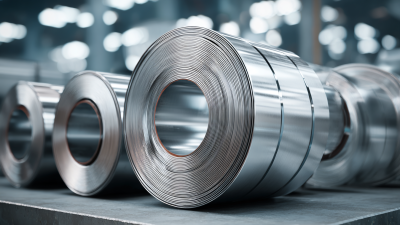
Choosing among stainless steel grades is rarely a simple matter of picking the most expensive option. Buyers must match the alloy to its environment, fabrication method, maintenance schedule, and expected service life. A kitchen backsplash, offshore platform, medical instrument, and chemical tank face very different risks. Chlorides, heat, acids, welding, and abrasion can change the decision completely.
Materials expert John C. Lippold offers a useful principle: “The best stainless steel is the one matched to the service environment.” That idea should guide every purchasing decision. Grade 304 may suit general food equipment and indoor fabrication. Grade 316L can provide stronger resistance in chloride-rich locations. Grade 430 offers a practical option for decorative applications. Duplex 2205 may serve demanding structural and marine conditions. However, no grade is universally superior.
A neat top-ten ranking can mislead. That deserves attention. Price, availability, forming behavior, surface finish, and certification also matter. Buyers should review ASTM or EN specifications, mill test certificates, heat numbers, and corrosion requirements before placing an order. Small details matter. A polished sample may look excellent while hiding poor weldability or unsuitable chemistry.
This guide compares ten widely purchased stainless steel grades through a buyer’s lens. It considers performance, typical applications, strengths, limitations, and purchasing risks. The list is not perfect. Local supply, project standards, and operating conditions can change the final choice. Still, it offers a practical starting point for buyers seeking reliable stainless steel grades rather than attractive claims.
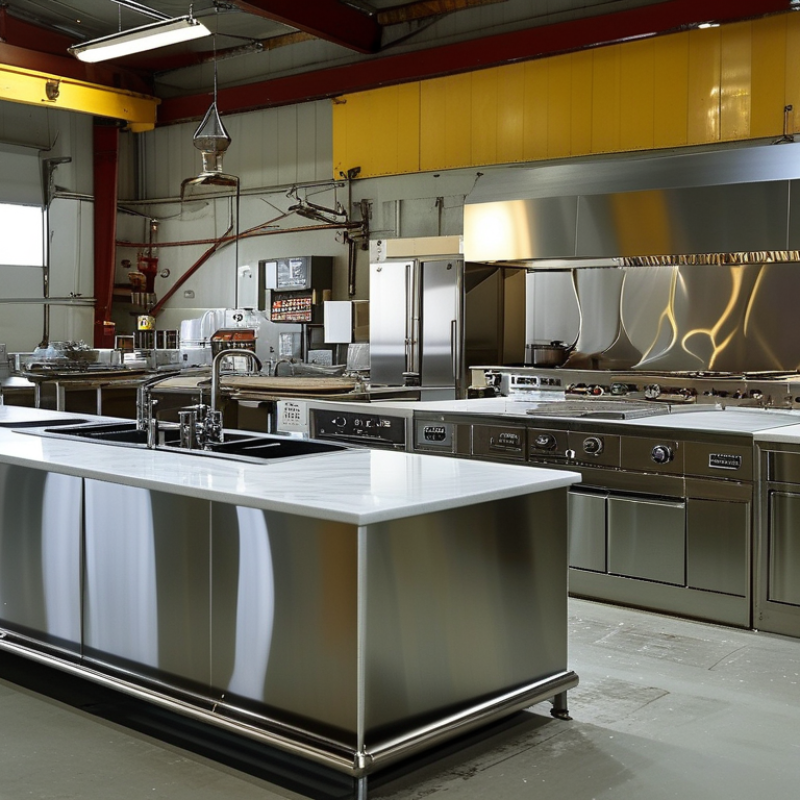
A buyer’s practical shortlist often starts with 304, the general-purpose workhorse for food equipment, architectural panels, and indoor processing. The Nickel Institute describes 304 as a versatile austenitic grade with strong forming and welding performance. Grade 316 adds molybdenum, improving resistance to chlorides and many coastal environments. For welded vessels, 316L reduces carbon-related sensitization risks. Do not confuse “L” with unlimited corrosion protection.
Ferritic 430 offers moderate corrosion resistance, magnetic behavior, and lower alloy cost. Grade 409 suits automotive exhaust components, where heat exposure matters more than appearance. Martensitic 410 provides useful strength and wear resistance after heat treatment. Grade 420 can achieve higher hardness, but it sacrifices some corrosion resistance.
Duplex 2205 combines high strength with chloride resistance. Its welding procedure needs careful control. Grade 904L targets severe chemical environments, although its high alloy content raises purchasing and fabrication costs. Precipitation-hardening 17-4 PH delivers high strength after aging treatment and supports demanding mechanical applications.
The International Stainless Steel Forum reported global crude stainless steel production of about 58.4 million tonnes in 2023. That scale confirms stainless steel’s industrial importance, but production volume does not identify the right grade. ASTM A240 and relevant project specifications should guide verification. Request the mill test report, heat number, chemical analysis, and mechanical results. Positive material identification can catch costly substitutions. No grade wins every test. A careful buyer still checks temperature, chloride concentration, weld design, finish, delivery condition, and lifecycle cost before approving the order.
A practical top-ten shortlist includes 304, 316, 321, 347, 310S, 410, 430, 2205, 2507, and 17-4 PH stainless steel. Across ASTM product specifications, their chemistry spans approximately 10.5–26% chromium, 0–22% nickel, and 0–5% molybdenum. Grade 410 contains about 11.5–13.5% Cr and very little Ni. Grade 430 offers 16–18% Cr with almost no Ni. In contrast, 304 and 316 typically contain 18–20% Cr and 8–14% Ni.
Molybdenum separates several corrosion-focused choices. Grade 316 usually contains 2–3% Mo, while duplex 2205 contains about 2.5–3.5% Mo. Super duplex 2507 reaches roughly 3–5% Mo and about 24–26% Cr. Heat-resistant 310S uses approximately 24–26% Cr and 19–22% Ni, with minimal Mo. Grade 321 and 347 add stabilizing elements, not simply more chromium or nickel. Chemistry alone is not enough. That is an important limitation.
Tips: Check the exact ASTM specification and heat certificate before buying. Chemistry ranges can vary slightly by product form and revision. Match the grade to chloride exposure, temperature, welding, and forming needs. A cheaper grade may become expensive after premature replacement. I would also verify carbon, nitrogen, and ferrite requirements, because buyers often overlook them.
PREN offers a practical starting point, not a complete buying decision. A common shortlist includes 304, 316L, 321, 347, 309S, 310S, 2205, 2507, 904L, and 410. Using composition ranges published in ASTM A240/A240M and EN 10088-1, the PREN estimate is Cr + 3.3Mo + 16N. Typical values place 2507 near 42, 2205 near 35, 904L near 34, 316L near 24, and 304 near 18. Higher numbers generally indicate stronger resistance to pitting.
This ordering needs care. 316L often performs well around chlorides, yet 2205 usually provides a wider safety margin. 304 can develop tea staining near coastal railings, even when its surface looks sound.
ASTM G48 laboratory testing and NACE/ISO 15156 guidance show that temperature, chloride concentration, welding, and surface condition affect field performance. PREN does not perfectly predict crevice corrosion or stress corrosion cracking.
I have seen buyers overvalue one number. That shortcut deserves reconsideration.
Tips: Request the mill test certificate, heat analysis, and solution-annealing condition. Confirm PREN from actual chemistry, not only the grade name. For seawater splash zones, inspect welded areas and specify suitable pickling or passivation. Keep 304 for mild indoor service when chloride exposure is controlled. Choose 2205 or 2507 only after checking welding procedures, design temperature, and supply availability. Industry data from the World Stainless Association shows stainless steel serves construction, processing, and transport; actual exposure still decides the grade.
What Are the Top 10 Stainless Steel Grades for Buyers?
Selecting stainless steel starts with the working environment, not the lowest price. Grade 304 suits food equipment, kitchen surfaces, tanks, and indoor construction. Its clean finish and easy fabrication make it a practical choice. Grade 316 performs better near salt water because molybdenum improves chloride resistance. Grade 316L adds lower carbon content, which helps welded marine frames and medical equipment resist corrosion around welds. Still, poor cleaning can damage even a suitable grade.
Grade 430 fits dry food areas, appliance panels, and decorative construction with moderate corrosion exposure. Grade 409 works well in automotive exhaust and general heat-resistant structures. For stronger construction parts, 410 offers hardness and useful corrosion resistance. Grade 420 is harder after heat treatment, making it suitable for surgical instruments and cutting tools. Medical buyers should verify surface finish, sterilization performance, traceability, and required material documentation.
High-temperature service needs different choices. Grade 309 handles furnace parts, burners, and heated structural components. Grade 310 supports more demanding heat exposure, although actual performance depends on atmosphere and load. Precipitation-hardening grade 17-4 PH serves high-strength construction hardware, shafts, and engineered components. These grades are not interchangeable. In practice, buyers sometimes overestimate corrosion resistance and underestimate welding, crevices, or temperature cycling. A mill certificate helps, but testing the finished component is wiser. The “best” grade may change after one site inspection.
| Rank | Grade | UNS Designation | Steel Family | Typical Chemistry (% by mass) |
Key Properties | Best-Fit Buyer Uses | Main Buying Considerations |
|---|---|---|---|---|---|---|---|
| 1 | 304 | S30400 | Austenitic | Cr 18–20; Ni 8–10.5 | Excellent general corrosion resistance; highly formable and weldable; non-magnetic when annealed. | Food-processing equipment, sinks, kitchen surfaces, tanks, architectural panels, general construction. | A strong general-purpose choice, but it is less resistant than 316L to chlorides, saltwater, and some chemical environments. |
| 2 | 316L | S31603 | Low-carbon Austenitic | Cr 16–18; Ni 10–14; Mo 2–3 | Superior resistance to chlorides and pitting; low carbon reduces sensitization after welding; excellent weldability. | Marine hardware, food and pharmaceutical equipment, medical devices, coastal construction, chemical-processing components. | Costs more than 304; not immune to corrosion in warm, concentrated chloride or crevice conditions. |
| 3 | 430 | S43000 | Ferritic | Cr 16–18; Ni usually absent | Moderate corrosion resistance; magnetic; good oxidation resistance and attractive cost-to-performance ratio. | Food-service panels, appliance trim, refrigerator interiors, decorative construction, indoor equipment. | Lower nickel content reduces cost, but formability, weldability, and chloride resistance are below 304 and 316L. |
| 4 | 2205 | S32205 / S31803 | Duplex | Cr 21–23; Ni 4.5–6.5; Mo 2.5–3.5; N 0.08–0.20 | High strength; very good chloride-pitting and stress-corrosion-cracking resistance; roughly double the yield strength of common austenitic grades. | Marine structures, offshore equipment, bridges, pressure vessels, storage tanks, desalination and construction components. | Welding and heat treatment require tighter control; prolonged exposure to unsuitable temperatures can reduce toughness and corrosion resistance. |
| 5 | 310S | S31008 | Austenitic | Cr 24–26; Ni 19–22 | Excellent high-temperature oxidation resistance and good strength at elevated temperatures; low-carbon version improves weldability. | Furnace parts, heat-treatment equipment, kiln components, burners, heat exchangers, high-temperature construction. | Usually more expensive than 304; not the preferred option for severe aqueous chloride service. |
| 6 | 321 | S32100 | Titanium-Stabilized Austenitic | Cr 17–19; Ni 9–12; Ti stabilized | Good resistance to intergranular corrosion after welding; strong performance during elevated-temperature service and thermal cycling. | Aerospace exhaust systems, expansion joints, furnace parts, heat exchangers, high-temperature piping and construction. | The titanium stabilization may complicate polishing and certain fabrication processes; it is not a substitute for 316L in chloride exposure. |
| 7 | 17-4 PH | S17400 | Martensitic Precipitation-Hardening | Cr 15–17.5; Ni 3–5; Cu 3–5; Nb/Cb | Very high strength and hardness after aging; useful combination of mechanical strength and moderate corrosion resistance. | High-strength fasteners, valves, shafts, pumps, structural hardware, surgical and medical instrument components. | Heat-treatment condition strongly affects properties; corrosion resistance is below 316L in demanding wet or chloride environments. |
| 8 | 410 | S41000 | Martensitic | Cr 11.5–13.5; Ni usually absent | Heat-treatable; good strength, hardness, wear resistance, and moderate corrosion resistance. | Construction fasteners, pump and valve parts, cutlery, machinery components, brackets and indoor structural hardware. | Less corrosion-resistant than 304 or 316L; welding needs suitable procedures and may require preheating or post-weld treatment. |
| 9 | 420 | S42000 | High-Carbon Martensitic | Cr 12–14; C typically 0.15–0.40 | Can achieve high hardness and wear resistance; suitable for sharp edges and precision cutting components. | Surgical and dental instruments, blades, molds, dies, wear parts and selected mechanical components. | Lower corrosion resistance and weldability than austenitic grades; medical use requires the appropriate product standard, finish, cleaning, and sterilization validation. |
| 10 | 904L | N08904 | Super Austenitic | Cr 19–23; Ni 23–28; Mo 4–5; Cu 1–2 | Very high resistance to sulfuric acid and many aggressive environments; strong resistance to pitting and crevice corrosion. | Chemical-processing equipment, pollution-control systems, marine components, tanks, piping and demanding architectural projects. | High material and fabrication cost; availability, welding procedure, and compatibility with the specific process fluid should be confirmed before purchase. |
What Are the Top 10 Stainless Steel Grades for Buyers?
A useful buying shortlist includes 304, 304L, 316, 316L, 321, 347, 410, 420, 430, and duplex 2205. Super duplex 2507 and 904L also deserve consideration for severe service. That makes the “top 10” imperfect, because application risk changes the ranking. The World Stainless Association reported approximately 58.4 million tonnes of global crude stainless production in 2023. This scale makes traceable specifications more important, not less.
Verify the grade through ASTM A240, EN 10088-2, and the UNS number. For example, 304L is UNS S30403, while 316L is UNS S31603. Common ASTM A240 minimums include about 205 MPa yield strength and 515 MPa tensile strength for many austenitic grades. Duplex 2205, commonly UNS S31803 or S32205, usually offers around 450 MPa minimum yield strength. Thickness can alter certified values. Check the actual mill test certificate.
Surface finish needs equal attention. Cold-rolled 2B suits many hygienic and general fabrication applications. BA gives a brighter appearance, while No. 4 provides a directional brushed texture. Hot-rolled plate may require pickling or additional treatment. Confirm thickness tolerance, flatness, heat treatment, and corrosion testing. EN 10088 tables and ASTM certificates should agree. Sometimes they do not. That gap requires review before payment, especially when the order includes welded edges, tight tolerances, or decorative surfaces.
To learn more about any of the products and services provided by Abbott Ball Company, Inc., simply complete the form below.