Top 10 Properties of 316 Stainless Steel for Global Buyers?
Understanding the nuances of 316 stainless steel properties is essential for global buyers. According to Dr. Emily Carter, an expert in material science, "The durability and corrosion resistance of 316 stainless steel make it a top choice in various industries." This statement underscores the material's significance in construction, marine, and pharmaceutical applications.
316 stainless steel offers unparalleled resistance to corrosive environments. Professionals recognize its strength and adaptability. However, some might overlook its cost relative to other materials. Buyers must weigh budget constraints against the long-term benefits. It's also crucial to consider that while 316 is robust, it is not invulnerable.
Companies like ArcelorMittal and Outokumpu often produce this steel, enhancing its global availability. Nevertheless, challenges still exist. Sourcing the correct grade and ensuring quality can be complicated. As the market evolves, understanding these aspects will help buyers make informed decisions.
Overview of 316 Stainless Steel: Composition and Characteristics
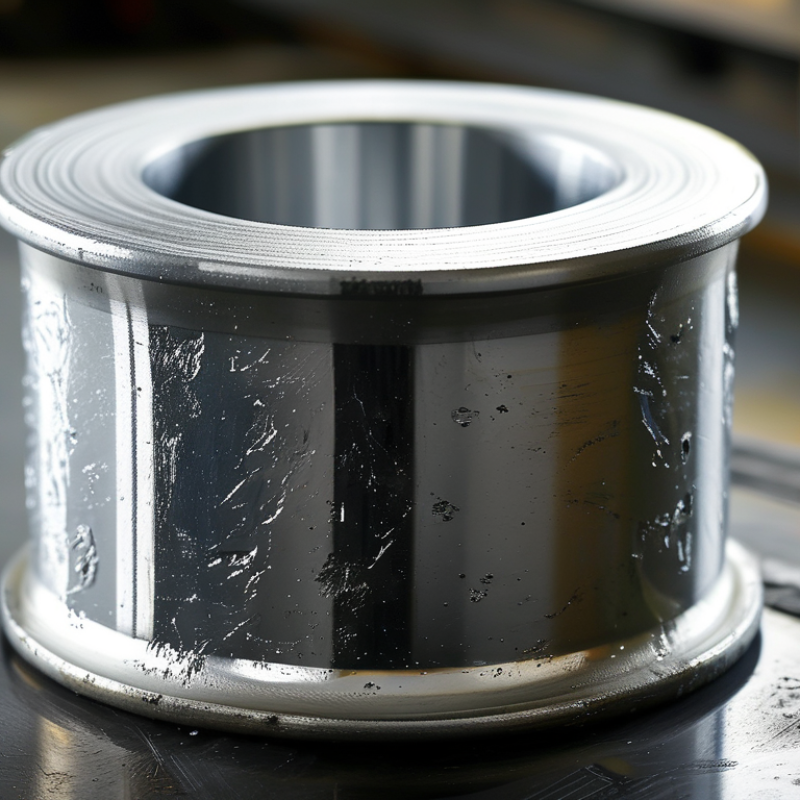
316 stainless steel is renowned for its impressive corrosion resistance and durability. Composed mainly of iron, chromium, nickel, and molybdenum, its chemical structure promotes superior performance in harsh environments. Reports indicate that the molybdenum content, typically around 2-3%, enhances resistance to pitting and crevice corrosion, particularly in chloride-rich environments. This property makes 316 stainless steel a top choice for marine applications and chemical processing.
The mechanical properties of 316 stainless steel contribute significantly to its widespread use. It has a tensile strength ranging from 70,000 to 100,000 psi and maintains good toughness at high temperatures. However, it is worth noting that this alloy can be prone to sensitization when exposed to high temperatures for extended periods. Such conditions can degrade its corrosion resistance and may require careful temperature management during fabrication.
Furthermore, while 316 stainless steel boasts excellent formability, challenges can arise during welding. Improper techniques may lead to weakened joints or compromised corrosion resistance. Experts suggest that preheating and controlled cooling can mitigate these risks, ensuring long-lasting applications. Despite these considerations, the versatility of 316 stainless steel continues to position it as a leading material in various industries, reflecting both reliability and the need for careful handling.
Top 10 Properties of 316 Stainless Steel for Global Buyers
| Property |
Description |
| Corrosion Resistance |
Excellent resistance to pitting, crevice corrosion, and stress corrosion cracking. |
| High Temperature Resistance |
Maintains strength and stability at elevated temperatures up to 870°C (1600°F). |
| Weldability |
Easily weldable with no preheating required, suitable for various welding methods. |
| Ductility |
Exhibits good ductility allowing it to be formed and shaped without breaking. |
| Mechanical Properties |
High tensile strength and impact resistance with yield strength around 290 MPa. |
| Magnetic Properties |
Non-magnetic in the annealed condition, but may become slightly magnetic when cold worked. |
| Surface Finish |
Can achieve a high-quality surface finish, enhancing aesthetic appeal and resistance to corrosion. |
| Cost |
Higher initial cost compared to other stainless steels but offers long-term durability. |
| Thermal Conductivity |
Good thermal conductivity suited for various heat transfer applications. |
| Applications |
Widely used in marine environments, chemical processing, and medical devices. |
Corrosion Resistance: The Key Advantage of 316 Stainless Steel
316 stainless steel is widely recognized for its impressive corrosion resistance, making it a preferred material in many industries. Its high nickel and molybdenum content grants this alloy superior performance in marine and chemical environments. The ability to withstand harsh conditions ensures long-term stability and reliability. Buyers often find value in its durability, which reduces maintenance costs significantly.
However, despite its advantages, not all applications require 316 stainless steel. Sometimes, alternatives may provide adequate protection at lower costs. In certain situations, its price can be a deciding factor. Consequently, a thorough evaluation of specific needs is essential before choosing this alloy. Buyers should consider factors like exposure to chlorides and overall design.
In practice, the corrosion resistance of 316 stainless steel can be tested through various methods. Regular assessments of the material in operational conditions can prevent unforeseen failures. While 316 stainless steel offers great benefits, it's important to acknowledge its limitations. Users need to weigh the benefits against potential downsides to make informed decisions.
Mechanical Properties: Strength, Ductility, and Hardness of 316 Stainless Steel
316 stainless steel is widely used for its superior mechanical properties. Strength, ductility, and hardness are key aspects that attract global buyers. This alloy boasts a tensile strength of about 580 MPa, which ensures durability in demanding applications. Its yield strength typically ranges from 290 MPa to 310 MPa, allowing it to withstand significant loads without permanent deformation.
The ductility of 316 stainless steel is another essential property. It has an elongation percentage of around 40% in 50 mm, indicative of its ability to deform under stress. This makes it suitable for forming processes and enables it to absorb energy before failure. The hardness, measured on the Rockwell scale, generally falls around 92 HRB. This attribute contributes to its resistance to wear and abrasion, critical for various industrial tasks.
Considering these properties, it’s essential to evaluate specific requirements when selecting materials. Strength alone may not suffice; ductility plays a vital role in applications requiring complex shapes. Ensuring the right balance between these mechanical properties is crucial. Regularly assessing how well the chosen material meets performance expectations can uncover potential areas for improvement.
Applications in Various Industries: Why Choose 316 Stainless Steel?
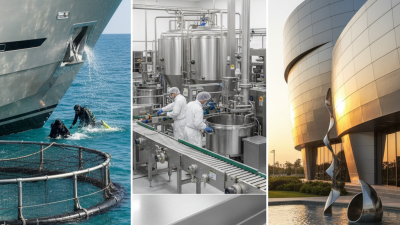
316 stainless steel is a favored choice in various industries due to its remarkable properties. This alloy contains molybdenum, which enhances its corrosion resistance. In marine environments, it withstands harsh conditions better than other steels. Data from the International Stainless Steel Forum indicates that 316 stainless steel provides around 2-3 times greater durability in saline environments compared to 304 stainless steel.
In the chemical processing industry, 316 stainless steel is ideal due to its resistance to pitting and crevice corrosion. Research from the National Association of Corrosion Engineers shows that materials can face significant degradation in corrosive environments. The use of 316 stainless steel can reduce maintenance costs and downtime, proving invaluable in keeping operations running smoothly.
Healthcare facilities also leverage 316 stainless steel for equipment and surfaces. Its non-reactive nature makes it suitable for high hygiene standards. The World Health Organization emphasizes the importance of using materials that can be easily sanitized. However, the premium cost of 316 stainless steel can be a barrier for some budgets, leading to discussions about alternative materials. Exploring options can reveal trade-offs between cost and performance, necessitating careful consideration.
Top 10 Properties of 316 Stainless Steel
This bar chart illustrates the top 10 properties of 316 stainless steel, highlighting its exceptional qualities such as corrosion resistance and temperature resistance that make it suitable for various industrial applications.
Sustainability and Recyclability of 316 Stainless Steel in Global Markets
The sustainability of 316 stainless steel is an essential topic in today's markets. This grade of stainless steel is highly valued for its durability and resistance to corrosion. However, the production process requires significant energy and resources. It's vital to weigh these impacts against its longevity. A longer lifecycle can mean less frequent replacement and waste.
Recyclability is a major advantage. 316 stainless steel can be recycled repeatedly without losing quality. This property makes it an attractive option for manufacturers aiming to reduce their environmental footprint. In many regions, recycling rates for stainless steel exceed 90%. This high recovery rate contributes considerably to sustainability efforts. Yet, the recycling processes are not flawless. Contaminants can still pose challenges in some cases.
When considering 316 stainless steel for various applications, one must reflect on the balance between its environmental benefits and the energy consumed in its production. Moving forward, increasing awareness and advancements in recycling technologies can make this material even more sustainable. Engaging with local recycling initiatives can enhance its eco-friendliness significantly.