
MON - FRI 8AM - 5PM

What Is a 12 Port Fiber Termination Box?

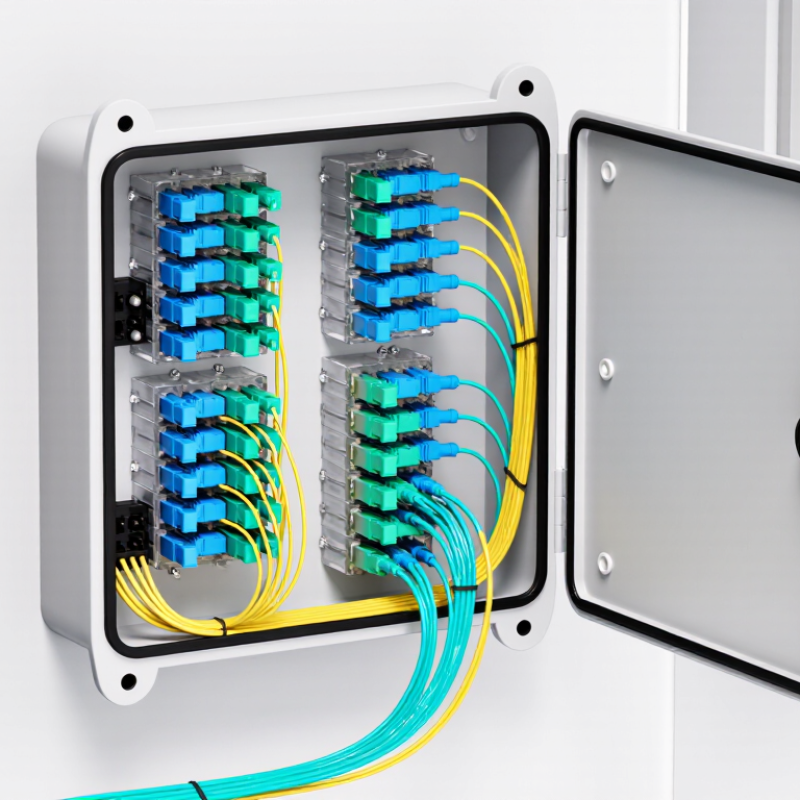
A 12 Port Fiber Termination Box is a compact enclosure for organizing and protecting fiber optic connections. It typically supports up to twelve fiber ports, although the exact capacity depends on its internal design. Some models manage pigtails, adapters, splice trays, and incoming cables in one controlled space. Others focus mainly on connector termination. That difference matters.

In real installations, technicians use this box in communication rooms, building networks, surveillance systems, and small data centers. A well-designed enclosure keeps fibers bent safely and prevents loose cables from becoming a maintenance problem. It may include SC, LC, or other adapter types, so compatibility must be checked before purchase. Port labeling also helps technicians trace connections without disturbing active lines. Small details often save time.

The box should provide protection from dust, accidental pulling, and unnecessary fiber movement. Its material, sealing level, mounting method, and cable-entry structure affect long-term reliability. However, a higher port count does not automatically mean better performance. Fiber quality, connector cleanliness, bend-radius control, and installation skill remain equally important. This is where product descriptions can be slightly misleading.

A careful evaluation should consider working environment, fiber type, splice requirements, and future expansion. For example, a wall-mounted box may suit a compact office, while a rack-compatible design may serve a central cabinet better. Inspectors should also verify routing space and grounding needs where applicable. The best choice is not always the largest one. It is the enclosure that keeps connections organized, accessible, and stable over time.
What Is a 12 Port Fiber Termination Box?

Definition and Purpose of a 12-Port Fiber Termination Box

What Is a 12 Port Fiber Termination Box?

A 12-port fiber termination box is a compact enclosure for organizing and protecting fiber connections. It usually holds twelve adapters, splice trays, or termination points. Technicians use it at building entrances, distribution cabinets, and small network rooms. The box separates incoming cables from outgoing patch cords. This makes testing, maintenance, and fault isolation more manageable.

Its main purpose is protection and orderly fiber management. A sealed enclosure limits dust, moisture, and accidental cable movement. Internal routing also helps control bend radius, which reduces optical loss and long-term damage.

The OECD Broadband Statistics report showed that fiber represented about 42% of fixed broadband connections across OECD economies in December 2023. That growth increases the need for compact termination equipment. A 12-port design suits limited-capacity installations, but capacity planning can be imperfect. Future expansion may require another box or a larger enclosure.

Tips: Check connector type, cable entry size, splice capacity, and IP rating before installation. Leave gentle service loops inside the box. Avoid tight bends and crowded adapters. The ITU-T G.657 recommendation supports bend-insensitive fiber designs, but installation quality still matters. Label every port clearly. Record test results after termination, including insertion loss and return loss. These small records often save hours during troubleshooting.

Main Components and Internal Fiber Connections

What Is a 12 Port Fiber Termination Box?

A 12 port fiber termination box organizes and protects up to twelve fiber connections. Its main components include a metal or flame-retardant enclosure, adapter panels, splice trays, cable glands, grounding points, and a cover. The enclosure protects delicate fibers from dust, pulling force, and accidental bending. The FTTH Council Global Alliance’s 2024 market report recorded more than 1.6 billion fiber homes passed worldwide in 2023. That scale makes compact, serviceable termination equipment increasingly important.

Inside, the incoming cable first enters through a sealed gland. Strength members should be anchored before fibers reach the splice tray. Each fiber is then routed through a gentle curve, spliced to a pigtail, and connected to an adapter. Follow the bend-radius guidance in ITU-T G.657, especially when using bend-insensitive fiber. Keep splice sleeves separated and label both ends. A crowded tray may still work, but it often slows fault testing and creates avoidable stress. Experienced installers leave a small service loop, although too much slack can obstruct the cover.

Tips: Clean every connector before insertion. Use a calibrated visual fault locator and an optical power meter. IEC 61300-3-35 inspection guidance helps identify contamination that simple visual checks can miss. Port numbering should match the distribution cabinet and network records. Recheck polarity before closing the box. Small labeling errors can become expensive troubleshooting problems.

How a 12-Port Fiber Termination Box Works

A 12-Port Fiber Termination Box: How It Works

A 12-port fiber termination box protects and organizes up to twelve fiber connections. It usually sits inside a communications cabinet, wall, or controlled equipment room. The incoming fiber cable enters through a sealed opening. Its outer jacket is removed carefully, while strength members remain secured to the box. This prevents pulling force from reaching the delicate glass fibers.

Inside, each fiber is routed toward a splice tray or termination area. Technicians may fusion-splice the incoming fibers to short pigtails. These pigtails connect to adapters mounted on the front panel. The adapters provide stable connection points for patch cords. A front door keeps dust away and reduces accidental contact. Small bend guides keep fibers from turning too sharply. That detail matters because excessive bending can increase signal loss.

During installation, technicians label every port and record fiber routes. They also inspect end faces before testing. Even a tiny dust particle can affect optical performance. A visual fault locator can help identify a broken or misrouted fiber. An optical power test gives more dependable loss data. In practical work, cable slack is easy to underestimate. Leaving a little extra length makes later repairs easier, although too much slack can create confusing loops. The box is simple, but poor routing can still cause real service problems.

What Is a 12 Port Fiber Termination Box? - How a 12-Port Fiber Termination Box Works
Data Dimension Typical Value Description
Product Type Fiber termination box A compact enclosure used to terminate, splice, organize, and protect optical fibers.
Port Capacity 12 optical ports Provides connection points for up to twelve fiber adapters, subject to the selected adapter format.
Fiber Capacity 12 fibers with simplex adapters; up to 24 fibers with duplex LC adapters The usable fiber count depends on whether each port carries one fiber or two fibers.
Common Adapter Formats SC, LC, or ST Adapter type is selected according to the connector used by the network equipment and patch cables.
Termination Method Fusion splicing or mechanical splicing Incoming cable fibers are joined to pigtails, which are then connected to the front adapters.
Splice Capacity Typically 12 to 24 splice positions The actual capacity depends on the splice tray design and whether the box supports simplex or duplex fiber arrangements.
Cable Entry Rear, top, bottom, or side entry Cable glands or sealed openings help secure incoming cables and reduce dust and moisture entry.
Cable Management Routing guides, bend-control paths, and fiber storage area Internal routing features help maintain fiber bend radius and prevent excessive pulling or twisting.
Minimum Bend Radius Usually at least 30 mm for stored standard fiber, unless the cable specification states otherwise Maintaining the specified bend radius helps limit additional optical loss and physical stress.
Mounting Options Wall-mount, rack-mount, or cabinet installation The mounting style depends on the enclosure design and the available installation space.
Typical Material Powder-coated metal or flame-retardant polymer The housing protects terminations from impact, contamination, and accidental fiber movement.
Typical Protection Rating Indoor models: often IP20–IP30; sealed outdoor models may be IP65 or higher The protection level varies by enclosure construction and installation environment.
Typical Size Range Approximately 200–350 mm wide, 200–400 mm high, and 50–120 mm deep Dimensions vary according to the adapter arrangement, splice capacity, cable storage, and mounting method.
Front Connection Fiber patch cord to adapter The front panel provides an accessible interface for connecting distribution fibers to optical equipment.
Internal Connection Sequence Incoming cable → splice tray → pigtail → adapter → patch cord This arrangement separates permanent cable splices from frequently changed patch-cord connections.
Primary Function Fiber termination and distribution It creates an organized transition between outside-plant or backbone cables and indoor optical equipment.
Maintenance Benefit Accessible inspection and reconfiguration Technicians can identify, test, replace, or reroute individual fiber connections without disturbing the entire cable.

Installation and Fiber Termination Process

What Is a 12 Port Fiber Termination Box?

A 12 port fiber termination box protects and organizes fiber connections in a compact enclosure. It usually holds adapters, splice trays, pigtails, and cable storage. Each port provides a controlled connection point for distribution or access fibers. The box should be installed on a stable wall, rack, or cabinet surface. Leave enough space for the cover, tools, and future maintenance.

Installation and Fiber Termination Process

Begin by checking the fiber count, port layout, and cable entry direction. Secure the enclosure before opening the cable jacket. Remove only the required length, then protect the exposed fibers with proper tubing. Route the fibers gently, without sharp bends or tight ties. Experienced technicians keep service loops inside the box. This small detail makes later repairs easier. Clean every connector before insertion. Dust can create high loss or unstable readings. Splice each fiber to a matching pigtail, protect the splice, and place it in the tray. Then connect the pigtails to the adapter panel and label both ends.

Tips: Use a fiber identifier, visual fault locator, and optical loss tester during commissioning. Record test results beside the port numbers. Never trust a connection because it looks clean. A rushed installation often causes hidden bends. I have seen technicians focus on neat labels while ignoring excess tension. That choice needs reconsideration. Test again after closing the box, because the cover can shift a poorly routed fiber.

Common Applications and Selection Considerations

What Is a 12 Port Fiber Termination Box?

A 12 port fiber termination box is a compact enclosure for organizing, splicing, and protecting optical fibers. It usually serves up to twelve fiber connections, though duplex adapters can change the actual fiber count. Inside, a splice tray, adapter panel, and cable management area keep fragile fibers controlled. The box may mount on a wall, rack, or distribution board.

Common Applications and Selection Considerations

These boxes appear in FTTH access points, office buildings, campus networks, security systems, and small data rooms. They suit locations where a larger cabinet would waste space.

OECD Broadband Statistics published in 2024 reported that fiber represented about 42% of fixed broadband subscriptions across OECD economies. That shift increases demand for neat, serviceable fiber distribution at the network edge.

Selection should begin with port capacity and connector type.

Check whether the enclosure supports single-mode fiber, the required adapter format, and the incoming cable diameter. Bend-radius protection matters. So does room for future splicing. Look for clear labeling, secure covers, grounding provisions, and an ingress rating suited to the installation site. Indoor boxes rarely need the same protection as outdoor enclosures. Field technicians also value tool-free access and visible splice storage. Keep it practical.

A twelve-port box is not automatically the best choice. High-density installations may outgrow it quickly, while small sites may never use every port. FTTH Council Global Alliance market reports continue to show strong fiber deployment worldwide, but local subscriber growth can vary sharply. Recheck capacity assumptions before purchasing. The cheapest enclosure can become expensive when every spare fiber is difficult to identify.

Request a Quote

To learn more about any of the products and services provided by Abbott Ball Company, Inc., simply complete the form below.