
MON - FRI 8AM - 5PM

Why Choose Golf Cart Umbrella for Golf Courses?

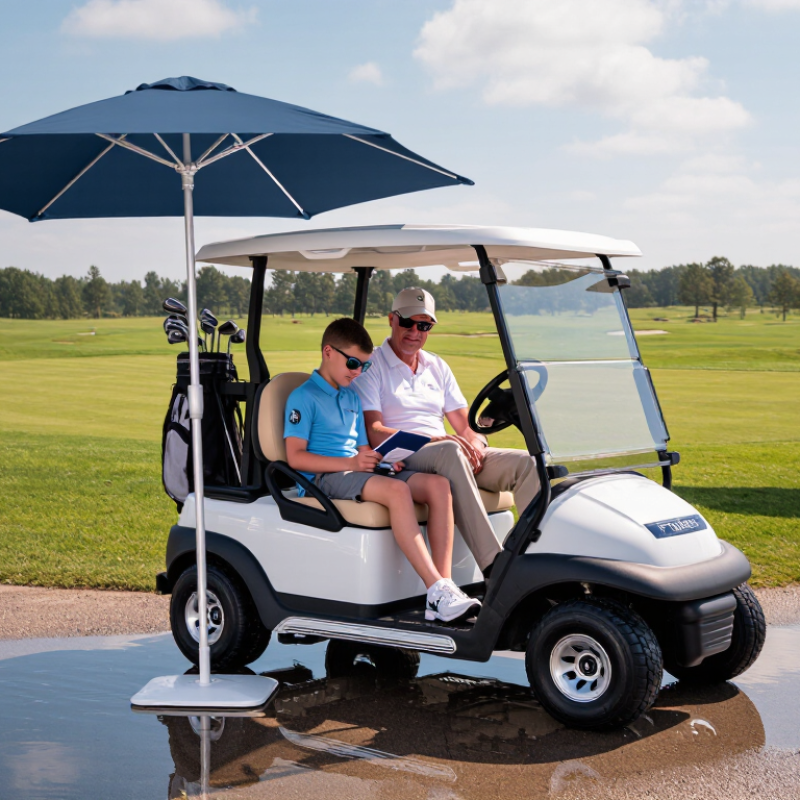
Golf courses face changing weather every day. Bright sun, sudden showers, and strong summer heat can affect a player’s concentration. They can also shorten the time guests want to spend on the course. A Golf Cart Umbrella offers a practical response. Mounted beside the cart, it creates a shaded and sheltered space without requiring players to hold an umbrella while driving or preparing a shot.

From course-management experience, small comfort improvements often influence the overall guest experience. A wide canopy can protect the driver and passenger during a brief rain shower. It may also reduce glare on the scorecard, clubs, and mobile devices. However, not every umbrella suits every cart. Course operators should check mounting stability, canopy size, folding performance, and resistance to wind before making a purchase. A loose fitting can become frustrating very quickly.

Durability matters too. Daily use exposes equipment to mud, moisture, ultraviolet light, and repeated opening. Strong frames, reliable clamps, and replaceable parts can support longer service life. Staff should inspect fixtures regularly, especially after storms or busy tournament days. This is not a perfect solution. An umbrella cannot replace safe driving or proper weather procedures. It may also create clearance concerns near trees and cart paths. Still, when selected carefully, a Golf Cart Umbrella can improve comfort, protect equipment, and present a more prepared image for the course. The real value appears in ordinary moments: a dry scorecard, a cooler seat, and a player who stays focused through changing weather.
Why Choose Golf Cart Umbrella for Golf Courses?

Golf Cart Umbrella Defined: 42–48-Inch Canopies for Course Mobility

Why Choose Golf Cart Umbrella for Golf Courses?

A golf cart umbrella is a practical canopy designed for moving golfers around the course. Most models measure 42 to 48 inches across. This size offers useful coverage without making the cart difficult to steer or park. The canopy can shade a player, clubs, scorecards, and small equipment during changing weather.

On busy courses, mobility matters as much as coverage. A compact umbrella should open smoothly and fit securely beside the cart seat or mounting point. Golf course staff should check the shaft, ribs, fabric, and attachment system regularly. Loose fittings can create unwanted movement on uneven paths. Wind changes quickly near water, trees, and open fairways. A vented canopy may reduce pressure, but it cannot replace careful handling.

Field experience also reveals a small compromise. A 48-inch canopy protects better, yet it may feel less convenient in narrow spaces. A 42-inch version is easier to manage, but it leaves more exposed shoulder area. There is no perfect size for every golfer or cart. Operators should test several canopies with real carts, not only product measurements. Water-resistant fabric helps during light rain, while UV-resistant material supports frequent summer use. Drying the canopy before storage can also limit odor and fabric wear. Small habits matter.

Weather Protection: UPF 50+ Coverage Under AATCC 183 Testing

A golf course can look inviting under bright sunlight, yet players quickly notice heat on their shoulders and hands. A golf cart umbrella offers practical shade during long rounds, especially across open fairways with little natural cover. The key detail is its tested UV protection, not simply its dark color or thick appearance.

When the umbrella fabric is evaluated under AATCC 183, laboratories measure how much ultraviolet radiation passes through the material. A UPF 50+ result indicates very strong protection, allowing only a small fraction of UV radiation to transmit through the tested fabric. This gives course operators a clearer performance reference than vague claims such as “sun resistant.” The test report should identify the fabric, test conditions, and result. Reliable information matters.

Shade feels cooler.

In daily use, the umbrella should cover the golfer’s upper body without blocking the driver’s movement or view. I have found that small gaps still matter; sunlight can reach the face, neck, and hands from changing angles. UPF 50+ fabric cannot replace sunscreen, protective clothing, or sensible breaks. It is not a magic shield. Wind, stretching, dirt, and aging may also affect performance, which deserves regular inspection. A stable frame, smooth opening, and secure attachment help maintain useful coverage throughout a round.

Safety and Fit: Applying ANSI/ITSDF B56.8’s 15-mph Cart Standard

Why Choose Golf Cart Umbrella for Golf Courses?

Safety begins with the cart, not the umbrella. ANSI/ITSDF B56.8 establishes a 15-mph maximum speed for golf cars within its scope. At that speed, a loose umbrella can become a serious distraction. It may lift suddenly, block the driver’s sightline, or shift the cart’s balance.

Choose a golf cart umbrella with a secure, purpose-built fitting system. The mount should remain stable during turns, braking, and uneven paths. It should also keep the canopy above the driver’s head without touching the steering area. A low edge can hide pedestrians, flags, or approaching carts. That is an easy detail to miss.

15-mph
maximum speed for golf cars within its scope

The U.S. Consumer Product Safety Commission’s NEISS analysis estimated 156,040 golf-cart-related emergency-department injuries from 2011 through 2020. That equals roughly 15,600 injuries each year. The figure does not prove umbrellas caused these incidents. It does show why small equipment choices deserve careful review.

Inspect mounts before each busy operating period. Check cracked clamps, loose bolts, and bent shafts.

Wind is another concern. A wide canopy can catch air near open fairways, even below 15 mph. In practice, a slightly smaller, firmly fitted umbrella may protect better than a larger unstable one.

Perfect installation is difficult, and staff judgment still matters.

Player and Course Benefits During Standard 18-Hole Rounds

Why Choose Golf Cart Umbrella for Golf Courses?

During a standard 18-hole round, players spend several hours outdoors. Sun, sudden rain, and strong wind can change comfort quickly. Weather changes quickly. The R&A’s Golf Around the World 2023 report recorded 66.6 million golfers across 206 countries and territories. That broad participation highlights a practical issue: courses must protect comfort without slowing play.

A golf cart umbrella gives players immediate shelter between shots. Its wide canopy can cover the golfer, clubs, scorecard, and part of the cart seat. This reduces wet grips and keeps scorecards readable during passing showers. Under strong sunlight, the umbrella can also limit direct exposure on exposed fairways. The National Golf Foundation reported 28.1 million on-course golfers in the United States during 2023. Even a small comfort improvement can affect many rounds.

For course operators, cart-mounted umbrellas may support steadier play and fewer weather-related interruptions. They also help protect cart interiors and rental equipment from rain. A secure mounting system matters, because a loose umbrella becomes a safety problem in wind. That detail is easy to overlook. Oversized canopies may obstruct nearby players or catch gusts, so staff should inspect fittings regularly. Golf courses should also consider storage, replacement parts, and cleaning after muddy rounds. The benefit is real, but it is not automatic. Good design and routine checks decide whether an umbrella helps the round.

Selection Criteria: Mounting, Wind Resistance, and 4-Hour Round Durability

Why Choose Golf Cart Umbrella for Golf Courses?

Mounting affects safety before shade. A reliable golf cart umbrella should attach to a reinforced frame, not a loose handle. Test the clamp on uneven paths, during turns, and near cart storage areas. It should release quickly during emergencies. A practical mount also keeps the canopy above the golfer’s head without blocking mirrors or reducing visibility. Small details matter.

Wind resistance needs measurable planning. The National Weather Service classifies 25–31 mph as a strong breeze, so course staff should review local NOAA wind records before selecting a canopy. A vented top can reduce pressure, while flexible ribs may absorb sudden gusts. Still, no umbrella is truly windproof. I would rather remove it early than trust marketing language. Some field tests also overlook crosswinds between trees and open fairways.

Four-hour round durability requires more than a strong frame. The World Health Organization’s Global Solar UV Index identifies levels of 8–10 as very high, making fabric coverage important during long summer rounds. Choose UV-resistant polyester, corrosion-resistant fittings, and stitching that survives repeated folding. ASTM G154 can guide accelerated UV testing, but laboratory exposure cannot fully copy rain, dust, and daily cart vibration. Inspect the hinge, clamp, and seams after every busy weekend. That habit may reveal failures before golfers do.

Why Choose Golf Cart Umbrella for Golf Courses? - Selection Criteria: Mounting, Wind Resistance, and 4-Hour Round Durability

Selection Dimension Recommended Specification Why It Matters on a Golf Course Practical Evaluation Method
Cart Mounting Adjustable clamp or bracket compatible with common golf-cart roof supports; tool-free tightening is preferred. A secure mount keeps the umbrella stable while preserving both hands for steering and equipment handling. Check fit on the cart frame, verify that the clamp does not obstruct controls, and test for movement after tightening.
Mount Adjustability Vertical adjustment and approximately 180° of directional adjustment are useful targets. The canopy can be positioned to block changing sun angles and rain without interfering with the golfer’s swing. Adjust the umbrella from seated and standing positions and confirm that the locking mechanism holds its angle.
Wind Resistance Vented canopy, flexible fiberglass ribs, reinforced hub, and a secure mounting joint. Vents allow wind to pass through the canopy and can reduce sudden lifting forces compared with a non-vented design. Review the manufacturer’s tested wind rating and inspect the frame for flex, cracking, or loose fasteners after testing.
Operating Wind Limit Use only within the stated tested limit; discontinue use during thunderstorms, lightning, or severe gusts. No portable umbrella should be treated as a storm shelter. Weather conditions can change quickly on open fairways. Require a documented test method and operating limit rather than relying on terms such as “storm-proof” alone.
Canopy Coverage Approximately 60–68 inches (152–173 cm) of canopy diameter is a practical range for one golfer and equipment. A larger canopy improves protection but also increases wind load and may restrict visibility or cart clearance. Measure the open canopy and check clearance from the golfer, cart roof, clubs, and nearby branches.
Four-Hour Round Durability Designed for at least four hours of repeated opening, closing, repositioning, and exposure to sun or rain. A standard round commonly lasts several hours, so the umbrella must remain functional throughout continuous outdoor use. Conduct a four-hour field trial and record canopy tension, clamp security, joint looseness, corrosion, and opening performance.
Frame and Rib Material Fiberglass ribs with a corrosion-resistant shaft or fittings are suitable for repeated outdoor exposure. Fiberglass is lightweight and electrically nonconductive, while corrosion-resistant components better withstand moisture. Inspect rib joints, shaft finish, spring action, and hardware after wet-weather use and storage.
Canopy Fabric Water-resistant polyester or nylon with tightly stitched panel seams and reinforced stress points. The fabric must shed rain, resist tearing, and maintain adequate tension during repeated use. Check seam quality, stitching density, coating uniformity, and signs of water pooling during a rain simulation.
Sun Protection Select fabric with a declared ultraviolet protection rating or verified UV-blocking performance. UV protection helps reduce direct sun exposure and may slow fabric fading and degradation. Request test documentation and inspect colorfastness and fabric condition after prolonged outdoor exposure.
Safety and Visibility Rounded edges, secure locking parts, high-visibility options, and no obstruction of the driver’s sightline. A golf-cart umbrella should protect users without creating collision, entanglement, or visibility hazards. Drive at low speed on a controlled path and check visibility, clearance, vibration, and emergency removal.
Storage and Maintenance Quick-release storage, a protective sleeve, drainage when wet, and replaceable mounting hardware. Dry storage and simple maintenance reduce mildew, corrosion, fabric damage, and downtime between rounds. Confirm that the umbrella fits the storage area and document cleaning, drying, inspection, and hardware replacement procedures.

Selection note: Wind ratings and UV-performance claims should be verified against the supplier’s test documentation. Always follow the golf course’s weather, cart-operation, and lightning-safety procedures.

Request a Quote

To learn more about any of the products and services provided by Abbott Ball Company, Inc., simply complete the form below.