
Fountain Construction matters because it shapes safety, durability, appearance, and long-term operating costs. For global buyers, a fountain is more than a decorative feature. It is a technical installation exposed to water, weather, visitors, and daily maintenance. A polished stone basin can still develop leaks if its drainage system is poorly planned. The wrong pump may also increase noise and energy use.
Reliable Fountain Construction begins with practical site research. Engineers should review climate, soil conditions, water quality, electrical access, and local installation requirements. They must select suitable materials, including corrosion-resistant metal, sealed lighting, durable stone, and waterproof structural layers. Experienced suppliers usually provide drawings, material certificates, load information, and maintenance guidance. These documents help buyers compare offers fairly and identify hidden risks before production begins.
Documentation matters.
Factory inspections, sample testing, and water-flow trials can reveal problems early. However, no project is flawless. A design may look impressive on paper but ignore cleaning access or seasonal temperature changes. That gap deserves honest discussion. Careful buyers ask how components are tested, how repairs are handled, and who supports the project after delivery. Questions reveal expertise. Clear communication also reduces misunderstandings across languages, time zones, and business cultures. Fountain Construction therefore connects creative ambition with engineering discipline. With qualified partners, global buyers can secure a fountain that performs reliably, protects investment, and remains attractive for years. Even small improvements in planning can prevent expensive changes later.
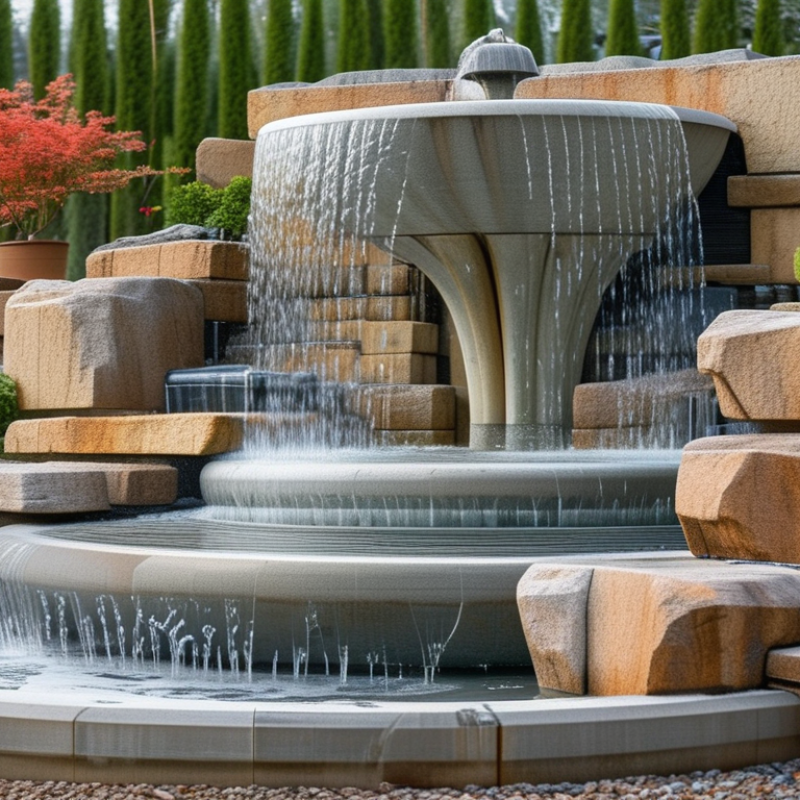
Fountain construction includes more than a basin and decorative nozzles. It covers structural design, waterproofing, pumps, filtration, electrical protection, drainage, lighting, controls, and maintenance access. A buyer should request drawings showing water flow, pipe sizes, pump duty, overflow routes, and cleaning points. Small omissions become expensive. A sealed equipment room may protect pumps, but it can also trap heat and complicate repairs.
Water management deserves careful attention. The United Nations World Water Development Report 2024 identifies water quality, scarcity, and climate pressure as growing infrastructure concerns. Recirculating fountains can reduce fresh-water demand, but only when filtration and automatic top-up systems work properly. The U.S. Environmental Protection Agency also links efficient water systems with lower operating waste. In practice, a clogged filter can increase pump load, cloud the water, and damage the visual effect within days.
Energy and safety are equally important. The 2024 Global Status Report for Buildings and Construction reports that buildings consume about 32% of global energy and produce roughly 34% of global carbon emissions. Fountain pumps therefore need efficient selection, variable-speed control, and realistic operating schedules. Electrical components require suitable protection near wet areas, while slip-resistant surfaces and controlled spray reduce public risks. Local codes still decide the final design. International buyers should verify certificates, spare-part access, climate resistance, and installer experience. A beautiful specification can still fail in freezing weather or dusty environments. That weakness deserves honest review.
| Construction Dimension | What It Includes | Typical Data or Specification | Why It Matters to Global Buyers |
|---|---|---|---|
| Structural Base | Reinforced concrete slab, supporting frame, waterproofed basin, and load-bearing details. | Common reinforced-concrete strength classes are approximately 20–40 MPa, subject to local engineering requirements. | The base determines stability, service life, drainage performance, and whether the fountain can safely withstand water, equipment, soil, and visitor loads. |
| Basin and Waterproofing | Concrete or prefabricated basin, waterproof membrane, joint sealant, expansion joints, and protective coating. | Waterproofing systems are selected according to hydrostatic pressure, temperature variation, UV exposure, and chemical compatibility. | Reliable waterproofing reduces leakage, structural damage, maintenance interruptions, and the risk of damage to surrounding paving or buildings. |
| Water-Circulation System | Collection tank, suction lines, return lines, valves, strainers, pumps, and balancing components. | Pump selection depends on required flow rate, total dynamic head, pipe length, fittings, elevation, and nozzle pressure. | Correct hydraulic sizing helps achieve the intended water pattern while controlling energy use, noise, splash, and operating costs. |
| Pumps and Motors | Submersible or dry-installed pumps, motors, control panels, overload protection, and maintenance access. | Pump motor ratings are commonly specified in kW; final capacity must be calculated from the designed flow and head rather than selected by appearance alone. | Compatible electrical and hydraulic specifications are essential when importing equipment into regions with different voltage, frequency, and safety requirements. |
| Nozzles and Water Effects | Vertical jets, fan nozzles, aeration nozzles, laminar outlets, spillways, manifolds, and adjustable fittings. | Nozzle performance is defined by flow rate, operating pressure, jet height, spray diameter, and spacing. | These parameters allow buyers to compare performance objectively and prevent mismatches between the visual design and the available pump capacity. |
| Filtration and Water Treatment | Strainers, filters, dosing equipment, circulation turnover, water-level control, and optional ultraviolet or other treatment systems. | A practical design may include continuous circulation and filtration sized to the basin volume, climate, debris load, and intended operating hours. | Water treatment helps control suspended solids, algae, odor, and biofouling, reducing cleaning frequency and protecting pumps and nozzles. |
| Electrical Infrastructure | Distribution board, residual-current protection, circuit breakers, grounding, conduits, junction boxes, and waterproof cable routes. | Outdoor fountain circuits generally require appropriate ingress protection, grounding, and residual-current protection in accordance with local electrical codes. | Electrical compatibility and safety documentation are critical for customs clearance, installation approval, insurance, and long-term public operation. |
| Lighting System | Underwater luminaires, cable glands, transformers or drivers, mounting brackets, and lighting controls. | Common underwater lighting specifications include low-voltage operation, IP-rated enclosures, color temperature, lumen output, and control protocol. | A correctly designed lighting system improves nighttime visibility and visual impact while reducing electrical and water-ingress risks. |
| Control and Automation | Programmable logic controller or timer, variable-speed drives, level sensors, wind sensors, lighting controls, and emergency stop functions. | Control logic may coordinate pump speed, lighting scenes, water level, filtration cycles, and automatic shutdown during abnormal conditions. | Automation supports consistent operation across time zones and climates, limits water loss during high winds, and simplifies remote or scheduled management. |
| Materials and Finishes | Stainless steel, concrete, stone, ceramic, glass, coated metals, grating, sealants, and exposed architectural finishes. | Material selection should consider corrosion resistance, water chemistry, freeze-thaw exposure, UV stability, slip resistance, and cleaning methods. | Material compatibility affects appearance, corrosion risk, replacement cycles, and suitability for coastal, tropical, cold, or heavily polluted environments. |
| Drainage and Overflow | Bottom drains, overflow channels, sump pits, isolation valves, backflow prevention, and connections to approved discharge systems. | Drainage capacity must account for rainfall intensity, make-up water, splash-out, cleaning discharge, and emergency emptying requirements. | Adequate drainage prevents flooding, protects adjacent structures, and helps the installation comply with local water-management rules. |
| Climate Adaptation | Freeze protection, insulation, ventilation, shade considerations, wind control, corrosion protection, and seasonal shutdown procedures. | Cold-climate designs may require complete draining, heated equipment areas, flexible joints, or components rated for freeze-thaw conditions. | Climate-specific construction reduces seasonal damage and ensures that the same fountain design performs reliably in different regions. |
| Safety and Accessibility | Slip-resistant surfaces, protected electrical equipment, safe access covers, barriers, rounded edges, signage, and maintenance clearances. | Safety requirements vary by jurisdiction and may address electrical protection, public access, water hygiene, fall prevention, and accessible routes. | Early compliance planning reduces redesign costs and supports approval for installation in public, commercial, hospitality, and residential settings. |
| Installation and Commissioning | Site preparation, equipment placement, pipe testing, cable testing, alignment, water balancing, programming, and performance verification. | Commissioning should verify leakage, flow, pressure, electrical protection, water level control, lighting, automation, and emergency shutdown functions. | A documented commissioning process confirms that the delivered system meets the agreed design instead of relying only on visual inspection. |
| Maintenance Access | Removable grilles, equipment rooms, isolation valves, service walkways, lifting points, spare parts, and maintenance manuals. | Access routes should allow safe removal of pumps, filters, valves, lights, and control components without dismantling the entire fountain. | Good maintainability lowers labor costs, shortens downtime, and makes international after-sales service more practical. |
| Documentation and Quality Control | Shop drawings, hydraulic calculations, electrical diagrams, material certificates, inspection records, test reports, and operation manuals. | A complete handover package normally records approved materials, pressure tests, insulation tests, control settings, warranties, and recommended maintenance intervals. | Clear documentation helps global buyers coordinate local contractors, verify specifications, obtain approvals, and manage future repairs or upgrades. |