MON - FRI 8AM - 5PM

What Are 316 Stainless Steel Properties from China?

Understanding 316 stainless steel properties from China requires more than reading a supplier catalogue. The grade is commonly identified as 06Cr17Ni12Mo2 under China’s GB/T 20878 system. ASTM A240 specifies approximately 16–18% chromium, 10–14% nickel, and 2–3% molybdenum for Type 316 plate, sheet, and strip. That molybdenum addition improves resistance to chlorides, seawater exposure, and many industrial chemicals. It does not make the steel corrosion-proof.

The details matter.

The Nickel Institute’s stainless steel technical guidance links molybdenum-bearing grades with improved localized corrosion resistance. The International Stainless Steel Forum reported global stainless steel production of about 58.4 million tonnes in 2023, with China representing the largest producing region. This scale supports broad Chinese manufacturing experience, from precision tubing to heavy chemical-processing equipment. However, production volume alone cannot verify quality. A mill certificate, heat number, chemical analysis, and mechanical test results provide stronger evidence. EN 10204 3.1 documentation is commonly requested for traceability.

In practical use, 316 can retain useful strength across ordinary process temperatures and offers good weldability when correctly fabricated. Low-carbon 316L is often preferred after welding because it reduces sensitization risks. Surface finish also changes performance. A smooth, properly pickled surface usually cleans more easily than a rough, heat-tinted weld zone. That difference is easy to miss.

Chinese supply chains vary. Some mills deliver excellent consistency; others need closer inspection. Buyers should compare standards, testing scope, surface condition, and actual service chemistry. These 316 stainless steel properties are reliable only when composition, processing, and application conditions are evaluated together.
What Are 316 Stainless Steel Properties from China?

What Is 316 Stainless Steel and Why Is It Used?

316 stainless steel is an austenitic stainless alloy designed for tougher corrosive environments. ASTM A240/A240M specifies roughly 16–18% chromium, 10–14% nickel, and 2–3% molybdenum. That molybdenum addition matters. It improves resistance to chloride pitting, especially around coastal air, process water, and cleaning chemicals.

It is not rust-proof.

On a fabrication floor, 316 can develop brown spots around welds, scratches, or trapped moisture. Proper pickling, passivation, and clean handling remain essential.

The material is also easy to form and weld, making it useful for food equipment, medical components, marine fittings, tanks, and architectural details.

However, severe hydrochloric acid or stagnant saltwater can still attack it. Alloy selection must follow the actual chemical exposure, temperature, and stress conditions.

The Nickel Institute describes 316 as a practical choice where higher corrosion resistance is needed than standard 304 steel can provide. Its typical pitting resistance equivalent number is about 24–26, based on chromium, molybdenum, and nitrogen content.

The International Stainless Steel Forum reported approximately 58.4 million tonnes of stainless crude steel production in 2023, with China contributing about 36.7 million tonnes. These figures show China’s manufacturing scale, but they do not guarantee every batch has equal performance.

Mill certificates, chemical analysis, surface inspection, and independent testing still deserve attention.
What Are the Main Properties of 316 Stainless Steel?

316 stainless steel is an austenitic stainless alloy valued for corrosion resistance in demanding service. Chromium forms a protective surface film that repairs itself when oxygen is available. Nickel helps maintain its stable austenitic structure and improves toughness. Molybdenum strengthens resistance to pitting, especially in chloride-bearing water. A coastal handrail may therefore remain cleaner than ordinary steel.

However, corrosion resistant does not mean corrosion proof. That distinction is often missed.

The alloy usually shows low magnetism in its annealed condition, although forming or machining can increase magnetic response. It combines good ductility with useful toughness, even at low temperatures. Its ductility supports bending, deep drawing, and fabricated pipework. Welding is generally straightforward. For welded structures, the low-carbon 316L grade can reduce carbide precipitation near the weld. Its strength is practical, not exceptional. Cold working increases strength quickly, but it also makes cutting and drilling more demanding. Sharp tools and steady feeds matter.

Actual performance depends on surface finish, heat treatment, chloride concentration, temperature, and joint design. Crevices under deposits can still encourage localized attack. Poor cleaning may leave stains that look like material failure. Sometimes, the installation is the real problem.

Reliable selection should include mill certificates, dimensional checks, and corrosion testing suited to the service environment. A datasheet alone is not enough. Even experienced engineers should review assumptions before specifying 316 stainless steel.

How Does China Manufacture and Supply 316 Stainless Steel?

China manufactures 316 stainless steel through melting, refining, casting, hot rolling, and controlled finishing. The alloy commonly contains molybdenum, which improves resistance to chlorides and many industrial chemicals. Nickel supports its toughness and corrosion performance.

In experienced mills, raw materials are weighed before electric-arc melting. Argon oxygen decarburization helps reduce carbon while preserving the required chemistry. Slabs are reheated and rolled into sheets, coils, bars, or pipes. Surface treatments may include pickling, passivation, polishing, or brushing. Factory engineers usually check thickness, hardness, tensile strength, and chemical composition. Portable PMI testing can verify molybdenum content on finished bundles.

Supply reliability depends on more than production capacity. Reputable exporters provide heat numbers, inspection records, material certificates, and packing photographs. Wooden cases, moisture barriers, and edge protection reduce damage during ocean transport. Buyers should confirm whether the product follows ASTM, EN, or another agreed standard. Small differences in tolerance or surface finish can affect fabrication costs.

No mill is flawless. Human inspection can miss a surface mark, especially on long coils. Independent testing is useful for critical applications. Clear drawings, sample approval, and written acceptance criteria prevent many disputes. A realistic supplier also explains lead times, minimum quantities, and possible production limits before accepting an order.

Where Is China-Made 316 Stainless Steel Commonly Used?

China-made 316 stainless steel is widely selected where moisture, salts, and chemicals challenge ordinary steel. Its typical composition includes 16–18% chromium, 10–14% nickel, and 2–3% molybdenum, according to ASTM A240/A240M. Molybdenum improves resistance to chloride-related pitting. That matters near coastlines, food-processing floors, and chemical cleaning areas.

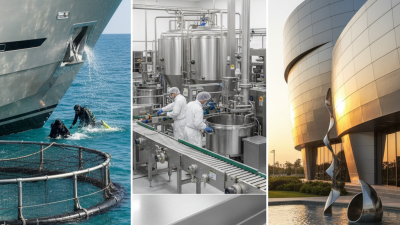
Where is it commonly used? Food and beverage factories use 316 for tanks, pumps, pipe fittings, and conveyor components. Pharmaceutical facilities often specify it for process vessels and cleanroom hardware. Marine equipment, coastal construction, and desalination systems also rely on its stronger chloride resistance. The Nickel Institute identifies 316 grades as suitable for many marine and chemical environments, although exposure conditions still require careful evaluation. It is not magic.

The scale of Chinese production supports broad availability. The International Stainless Steel Forum reported about 58.4 million tonnes of global crude stainless steel production in 2023, with China contributing roughly 63%. This capacity can support customized thicknesses, welded assemblies, and large project orders. However, “made in China” does not guarantee identical performance. Mill certificates, ASTM compliance, surface finish, heat treatment, and corrosion testing should be checked. A 316 label alone is insufficient. That assumption needs checking. In practice, crevices, stagnant water, poor welding, and surface contamination can still cause corrosion, even when the material grade is correct.

What Are 316 Stainless Steel Properties from China?

Type 316 stainless steel is an austenitic stainless steel containing chromium, nickel, and molybdenum. The molybdenum content improves resistance to chlorides and many industrial chemicals. The composition ranges below reflect ASTM A240 Type 316 requirements by mass percentage.

Minimum Tensile Strength 515 MPa ASTM A240 requirement
Minimum Yield Strength 205 MPa 0.2% offset, ASTM A240
Minimum Elongation 40% In 50 mm, ASTM A240
Maximum Hardness 217 HBW Brinell hardness limit

Where Is China-Made 316 Stainless Steel Commonly Used?

China-made 316 stainless steel is commonly used for chemical-processing equipment, food-processing machinery, pharmaceutical and sanitary components, marine and coastal hardware, heat exchangers, storage tanks, piping, and architectural components exposed to chlorides. The actual suitability depends on the product form, heat treatment, surface condition, fabrication quality, and compliance with the required standard and inspection documents. Country of manufacture alone does not determine performance.

How Can Buyers Evaluate 316 Stainless Steel Quality from China?

What Are 316 Stainless Steel Properties from China?

How Can Buyers Evaluate 316 Stainless Steel Quality from China?

Buyers should verify the material, not only the supplier’s description. Genuine 316 stainless steel normally contains molybdenum for better resistance to chloride corrosion. Its chromium, nickel, molybdenum, carbon, and nitrogen levels must match the selected standard. Ask for a mill test certificate linked to each heat number. The certificate should show chemical composition, tensile strength, yield strength, elongation, and hardness.

Check traceability carefully. Heat numbers should appear on documents, labels, and, when possible, the material itself. A handheld PMI test can quickly confirm chromium, nickel, and molybdenum. However, XRF cannot reliably measure carbon. Use laboratory testing when low-carbon grades or welding performance matter. Request independent inspection for thickness, surface defects, flatness, dimensions, and quantity before shipment. Small scratches can become serious problems in marine or chemical environments.

Do not judge quality from a bright surface alone. It can mislead. Review the manufacturing standard, heat-treatment records, and passivation details. Ask for production photographs, sample reports, and previous inspection records. A factory visit may reveal storage near carbon steel, unclear labeling, or poor moisture control. I once treated paperwork as stronger evidence than physical sampling; that was a weak assumption. Buyers should test representative samples, including different coils or plates. Clear acceptance criteria prevent arguments after delivery.

What Are 316 Stainless Steel Properties from China? - How Can Buyers Evaluate 316 Stainless Steel Quality from China?

Evaluation Dimension 316 Stainless Steel Data or Requirement How Buyers Can Verify Quality Buyer Acceptance Notes
Material designation Austenitic stainless steel containing chromium, nickel, and molybdenum. Common equivalents include UNS S31600 for 316 and UNS S31603 for 316L. Check the purchase order, product marking, mill certificate, and independent positive material identification (PMI). Do not accept a certificate that identifies only “stainless steel” without the specific grade and product standard.
Chromium (Cr) 16.0–18.0% for ASTM A240 316/316L flat products. Verify the heat-analysis result on the material test certificate and confirm it using laboratory OES or XRF, where suitable. Chromium supports passive-film formation and general corrosion resistance; the applicable standard controls the final limits.
Nickel (Ni) 10.0–14.0% for ASTM A240 316/316L flat products. Compare the certificate with an independent PMI or laboratory chemistry report. Nickel helps stabilize the austenitic structure and contributes to ductility and formability.
Molybdenum (Mo) 2.0–3.0% for ASTM A240 316/316L flat products. Request a chemistry report showing Mo content; standard handheld XRF can generally screen for molybdenum. Molybdenum improves resistance to chloride-related pitting compared with 304, but 316 is not immune to corrosion in severe chloride environments.
Carbon (C) 316: maximum 0.070%. 316L: maximum 0.030% under ASTM A240. Check the heat-analysis certificate or use combustion analysis when carbon accuracy is critical. 316L is preferred for welded assemblies because its lower carbon content reduces the risk of sensitization during welding.
Other chemistry limits Typical ASTM A240 maximums for both grades: Mn 2.00%, Si 1.00%, P 0.045%, and S 0.030%. Compare every listed element with the exact edition and product form specified in the contract. Chemical limits can differ by standard, product form, and grade variant; do not use a generic chemistry table as the sole acceptance basis.
Tensile strength ASTM A240 minimum: 515 MPa for 316 and 485 MPa for 316L plate, sheet, and strip. Review the tensile-test result and, for critical orders, request testing to ASTM E8/E8M or the applicable equivalent. The requirement may change for bars, tubes, forgings, or pressure products, so the product standard must be stated.
Yield strength ASTM A240 minimum: 205 MPa for 316 and 170 MPa for 316L at 0.2% offset. Check the certified mechanical test report and verify specimen orientation and test temperature when relevant. Yield strength is not interchangeable with tensile strength; both values should be reported separately.
Elongation ASTM A240 minimum elongation is generally 40% in 50 mm for 316 and 316L flat products. Confirm the gauge length, specimen direction, and test method in the mechanical test report. High elongation is consistent with the ductility expected from annealed austenitic stainless steel.
Hardness ASTM A240 maximum for annealed 316/316L flat products: 217 HBW, 95 HRB, or ಮಾಡ 15 HRC equivalent reporting limits as specified by the standard. Use calibrated Brinell, Rockwell, or approved equivalent equipment and record the test scale. Cold working can increase hardness; compare results with the ordered temper and delivery condition.
Heat treatment and condition 316 and 316L products are commonly supplied in an annealed and rapidly cooled condition, subject to the applicable product standard. Request heat-treatment records or certificate statements and verify the specified delivery condition. For welded components, specify post-fabrication cleaning and passivation requirements separately.
Surface finish Common finishes include 2B, BA, No. 1, brushed, and polished surfaces; finish designations must be defined by the relevant standard or purchase specification. Inspect under consistent lighting and compare with an approved sample or surface roughness requirement. Reject or investigate deep scratches, scale, embedded iron, lamination, edge cracking, and unremoved weld discoloration.
Dimensions and tolerances Thickness, width, length, flatness, ovality, and edge condition depend on the product form and dimensional standard. Measure with calibrated micrometers, calipers, gauges, and straightedges at defined sampling points. State the tolerance standard and measurement locations before production to avoid disputes.
Traceability Each batch should be linked to a heat number, product identification, quantity, production date, and material certificate. Match markings on the material, packing list, certificate, and purchase order. Unmatched or missing heat numbers significantly reduce confidence in the reported chemistry and mechanical results.
Independent inspection Independent inspection can cover chemistry, dimensions, surface condition, mechanical properties, packaging, and documentation. Use a qualified third-party inspection body or an accredited laboratory agreed in the contract. Define sampling frequency, witness points, test standards, and nonconformance procedures before shipment.
Corrosion-resistance assessment 316 generally offers better resistance to chloride pitting and crevice corrosion than 304 because of its molybdenum content. Assess chemistry, surface cleanliness, weld condition, environment, and any specified corrosion test together. There is no universal salt-spray pass value for every 316 application; use a project-specific test method and acceptance criterion.
Documentation package A robust package normally includes the purchase specification, material certificate, heat analysis, mechanical results, dimensional report, inspection report, and packing details. Review documents before shipment and confirm that test standards, grade, product form, heat number, and quantities are consistent. Certificates should support the exact supplied material, not merely describe a similar grade or a different product form.
Reference basis: The numerical values above are primarily aligned with ASTM A240 requirements for 316 and 316L plate, sheet, and strip. Buyers should confirm the exact applicable standard, product form, edition, test method, and contractual acceptance criteria before placing an order.

Request a Quote

To learn more about any of the products and services provided by Abbott Ball Company, Inc., simply complete the form below.