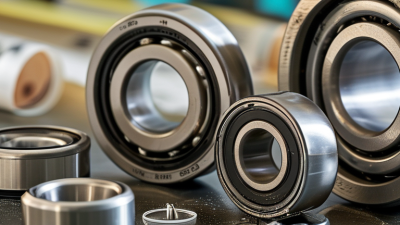
Choosing reliable ball bearings is not simply a matter of comparing prices or counting factory years. Global buyers must examine accuracy, material quality, load ratings, sealing systems, traceability, and after-sales support. A bearing may look perfect on a clean product page, yet fail early in a dusty workshop or under unexpected vibration.
Bearing specialist Tedric A. Harris expressed a practical principle: “Bearing life is a system issue, not a catalog promise.” This idea remains important when evaluating China’s leading manufacturers. The best suppliers usually explain their steel grades, heat-treatment methods, cage designs, lubrication options, and quality-control procedures. They can also provide test data, inspection records, and clear tolerances for different applications. Small details matter. A rough raceway, inconsistent clearance, or weak seal can quietly increase noise and maintenance costs.
This guide examines ten China ball bearing manufacturers for international buyers. It considers production capability, export experience, customization, industry coverage, certifications, and communication reliability. Some companies may excel in automotive applications, while others focus on industrial machinery, agricultural equipment, electric motors, or miniature bearings. No supplier is perfect. Even an experienced factory may have uneven delivery performance or limited support in certain regions.
That is worth admitting.
Buyers should treat this list as a starting point, not a final purchasing decision. Samples, technical drawings, factory audits, and application testing still matter. A dependable partnership develops through evidence, careful questions, and honest performance reviews.
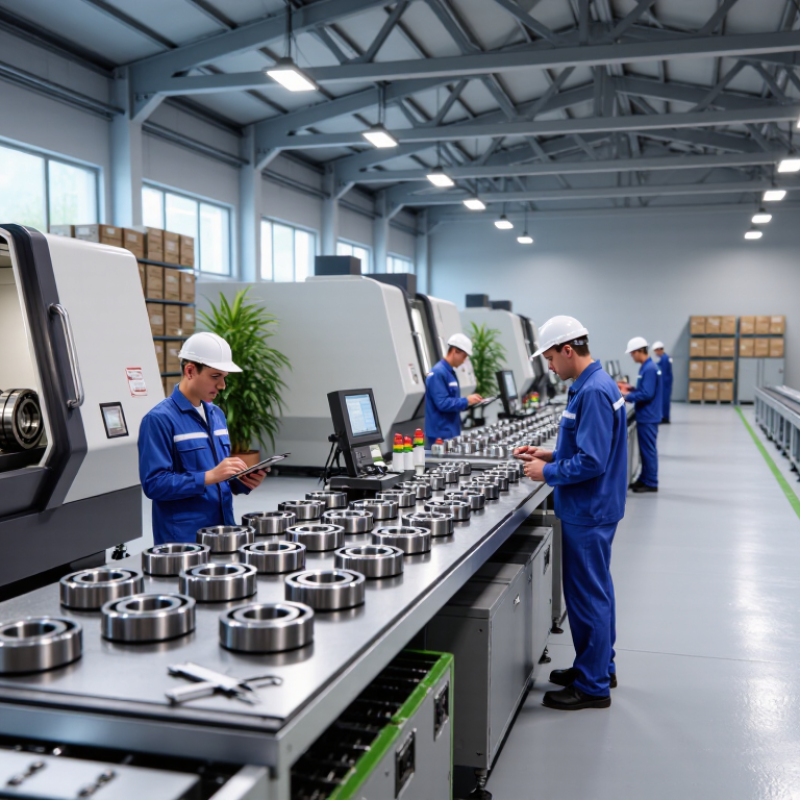
A reliable Chinese ball bearing manufacturer proves its capability through repeatable details, not impressive catalog language. Global buyers should inspect production records, process controls, and inspection equipment. A serious factory can explain how steel is sourced, heat-treated, ground, cleaned, and packed. It should also provide material certificates and batch traceability.
Look closely at dimensional control. Bearing performance depends on bore size, roundness, clearance, noise, vibration, and surface finish. Ask for inspection reports linked to specific production lots. Load testing should match the bearing’s intended application, rather than relying on generic figures. Packaging deserves attention too. Sealed bags, moisture protection, clear labels, and strong cartons reduce damage during long transport.
Real experience often reveals small weaknesses. A factory may have modern equipment but inconsistent operator training. Another may pass routine checks while responding slowly to complaints. Request a sample order before signing a large contract. Compare samples from different batches. Audit corrective-action records, production capacity, delivery history, and communication speed. Certifications can support trust, but they cannot replace direct verification.
No manufacturer is perfect. A dependable supplier admits limits, records defects, and explains how problems are corrected. Buyers should also challenge their own assumptions, especially when choosing only by price. A lower quotation can hide shorter testing, weaker packaging, or unstable materials. Reliability grows through evidence, transparent communication, and repeated performance over time.
| Rank | Anonymous Manufacturer Profile | Main Bearing Categories | Typical Accuracy Classes | Common Material Grades | Production Capability | Quality Documentation | Customization Support | Typical Lead Time | Best-Fit Applications |
|---|---|---|---|---|---|---|---|---|---|
| 01 | Profile A — High-Volume Export Manufacturer | Deep-groove, angular-contact, tapered-roller, spherical-roller | P0, P6, P5; P4 for selected lines | GCr15 / 100Cr6; stainless steel options | Standard metric and inch sizes; medium-to-large batch production | ISO 9001 system, dimensional reports, material certificates, lot traceability | Seals, shields, internal clearance, lubrication, packaging | 15–35 working days for standard items | Motors, pumps, gearboxes, agricultural machinery |
| 02 | Profile B — Precision Bearing Specialist | Angular-contact, miniature, thin-section, deep-groove | P6, P5, P4; ABEC-equivalent documentation on request | GCr15 / 100Cr6; ceramic balls available for selected designs | Small-bore and high-speed production; controlled assembly | ISO 492 inspection records, runout data, vibration and noise testing | Preload, contact angle, cage material, grease selection | 20–45 working days for precision or custom items | Machine tools, robotics, encoders, high-speed equipment |
| 03 | Profile C — Industrial Heavy-Duty Manufacturer | Tapered-roller, spherical-roller, cylindrical-roller, thrust bearings | P0, P6; enhanced clearance and load options | GCr15 / 100Cr6; carburized steel for selected heavy-load designs | Large bore and high-load capacity; heat-treatment capability | Load calculation sheets, hardness reports, dimensional inspection records | Clearance, heat stabilization, special seals, housing fit support | 25–50 working days depending on size and quantity | Steel mills, mining equipment, conveyors, construction machinery |
| 04 | Profile D — OEM Customization Manufacturer | Deep-groove, flanged, non-standard, insert bearings | P0, P6; project-specific tolerance control | GCr15 / 100Cr6; stainless steel and coated components | Drawing-based production; prototype and small-batch support | First-article inspection, control plans, sample approval records | High flexibility for dimensions, flanges, seals, grease and marking | 20–40 working days after drawing approval | Specialized machinery, agricultural tools, material-handling systems |
| 05 | Profile E — Stainless and Corrosion-Resistant Manufacturer | Stainless deep-groove, miniature, flanged and sealed bearings | P0, P6; selected P5 products | AISI 440C, corrosion-resistant stainless steel, polymer cages | Small and medium sizes; clean assembly for special applications | Material certificates, salt-spray or corrosion test data when applicable | Food-grade grease, special seals, stainless housings and shields | 20–45 working days | Food processing, medical devices, marine and chemical equipment |
| 06 | Profile F — Electric Motor Bearing Manufacturer | Deep-groove, insulated, high-speed and low-noise bearings | P0, P6, P5; low-vibration inspection available | GCr15 / 100Cr6; electrically insulated coating options | High-volume standardized production with automated testing | Noise and vibration records, grease data, balance and clearance reports | C3/C4 clearance, seals, insulation coating, low-noise grease | 15–30 working days for regular sizes | Electric motors, fans, compressors, generators and pumps |
| 07 | Profile G — Agricultural and Automotive Supply Manufacturer | Insert, flanged, tapered-roller, wheel and tensioner bearings | P0, P6; application-specific internal clearance | GCr15 / 100Cr6; high-sealing elastomer options | Standardized series with application-specific assemblies | Life-test summaries, seal-performance data, dimensional reports | Eccentric locking collars, special seals, housings and relubrication features | 20–40 working days | Farm machinery, trailers, wheel assemblies and belt systems |
| 08 | Profile H — Small-Batch and Rapid-Prototyping Manufacturer | Miniature, thin-section, flanged and custom bearings | P0, P6; tolerance review based on drawings | GCr15 / 100Cr6; stainless steel and ceramic hybrid options | Prototype, low MOQ and mixed-size order capability | Sample inspection reports, material declarations and packing records | Strong support for drawings, samples, packaging and small revisions | 10–30 working days for standard prototypes | Automation prototypes, instruments, laboratory equipment and small devices |
| 09 | Profile I — Conveyor and Material-Handling Manufacturer | Deep-groove, spherical-roller, pillow-block and take-up bearings | P0, P6; clearance and sealing optimized for dusty environments | GCr15 / 100Cr6; ductile-iron and pressed-steel housing options | Bearing units, housings and assemblies for continuous operation | Housing inspection, seal checks, load ratings and grease specifications | Housing dimensions, locking method, seals and relubrication design | 20–45 working days | Conveyors, aggregate plants, logistics systems and bulk handling |
| 10 | Profile J — Cost-Competitive Standard Bearing Manufacturer | Deep-groove, tapered-roller, spherical and thrust bearings | Primarily P0; P6 available for selected sizes | GCr15 / 100Cr6; standard steel cages and seals | High-volume standard sizes; price-sensitive OEM and replacement supply | Certificate of conformity, batch inspection and packing list | Basic seal, clearance, grease, packaging and private-label-free packing options | 10–25 working days for stocked or regular items | General machinery, repair markets, distributors and low-to-medium duty equipment |