Choosing nitronic 60 stainless steel in 2026 requires more than comparing tensile strength or purchase price. The correct decision begins with the actual service environment. Will the part face galling, sliding contact, chloride exposure, vibration, or repeated cleaning? A valve stem, pump shaft, fastener, and food-processing guide may need different evidence, even when they share the same alloy.
Dr. James R. Davis, editor of ASM’s Stainless Steels handbook, states, “Stainless steels are iron-base alloys containing a minimum of about 11% chromium.” This definition explains corrosion resistance, but it does not guarantee successful performance. Nitronic 60 stainless steel is valued for its high galling resistance, useful strength, and dependable wear behavior. Those advantages matter when two metal surfaces repeatedly rub under pressure. They matter less if fabrication, welding, or finishing controls are weak.
Look closely at the details.
A practical selection review should examine temperature, load, surface finish, mating materials, corrosion chemistry, and required tolerances. Request current mill certificates, heat numbers, inspection records, and applicable ASTM documentation. Confirm whether the product is bar, plate, sheet, tube, or a finished component. Manufacturing history can change real-world results. A polished laboratory sample may not represent a machined production part. That is easy to overlook.
This guide also considers availability, lifecycle cost, and supplier consistency in 2026. The cheapest quote may create expensive downtime later. Still, nitronic 60 stainless steel is not a universal solution. Testing remains necessary when failure carries serious operational consequences. Exact service data should lead the choice, not a fashionable material name.
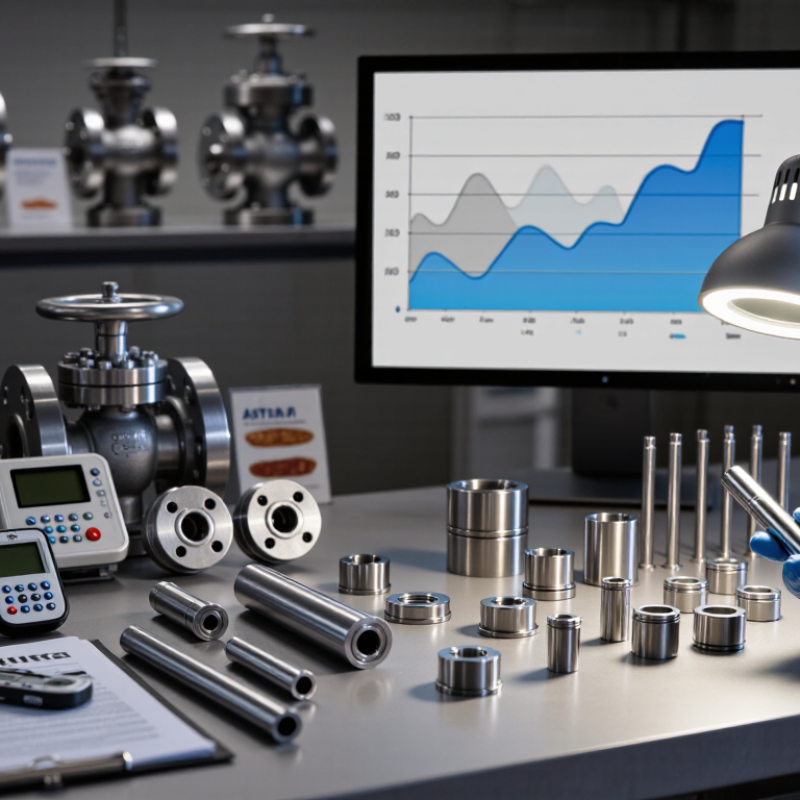
Choosing Nitronic 60 stainless steel in 2026 requires more than checking its name. Its typical composition includes 16–18% chromium, 8–9% nickel, 7–9% manganese, and 3.5–4.5% silicon. Nitrogen, usually around 0.08–0.18%, strengthens the austenitic structure. Carbon is commonly limited to 0.03% maximum. These figures should be verified against the certified heat analysis, not copied from a general catalogue.
Its main advantage is resistance to galling in sliding contact. That matters in valve stems, pins, bushings, and heavily loaded fasteners. ASM Handbook data identifies nitrogen-strengthened austenitic steels as offering higher strength than conventional 300-series grades. Typical annealed tensile strength may approach 690 MPa, while yield strength can exceed 345 MPa, depending on product form and specification. Real performance changes with surface finish, lubrication, temperature, and cold work. It is not magic.
For 2026 procurement, compare the mill certificate with ASTM A276/A276M requirements for stainless steel bars and shapes. Pressure equipment users should also check the current ASME BPVC Section II material tables. These standards control chemistry, mechanical testing, dimensions, and traceability. ASTM documents are revised periodically, so the 2026 edition must be confirmed before purchase. A practical mistake is selecting the alloy from hardness alone. Test the actual mating surfaces when galling risk is critical.
Nitronic 60 Stainless Steel: Composition, Properties, and 2026 Standards
For 2026 purchasing, compare the material certificate with the current applicable edition of ASTM A240/A240M or the corresponding ASME SA-240 specification. Exact chemistry limits, product form, heat treatment, and mechanical requirements should be confirmed for the selected thickness and application.
Identify the required performance before selecting Nitronic 60 stainless steel. Start with load, temperature, corrosion exposure, and sliding conditions. A valve stem needs different evidence than a pump shaft. Measure contact pressure, speed, surface finish, and lubrication limits. Small details decide failure.
ASTM A276 and ASTM A240 provide relevant requirements for UNS S21800 products. ASM Handbook data commonly reports annealed yield strength near 310 MPa and tensile strength near 655 MPa. Actual values change with product form, thickness, and processing. Do not treat a handbook number as a guaranteed design value. Request certified test results for the exact heat and condition.
Galling resistance is often the main reason for choosing this alloy.
Verify it through an application-specific test, such as ASTM G98 galling evaluation, rather than relying on marketing language. Check mating materials, hardness, alignment, and surface roughness. A dry stainless-steel pair can still seize under high pressure. It happens.
For corrosive service, compare the real fluid, concentration, temperature, and oxygen level against corrosion data. NACE MR0175 or ISO 15156 may matter in sour-service environments, but compliance depends on product condition and service limits. Salt spray results alone are weak evidence for complex process fluids. I would also review inspection records, machining experience, and dimensional stability, because excellent laboratory performance may not survive poor installation.
Choosing Nitronic 60 in 2026 starts with the failure mode, not a catalog label. In sliding assemblies, its galling resistance can outperform 304 and 316 stainless steel. Consider valve stems, pump wear rings, and threaded fasteners exposed to repeated movement. A dry stainless-on-stainless test can reveal more than a polished datasheet. It is not magic. Poor alignment, rough threads, or trapped grit can still cause seizure.
Against 304, Nitronic 60 usually offers greater strength and better resistance to adhesive wear. 304 remains easier to source, form, and machine for general enclosures and brackets. Compared with 316, Nitronic 60 may reduce galling while providing useful chloride resistance. However, 316 can be safer in severe marine or chemical exposure, depending on temperature and contaminants. Do not assume one grade wins.
17-4 PH stainless steel brings higher strength after heat treatment, making it suitable for shafts and loaded hardware. Its corrosion performance and toughness can vary by condition, so testing matters. Duplex grades may offer stronger chloride resistance and yield strength, but fabrication control becomes more demanding. Compare mating surfaces, torque, hardness, weld procedures, and cleaning cycles. Cost can mislead. A cheaper bar may create expensive maintenance if threads seize. Nitronic 60 also needs careful machining; dull tooling can damage its surface. Review operating data after installation. The first selection is rarely perfect.
How to Choose Nitronic 60 Stainless Steel in 2026?
Choosing Nitronic 60 starts with the workshop, not the datasheet. World Stainless reported global stainless steel production at about 62.6 million tonnes in 2024, showing how widely fabrication experience matters. This alloy resists galling, but it is not effortless to cut. Use rigid fixturing, sharp tooling, steady feeds, and plenty of coolant. Avoid rubbing. It quickly creates heat and work-hardening. Short tool paths help.
Welding needs clean preparation and controlled heat input. Follow qualified procedures, then inspect distortion around thin sections. ASTM A380 supports cleaning and passivation practices, while ASTM A967 defines accepted passivation testing. These standards do not replace a procedure qualified for your joint design. That detail is often missed. Nitronic 60 may weld well, yet poor fit-up can still produce a disappointing assembly.
Surface finishing should match service conditions. ISO 21920 provides current terminology for profile measurement, but it does not choose the required roughness for you. A sliding pin may need a smoother, directional finish than a structural bracket. Specify Ra, measurement method, abrasive sequence, and final cleaning. Electropolishing can improve cleanliness, but it may alter dimensions. I would verify this on a sample first. Perfect on paper is not always perfect in production.
| Evaluation Area | Relevant Requirement | Typical Nitronic 60 Data or Behavior | Selection Interpretation | Recommended Practice |
|---|---|---|---|---|
| Material identification | Confirm the grade and applicable specification before purchasing. | Nitronic 60 is an austenitic stainless steel commonly identified by UNS S21800. Exact mechanical and chemical limits depend on the governing product specification. | Use the grade when galling resistance and wear performance are more important than maximum corrosion resistance or low cost. | Specify UNS S21800, product form, condition, dimensions, test requirements, and certification documents. |
| Mechanical strength | Assess load capacity, deformation risk, and temperature of service. | Typical minimum values cited for annealed product are about 620 MPa tensile strength, 275 MPa 0.2% yield strength, and 35% elongation; values vary with form and specification. | Provides higher strength than many conventional annealed austenitic stainless steels while retaining useful ductility. | Use certified mill data for design calculations rather than relying on generic typical values. |
| Galling and wear | Evaluate sliding contact, repeated assembly, and metal-to-metal movement. | Nitronic 60 is recognized for strong resistance to galling and adhesive wear in many unlubricated or lightly lubricated stainless-steel contact applications. | It can be a suitable choice for bushings, valve components, fasteners, shafts, and wear surfaces where galling is a major failure mode. | Validate the actual load, speed, surface pressure, counterface, lubrication, and temperature through application testing. |
| Corrosion resistance | Consider chlorides, acids, moisture, temperature, and crevice conditions. | Offers corrosion resistance broadly comparable to many 18-8 austenitic stainless steels in general environments, but it is not a universal substitute for higher-alloy corrosion-resistant grades. | Suitable for many industrial and marine-adjacent environments, but chloride pitting and crevice corrosion still require evaluation. | Review solution chemistry and test data; do not select solely from a general corrosion-resistance label. |
| Cold forming and fabrication | Determine whether the part will be bent, deep drawn, rolled, or cold headed. | The austenitic structure provides good ductility, but substantial strain hardening can increase forming force and springback. | Good for many forming operations, but severe deformation may require process trials or intermediate annealing. | Use generous bend radii, control work hardening, maintain sharp tooling, and verify final dimensions after springback. |
| Machining difficulty | Assess turning, milling, drilling, chip control, tool life, and production rate. | Machinability is generally more difficult than free-machining stainless steel because of work hardening, toughness, and a tendency to generate heat at the cutting edge. | The grade may reduce galling in service but can increase machining cost and cycle time. | Use rigid setups, positive cutting geometry, adequate coolant, consistent feed, and avoid rubbing or dwelling. |
| Machining controls | Choose stable cutting parameters for the selected tool and machine. | Exact speed and feed depend on tool material, operation, diameter, rigidity, coolant, and stock condition; universal cutting values are not reliable. | A controlled parameter-development trial is more dependable than copying settings from ordinary 304 stainless steel. | Start with the tooling supplier's stainless-steel recommendations and adjust using cutting temperature, chip form, tool wear, and surface finish. |
| Welding compatibility | Select a process that preserves joint strength, corrosion resistance, and dimensional accuracy. | Common fusion processes such as GTAW, GMAW, and SMAW can be used with suitable procedures and compatible austenitic stainless filler metals. | Generally weldable, but heat input, shielding, contamination, and distortion must be controlled. | Use qualified welding procedures, clean tools dedicated to stainless steel, appropriate shielding gas, and interpass-temperature control. |
| Heat-affected zone | Minimize sensitization, distortion, oxidation, and loss of surface performance. | Austenitic stainless steel welds can develop heat tint and localized corrosion risk if surfaces are poorly shielded or inadequately cleaned. | Weld quality depends strongly on procedure control and post-weld surface restoration. | Use low-to-moderate heat input where practical, back-purge enclosed welds, remove heat tint, and passivate when required. |
| Surface finishing | Define appearance, friction, cleanability, corrosion performance, and dimensional limits. | Grinding, polishing, brushing, bead blasting, electropolishing, and chemical passivation may be used when matched to the required finish. | A smooth, clean surface can reduce contamination retention and friction, but aggressive finishing may alter dimensions or introduce embedded particles. | Use stainless-dedicated abrasives, progress through consistent grit sizes, clean thoroughly, and specify an Ra target when function requires it. |
| Thermal and physical properties | Check thermal expansion, heat transfer, mass, and stiffness for design and processing. | Typical room-temperature values are approximately 7.9 g/cm³ density, 190–200 GPa elastic modulus, and about 14 W/m·K thermal conductivity; published values vary by condition and temperature. | Low thermal conductivity can concentrate heat during machining and welding, while thermal expansion must be included in close-tolerance assemblies. | Use temperature-specific data for high-temperature service, thermal cycling, or precision assemblies. |
| Final selection decision | Balance performance, manufacturability, inspection, and total lifecycle cost. | Nitronic 60 is most attractive when galling resistance, wear behavior, ductility, and general stainless corrosion resistance must be combined. | It may be less suitable when the priority is easiest machining, lowest material cost, very high chloride resistance, or a tightly controlled decorative finish at minimum cost. | Approve the grade only after reviewing service conditions, prototype machining, welding qualification, surface-finish inspection, and applicable standards. |
Note: Values shown are representative engineering data for preliminary comparison. Final design and purchasing decisions should use the applicable material specification, certified test results, and application-specific validation.
Choosing Nitronic 60 stainless steel starts with supplier quality, not the lowest quotation. Ask for recent mill test certificates showing chemical composition, mechanical properties, heat number, and product size. For critical parts, require full lot traceability from melting through final inspection. A reliable supplier should explain testing methods clearly. Do not accept vague claims about “premium” material. Request independent inspection when the application involves heavy wear, sliding contact, or high loading.
Certification must match your project requirements. Check whether the material follows the specified ASTM, ASME, or EN standard. An EN 10204 3.1 certificate can provide useful inspection evidence, but it does not replace engineering review. Confirm surface condition, tolerances, and ultrasonic testing requirements before ordering. I have seen projects delayed because certification arrived after machining. That mistake is avoidable, but many teams still overlook document timing.
Compare total cost, not only price per kilogram. Machining behavior, scrap, freight, testing, and minimum order quantities can change the final figure. A cheaper bar may create more tool wear or longer production time. Ask for current stock, normal lead time, available sizes, and allocation risks. Keep a second qualified source where practical. Long-term supply is never guaranteed. Forecast demand early, especially for uncommon diameters. A written availability statement helps, although it should not be treated as a promise.
To learn more about any of the products and services provided by Abbott Ball Company, Inc., simply complete the form below.