Stainless steel looks simple until a coastal railing develops tea staining, or a kitchen surface shows fingerprints every morning. The label alone does not explain performance. Stainless steel grades describe carefully controlled combinations of chromium, nickel, molybdenum, carbon, and other elements. These differences affect corrosion resistance, strength, forming behavior, weldability, appearance, and price.
This guide examines common grades, including 304, 316, 430, 410, and duplex stainless steels. It explains where each option performs well and where it may disappoint. Grade 304 suits many indoor, food-service, and architectural applications. Grade 316 offers stronger resistance in marine or chloride-rich environments because it contains molybdenum. Grade 430 can reduce costs, but it may require more careful environmental assessment. Grade 410 provides useful hardness, although it generally sacrifices corrosion resistance.
There is no universal winner. Not even close. A material specialist should consider cleaning chemicals, temperature, humidity, salt exposure, fabrication methods, and maintenance routines before recommending a grade. Product standards, surface finishes, and supplier certifications also matter. A poorly finished 316 component can still develop visible problems, while a well-specified 304 product may perform reliably indoors for decades.
Some decisions remain imperfect. Buyers often compare price before considering replacement, polishing, or downtime. That approach can create false savings. By connecting technical data with real working conditions, this article offers a practical way to compare stainless steel grades. The aim is not to promote the most expensive option, but to identify the most dependable choice for each specific application.
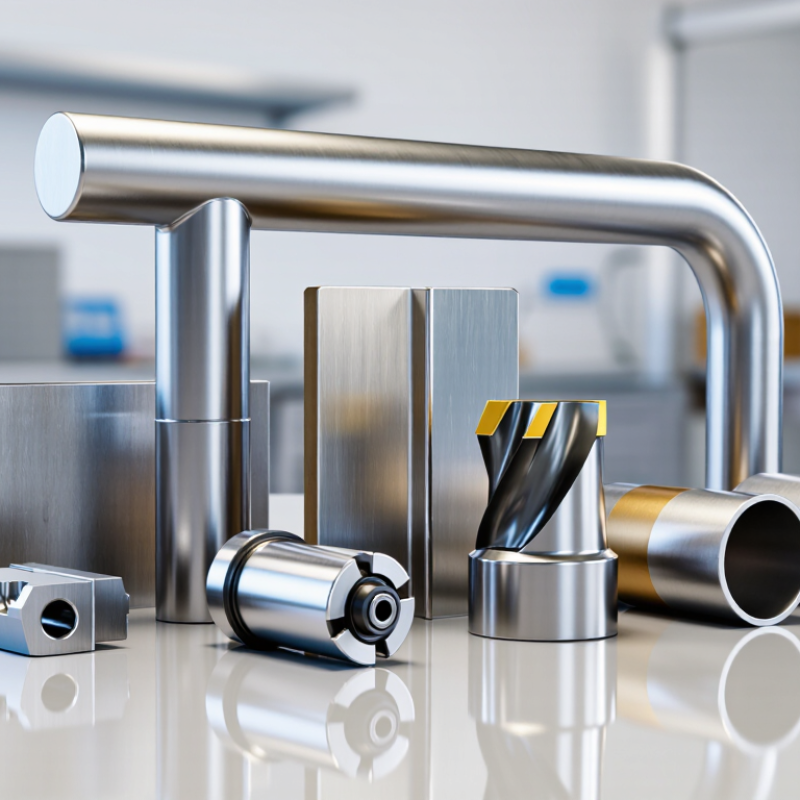
Stainless steel grades are coded descriptions of alloy chemistry and performance. They are not simple rankings from low to high quality. A grade tells you which elements are present and how much each element may vary. Chromium creates the protective oxide film that resists rust. Nickel can improve toughness and formability. Molybdenum often strengthens resistance to chlorides. Carbon levels influence welding behavior and hardness.
Common grades illustrate these differences. A 304 grade suits many indoor fittings, kitchen parts, and general fabrication projects. A 316 grade usually performs better near saltwater or deicing chemicals because it contains molybdenum. A 430 grade uses less nickel and offers useful heat resistance, but it is less ductile in many forming operations. These numbers need context.
The best grade depends on exposure, temperature, fabrication, and maintenance. A coastal handrail may need more protection than an indoor cabinet. Surface finish matters too. A rough, contaminated surface can stain even when the alloy is suitable. In practical inspections, weld discoloration and trapped moisture often explain failures. That is easy to overlook.
Standards also differ by region, so equivalent designations should be checked carefully. Grade selection should follow test data, drawings, and the actual service environment. Choosing the cheapest grade can become expensive after repairs. Yet choosing the most corrosion-resistant grade is not always sensible. It may add cost without solving the real problem. Temperature cycling, cleaning chemicals, and contact with other metals deserve closer review.
A practical comparison of common stainless steel grades, their compositions, properties, and typical applications
| Grade | Metallurgical Family | Typical Chemical Composition (% by mass) |
Magnetism | Corrosion Resistance | Strength & Heat Treatment | Weldability | Common Applications | Best Choice When... |
|---|---|---|---|---|---|---|---|---|
| 304 / 304L | Austenitic | Cr 18–20%; Ni 8–10.5%; C ≤0.08% (304) or ≤0.03% (304L) | Generally non-magnetic when annealed; may become slightly magnetic after cold working | Excellent general-purpose resistance to atmospheric corrosion, moisture, and many food chemicals; limited resistance to chlorides | Excellent ductility and formability; cannot be hardened by heat treatment; strengthening is mainly by cold working | Very good, especially 304L for welded sections because of its lower carbon content | Food-processing equipment, kitchen equipment, architectural trim, tanks, piping, and general fabrication | You need the most versatile and widely used stainless steel for ordinary environments |
| 316 / 316L | Austenitic | Cr 16–18%; Ni 10–14%; Mo 2–3%; C ≤0.08% (316) or ≤0.03% (316L) | Generally non-magnetic when annealed; slight magnetism may result from cold working | Very good resistance to chlorides, marine atmospheres, and many chemical environments due to molybdenum | Excellent ductility and toughness; cannot be hardened by heat treatment | Very good; 316L is preferred for welded fabrications to reduce sensitization risk | Marine hardware, pharmaceutical equipment, chemical processing, medical equipment, coastal structures, and heat exchangers | Chlorides, saltwater, or more aggressive chemical exposure make 304 insufficient |
| 430 | Ferritic | Cr 16–18%; Ni usually ≤0.75%; C typically ≤0.12% | Magnetic | Good resistance in mild atmospheric and indoor environments; lower than 304 in demanding or chloride-containing conditions | Moderate strength; cannot be hardened significantly by heat treatment; good resistance to oxidation at moderate temperatures | Fair; generally less forgiving than austenitic grades during welding | Appliance panels, automotive trim, sinks, indoor architectural components, and exhaust-related parts | You need a lower-cost, magnetic stainless steel for mild service conditions |
| 409 | Ferritic | Cr 10.5–11.75%; Ti stabilized; Ni usually very low | Magnetic | Suitable for mildly corrosive and high-temperature exhaust environments; less decorative than 304 or 316 | Good resistance to thermal cycling and oxidation; moderate mechanical strength | Good with suitable procedures; stabilization helps reduce weld-related sensitization | Automotive exhaust systems, catalytic converter components, and heat-resistant brackets | High-temperature exhaust service is required and appearance is less important than cost |
| 410 | Martensitic | Cr 11.5–13.5%; C ≤0.15%; Ni usually ≤0.75% | Magnetic | Moderate corrosion resistance; less resistant than 304 and 316, particularly in chloride environments | Can be hardened and tempered; provides higher strength and wear resistance than common austenitic grades | Fair to good with preheating, controlled interpass temperature, and appropriate post-weld treatment | Valves, pumps, fasteners, shafts, cutlery, and mechanical components | Strength, hardness, and wear resistance are more important than maximum corrosion resistance |
| 420 | Martensitic | Cr 12–14%; C typically 0.15–0.40% | Magnetic | Moderate corrosion resistance when hardened and properly finished; requires good maintenance in wet service | Higher carbon content allows high hardness and wear resistance after heat treatment | Limited compared with 304 or 316; welding requires careful thermal control and may need post-weld heat treatment | Cutting tools, surgical instruments, molds, valves, knife blades, and wear-resistant parts | High hardness and edge retention are required in a controlled, non-severe corrosion environment |
| 2205 | Duplex | Cr 22–23%; Ni 4.5–6.5%; Mo 3–3.5%; N 0.08–0.20% | Magnetic | Very high resistance to chloride pitting, crevice corrosion, and stress-corrosion cracking | High yield strength, typically about twice that of annealed 304 or 316; heat treatment is not used for hardening | Good when proper duplex welding procedures control heat input and phase balance | Offshore equipment, pressure vessels, chemical tanks, desalination systems, and process piping | You need high strength and strong chloride resistance without using a fully austenitic alloy |
| 904L | High-Alloy Austenitic | Cr 19–23%; Ni 23–28%; Mo 4–5%; Cu 1–2% | Generally non-magnetic when annealed; may show slight magnetism after cold working | Excellent resistance to sulfuric acid, phosphoric acid, chlorides, and severe general-corrosion environments | Excellent toughness and ductility; cannot be hardened by heat treatment | Good with compatible filler metals and controlled procedures | Strong-acid processing equipment, chemical storage, pollution-control systems, and specialized process piping | A highly corrosive chemical environment justifies a high-alloy stainless steel |