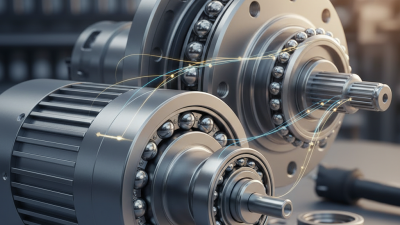
Choosing reliable steel ball bearings manufacturers requires more than comparing unit prices. Global buyers must examine material quality, dimensional accuracy, production capacity, testing systems, and after-sales support. A bearing may look flawless on a sample table, yet fail under heat, contamination, or continuous vibration.
Industry reports show why this market deserves careful supplier evaluation. Fortune Business Insights projects continued growth in the global bearings market, driven by automotive, industrial machinery, renewable energy, and aerospace applications. Grand View Research also identifies automation and advanced manufacturing as major demand factors through 2030. These reports use different market definitions, so their figures should not be treated as perfectly interchangeable. That limitation matters.
Manufacturers with strong technical credibility usually document steel grades, heat-treatment procedures, hardness ranges, and dimensional tolerances. AISI 52100 chrome steel remains common for demanding applications. ISO 281 supports standardized bearing-life calculations, while ISO 492 helps define dimensional accuracy. Buyers should also request inspection records, batch traceability, corrosion-control methods, and noise or vibration test results. Small details matter. A clean raceway and controlled surface finish can influence service life significantly.
This guide introduces leading manufacturers serving international buyers and compares their practical strengths. The comparison considers product range, engineering experience, certification, production scale, customization, logistics, and communication quality. No ranking is permanent. A large brand may suit an automotive program, while a specialized regional producer may respond faster to custom sizes. Buyers should verify current certificates, factory capabilities, and test evidence before signing contracts. A shortlist can still miss a capable supplier. Careful validation remains essential.
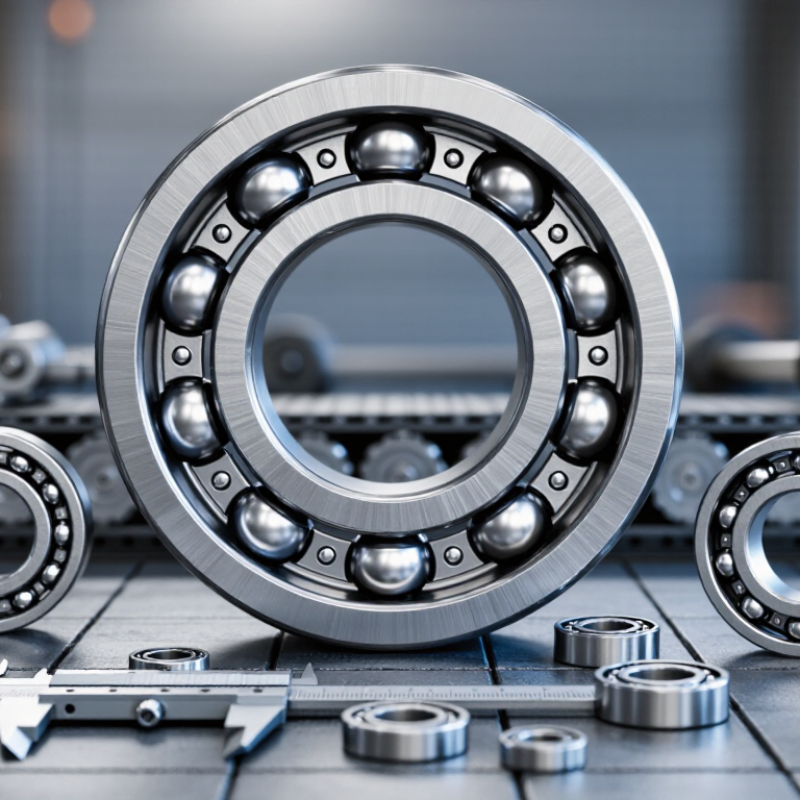
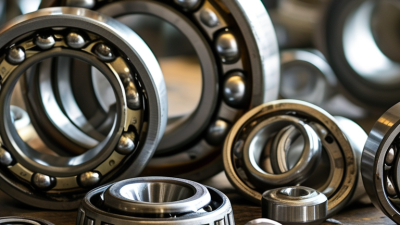
Steel ball bearings come in several designs, and each suits a different load pattern. Deep-groove bearings handle radial loads and moderate axial forces. They are common in motors, pumps, conveyors, and household equipment. Angular-contact bearings support combined loads at higher speeds. Paired units can improve axial stiffness. Thrust ball bearings carry mainly axial loads. They are useful in indexing tables, screw mechanisms, and low-speed support systems.
Material grade affects service life. Chrome steel, often based on 52100 steel, offers strong wear resistance for clean, lubricated environments. Stainless steel grades such as 440C resist moisture better, though they may sacrifice some load capacity. Precision classes control dimensional tolerance, noise, and rotational accuracy. Higher precision is not automatically better. It can increase cost without improving a slow conveyor. Contamination remains a serious concern.
Application details should guide selection. A food-processing line may need stainless construction and frequent washdown protection. A machine-tool spindle may require angular-contact bearings, controlled preload, and careful lubrication. Electric motors usually need quiet running, balanced seals, and stable grease performance. Check load, speed, temperature, shaft fit, housing fit, and expected maintenance intervals. A small misalignment can create uneven raceway marks. That detail is easy to miss. No catalog choice is perfect; field conditions often expose assumptions that looked reasonable during design.
| Ball Bearing Type | Typical Material | Common Grade or Designation | Typical Diameter Range | Applicable Standards | Key Performance Characteristics | Typical Industrial Applications | Buyer Evaluation Points |
|---|---|---|---|---|---|---|---|
| Chrome Steel Balls | Through-hardened high-carbon chromium bearing steel | AISI 52100 / 100Cr6 | Approximately 0.5–100 mm, depending on the product series | ISO 3290-1; ASTM A295; DIN 5401 | High hardness, excellent fatigue resistance, good wear resistance, and low friction in clean operating conditions | Deep-groove bearings, electric motors, pumps, gearboxes, machine tools, and general rotating equipment | Check hardness, dimensional tolerance, roundness, surface roughness, magnetic properties, and corrosion protection |
| Martensitic Stainless Steel Balls | Corrosion-resistant martensitic stainless steel | AISI 440C / 1.4125 | Approximately 0.5–80 mm, subject to bearing design and supply capability | ISO 3290-1; ASTM A756; DIN 5401 | Higher corrosion resistance than 52100 steel, good hardness, and suitable load capacity for many moderate-duty applications | Food-processing machinery, medical equipment, chemical handling systems, laboratory instruments, and outdoor mechanisms | Confirm corrosion resistance, heat treatment, cleanliness, surface finish, and compatibility with cleaning agents |
| Austenitic Stainless Steel Balls | Non-hardenable austenitic stainless steel | AISI 304 / 1.4301; AISI 316 / 1.4401 | Approximately 0.5–100 mm | ISO 3290-1; ASTM A276; DIN 5401 | Excellent general corrosion resistance and non-magnetic behavior, but lower hardness and load capacity than bearing-grade martensitic steel | Food and beverage equipment, marine hardware, chemical-processing systems, sensors, and low-load conveying equipment | Use when corrosion resistance or non-magnetic performance is more important than maximum load capacity |
| Ceramic-Hybrid Bearing Balls | Silicon nitride balls paired with steel bearing rings | Si3N4; commonly Grade 5 or Grade 10 | Commonly approximately 1–50 mm | ISO 3290-2; ISO 26602; application-specific bearing specifications | Low density, electrical insulation, low thermal expansion, high-speed capability, and strong resistance to many forms of wear | High-speed spindles, electric motors, generators, aerospace systems, and electrically insulated bearing arrangements | Evaluate speed rating, preload, ring material, thermal conditions, electrical insulation requirements, and total system cost |
| Tungsten Carbide Balls | Cemented tungsten carbide with a metallic binder | ISO 3290-1; application-specific carbide grade | Approximately 0.5–50 mm | ISO 3290-1; material and carbide quality specifications | Very high hardness, excellent wear resistance, high density, and strong resistance to deformation under severe contact loads | Valve seats, flow-control equipment, precision instruments, mining tools, wear-resistant mechanisms, and harsh industrial environments | Consider density, impact resistance, binder chemistry, surface finish, dimensional tolerance, and operating temperature |
| Plastic-Coated or Polymer Balls | Steel core with a polymer coating or engineered polymer construction | Application-specific polymer system | Commonly approximately 2–50 mm | Material-specific standards; food-contact or chemical-resistance requirements where applicable | Low noise, reduced metal-to-metal contact, chemical resistance, and lower weight; load and temperature capability depend strongly on the polymer | Conveyors, packaging systems, material-handling equipment, laboratory devices, and low-noise mechanisms | Verify coating adhesion, operating temperature, chemical compatibility, load rating, wear rate, and regulatory requirements |
| Precision Bearing Balls | Usually 52100 chrome steel, 440C stainless steel, or silicon nitride | G5, G10, G25, G50, or G100 | Selected from standardized nominal ball diameters | ISO 3290-1 or ISO 3290-2; ABMA-style grade terminology may also be specified | Controlled diameter variation, spherical deviation, surface roughness, and batch consistency | Precision bearings, aerospace instruments, robotics, optical equipment, laboratory systems, and high-speed machinery | Confirm whether the quoted grade refers to ball diameter variation, and request inspection data for lot-to-lot consistency |
| Standard Industrial Bearing Balls | Commonly hardened 52100 chrome steel or stainless steel | G100 or application-specific commercial grade | Approximately 1–100 mm | ISO 3290-1; ASTM A295 for bearing-quality steel where specified | Balanced cost, durability, availability, and performance for general-purpose rotating equipment | Material handling, agricultural machinery, pumps, compressors, automotive components, and general industrial bearings | Compare load rating, hardness profile, dimensional consistency, packaging, rust prevention, traceability, and inspection documentation |
| Corrosion-Resistant Bearing Balls | Martensitic stainless steel or corrosion-resistant specialty alloy | 440C / 1.4125 or application-specific alloy | Approximately 0.5–80 mm | ISO 3290-1; ASTM A756; customer-specific corrosion testing | Improved resistance to moisture, cleaning chemicals, and atmospheric exposure compared with standard chrome steel | Marine equipment, washdown machinery, pharmaceutical systems, food-processing lines, and outdoor automation | Define the actual exposure conditions, including salt spray, humidity, detergents, acids, temperature, and lubrication type |
| Large-Diameter Heavy-Load Balls | Hardened bearing steel, stainless steel, or specialty alloy steel | Material and tolerance grade specified by design | Typically above 50 mm, with size determined by the bearing assembly | ISO 3290-1; ASTM A295; drawing-based inspection requirements | High static load capacity, strong resistance to brinelling, and suitability for large rolling-contact assemblies | Heavy machinery, slewing systems, industrial gearboxes, construction equipment, and large-scale material-handling systems | Review static load, impact loading, heat treatment depth, internal quality, dimensional stability, and transportation protection |